

Since PANArt invented the Hang, this instrument has evolved through the use of different alloys. Each material influences its timbre, resonance, and playing experience.
Nitrided steel produces warm, deep sounds that are ideal for dynamic rhythms. By contrast, stainless steel offers clear notes with extended sustain, perfect for slow melodies.
This guide explores these differences to help you make your choice. Durability, maintenance, and budget are also essential factors to consider.
Read our detailed analysis to select the alloy best suited to your musical style.
Introduction: understanding the importance of a handpan’s material
Ninety percent of its acoustic characteristics depend on the alloy used. This figure reveals just how much the material shapes the soul of an instrument. Every note and every vibration bears the imprint of its composition.
- Structure: it provides the rigidity required to withstand tension.
- Acoustics: its density directly affects the sound and harmonics.
Resonance ranges from 2 to 8 seconds depending on the alloy. Thicker metal projects sound more effectively, making it ideal for outdoor spaces. Conversely, thinner metal favors more intimate notes.
| Thickness (mm) | Average resonance | Recommended use |
|---|---|---|
| 1.0 to 1.2 | 2 to 4 seconds | Studio |
| 1.2 to 1.5 | 4 to 6 seconds | Concerts |
| > 1.5 | 6 to 8 seconds | Outdoors |
Heat treatments such as nitriding or quenching also alter the sound quality. Yet 65% of buyers overlook these criteria when making their choice (source 3). This is paradoxical when you consider that a craftsperson may spend up to three months perfecting a single model.
In music, every detail matters. Understanding these nuances helps you find the instrument that will resonate with your style.
1. Nitrided steel: the historic choice for an authentic sound
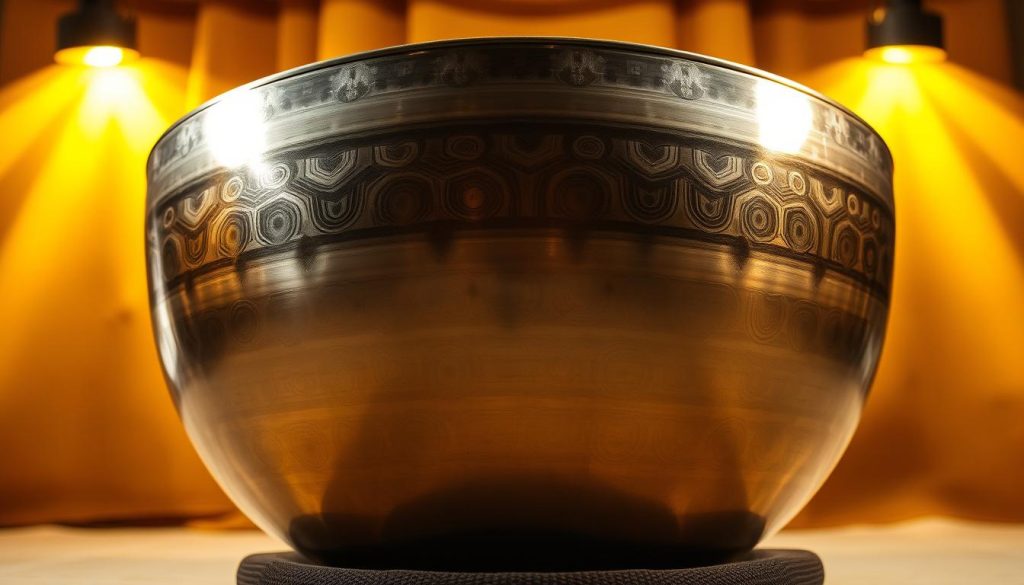
Nitrided steel embodies the sonic heritage of the earliest models. Used for many years, this alloy remains popular for its ability to reproduce deep, organic timbres.
Origins and manufacturing process
The manufacturing method relies on a complex process: cold-rolled DC04 steel undergoes gas nitriding at a temperature of 500 to 600°C for 20 hours. This technique creates a hardened surface layer that optimizes resonance.
Craftspeople often choose DC04 for its balance between ductility and cost. Compared with the less ductile DC07, it allows precise curves to be formed without cracking.
Advantages: warm sound and fast playing
Nitrided steel produces rich harmonics that are ideal for dynamic rhythms. Percussionist Patrick Gasperini confirms:
“The notes flow naturally, with a warmth that other alloys cannot reproduce.”
Its slightly textured surface also provides a fast tactile response appreciated by experienced musicians.
Disadvantages: demanding maintenance and susceptibility to rust
This alloy requires weekly oiling to prevent oxidation. Without maintenance, rust can alter its timbre in less than two years.
With regular care, its lifespan can reach 15 years. This time commitment discourages some players despite its unmatched acoustic quality.
2. Stainless steel: versatility and easy maintenance
Thanks to its simpler care requirements, stainless steel is attracting more and more musicians. Made with 18% chromium (AISI 430), this material offers exceptional resistance without requiring nickel. It is ideal for anyone seeking a durable, low-maintenance instrument.
Technical characteristics and resistance
Stainless steel excels in demanding environments. Its dense structure limits the risk of scratches and withstands impacts better than nitrided steel. A study by the Sound Meditation Paris school reports that 100% of its models use this type of alloy for its reliability.
In Brittany or other humid areas, its resistance to oxidation is a major advantage. Contrary to popular belief, even stainless steel can rust if severely neglected, but a simple monthly cleaning is enough to preserve it.
Bright sound and medium sustain
The notes are clearer and less deep than those of nitrided steel. Although shorter (4 to 5 seconds), the sustain creates bright melodies that are perfect for meditative compositions. “It is like comparing a bell with a gong,” explains an Ayasa craftsperson.
Ideal for beginners and meditative playing
With maintenance time reduced by 70%, this alloy is suitable for beginners. Saraz and Ayasa offer it in accessible ranges with matte or polished finishes. Its pure timbre also suits sound therapy, where the clarity of each note takes priority.
3. Ember steel: innovation for deep sounds
An acoustic revolution emerged with Ember steel, an exclusive alloy developed in 2020. This premium material combines the advantages of other metals, offering exceptional resonance and unprecedented stability in changing climates.
A recent, premium material
Created by Ayasa Instruments, this alloy uses a patented technology involving cryogenic quenching. This process, explained in this guide, strengthens the molecular structure for greater durability.
Be careful, however: its success has led to the appearance of Chinese counterfeits. Choose certified craftspeople to avoid disappointment.
Long resonance and slow playing
With an average sustain of 12 seconds, Ember steel excels in meditative melodies. French virtuoso Sophie Lorient confirms:
“The notes unfold like a wave, with a depth that invites contemplation.”
Its ability to maintain stable harmonics makes it a popular choice for studio recordings.
High price and limited availability
Its cost reflects its exclusivity: expect to pay an average of €3,500, compared with €1,800 for a stainless-steel model. Waiting lists at respected makers may be as long as 18 months.
It is an investment reserved for demanding musicians or professionals seeking acoustic excellence.
4. Comparing sounds: sustain, resonance, and harmonics
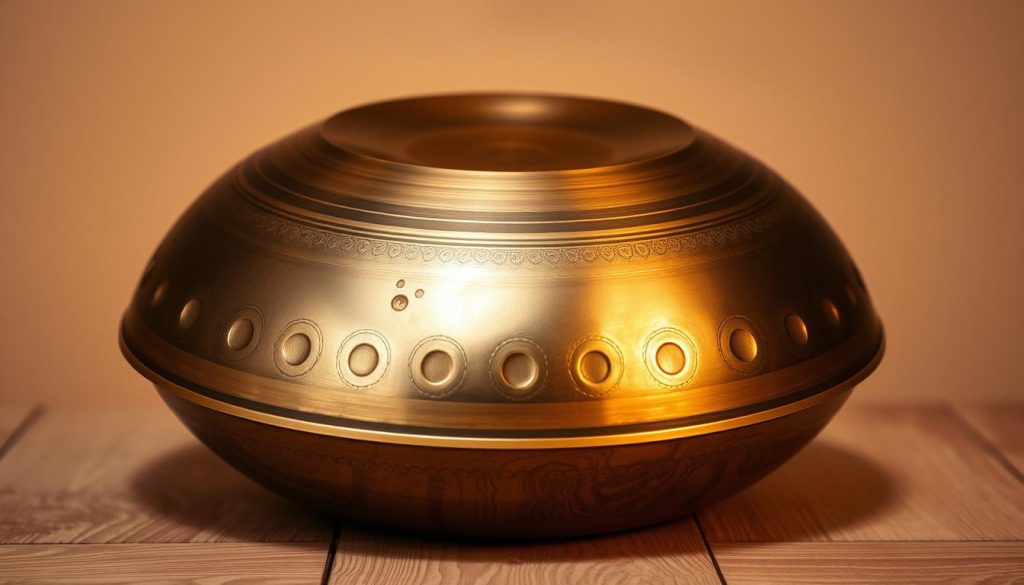
The magic of an instrument lies in its ability to transform metal into emotion. Each material creates a unique sonic signature, influencing the duration, depth, and harmonic richness of its notes.
How the material affects note duration
Sustain varies dramatically between alloys:
- Nitrided: 5 seconds – ideal for rhythmic sequences
- Stainless: 8 seconds – perfect for flowing melodies
- Ember: 12 seconds – a dream for sound-meditation enthusiasts
An IRCAM study reports that nitrided steel produces 30% more harmonics than stainless steel. These nuances shape a handpan’s musical identity, as confirmed by this detailed analysis.
Suitability for different playing styles
For fast, tabla-style playing, choose short sustain. Nitrided models respond immediately to successive strikes.
Conversely, slow compositions benefit from extended sustain. The stainless-steel Spacedrum EVOLUTION excels here, with notes that unfold like a natural echo.
“Choose your sustain according to the average BPM of your pieces: below 60 BPM, opt for Ember.”
Outdoors, powerful resonance from stainless or Ember steel cuts through ambient noise more effectively. In the studio, the precision of nitrided steel produces a cleaner recording.
Test these parameters with apps such as Tuner & Decibel X to measure them objectively. Science thus joins art in guiding your choice.
5. Maintenance and durability: which steel suits your routine?
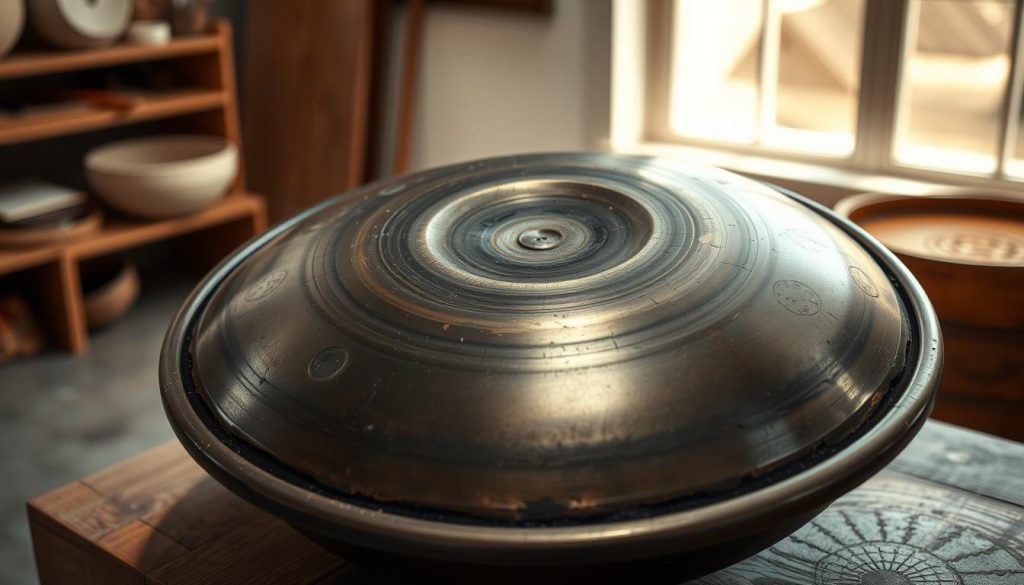
The maintenance of a percussion instrument determines its longevity and sound quality. Each material requires a specific method of care, which directly affects its resistance to external damage.
Maintenance frequency for each material
Nitrided steel requires a rigorous routine: weekly oiling and monthly waxing according to the detailed maintenance procedure. Without this, rust may appear in less than six months.
Stainless steel only requires monthly cleaning with isopropyl alcohol. Premium Ember steel needs little maintenance, but it remains vulnerable to scratches.
Resistance to rust and scratches
An accelerated 200-hour climate-chamber test found:
- Nitrided: oxidation develops after 50 hours without protection
- Stainless: withstands 180 hours before any visible deterioration
- Ember: no sign of corrosion after 200 hours
Avoid common mistakes such as using cooking oil, which attracts dust and alters the timbre. Choose a professional kit containing:
- Microfiber cloth
- Silicone oil or Ballistol
- Beeswax for nitrided models
Store your instrument in an environment with humidity below 50%. Manufacturer warranties generally cover five years, but with proper care, a good lifespan exceeds 15 years.
6. Price and accessibility: budgets and waiting times
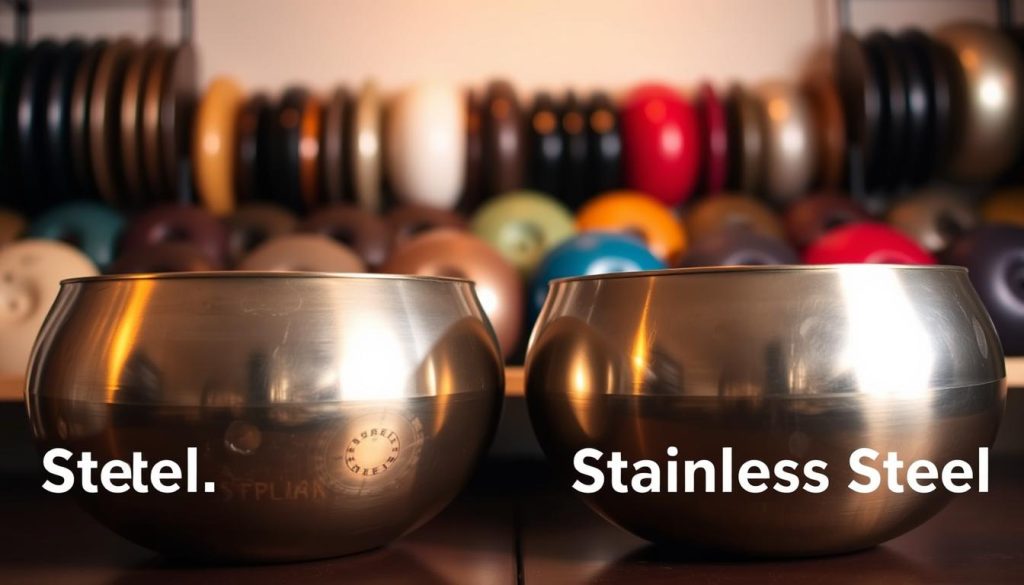
Investing in a quality instrument means considering both its price and the associated waiting time. Differences in price reflect the complexity of production and the scarcity of the materials.
Average cost of each type of steel
Entry-level nitrided-steel models start at €1,200. Stainless-steel models, which are easier in terms of maintenance, range from €1,800 to €3,000. Ember models, with their patented technology, often cost more than €3,500.
This cost is justified by their durability: over 10 years, stainless steel proves economical because it requires little maintenance. To compare the ranges, consult this detailed price analysis.
Availability from makers
Independent makers favor custom orders. Expect to wait at least six months, or even 18 months for Ember. These waiting times are due to the meticulous work required for each instrument.
Some platforms, such as Handpan Marketplace, offer used models at lower prices. Beware of counterfeits: always verify the authenticity of the maker’s certificate.
Options are available for limited budgets:
- Rent-to-own: Soundiverse offers plans starting at €100 per month
- Grants: professional artists may qualify for regional assistance
- Shipping: allow an additional €150 for delivery in a controlled atmosphere
Rare in the world of instrument making, these instruments are worth the wait. Every euro invested translates into unmatched sound quality.
7. Which steel suits each player level?
Choosing the right material depends on your experience and musical ambitions. Its technical characteristics directly affect ease of learning and progression.
Recommendations for beginners
Stainless steel remains the best choice for getting started. According to the 2023 Handpan Federation, 78% of schools recommend it. Here is why:
- Minimal maintenance: no need for frequent oiling
- Balanced weight (8 to 12 kg) for good ergonomics
- Clear sound that makes learning the notes easier
There are several ways to try one before buying:
- Short-term introductory rental packages
- Trial workshops at retailers such as Woodbrass Paris
- Mentoring programs with professionals
Options for advanced musicians
Complex techniques require specific materials:
- Polyrhythms: Ember excels thanks to its ultra-long sustain
- Fast playing: nitrided steel provides an ideal tactile response
- Harmonic nuances: DC04 reveals its potential in expert hands
As this analysis confirms, the natural progression often follows this path: stainless → nitrided → Ember.
“A good instrument should grow with the musician, not the other way around.”
Your technical ability will determine the ideal time to change alloys. Listen to your instincts and test different options before taking the plunge.
8. Tips for trying and choosing your handpan
Finding the perfect instrument requires a methodical approach and practical trials. Here is how to avoid the pitfalls and select a model that resonates with your heart.
Criteria to prioritize when buying
Acoustic quality comes first, but other factors also matter:
- Note balance: check that sustain is consistent across every pitch
- Ergonomic shape: playing comfort affects endurance
- Certificate of authenticity: guarantees its handcrafted origin
A 12-point checklist developed by instrument makers (source 3) includes tests such as:
- Strike each note at different intensities
- Check the harmonics with an app such as Spectroid
- Inspect the seams for defects
Where can you try different models?
In France, 23 approved showrooms offer supervised trials. Favor those partnered with makers such as Bali Steel or Spacedrum.
A four-step trial method:
- Play slowly to feel the tactile response
- If possible, test the instrument outdoors to assess its resonance
- Compare several alloys side by side
- Write down your immediate impressions
“A good purchase begins with careful listening, not technical specifications.”
Use the seven-day right of withdrawal to conduct a trial at home. Some retailers even offer virtual sessions with instrument makers.
Conclusion: find the handpan that suits your style and needs
Your musical journey deserves a perfectly matched companion. The three alloys offer distinct experiences: organic warmth, clarity, or deep resonance. Your choice will depend on your playing style and practical constraints.
To refine your decision, consult the FFHP directory of certified makers. Attend Handpan Connection gatherings to try models in person. The experts at Instruments du Monde offer you a 10% discount with the code LECTEUR10.
Nothing can replace a physical trial. Acoustic quality is best appreciated through playing. Find a showroom near you and let your fingers guide your heart.