
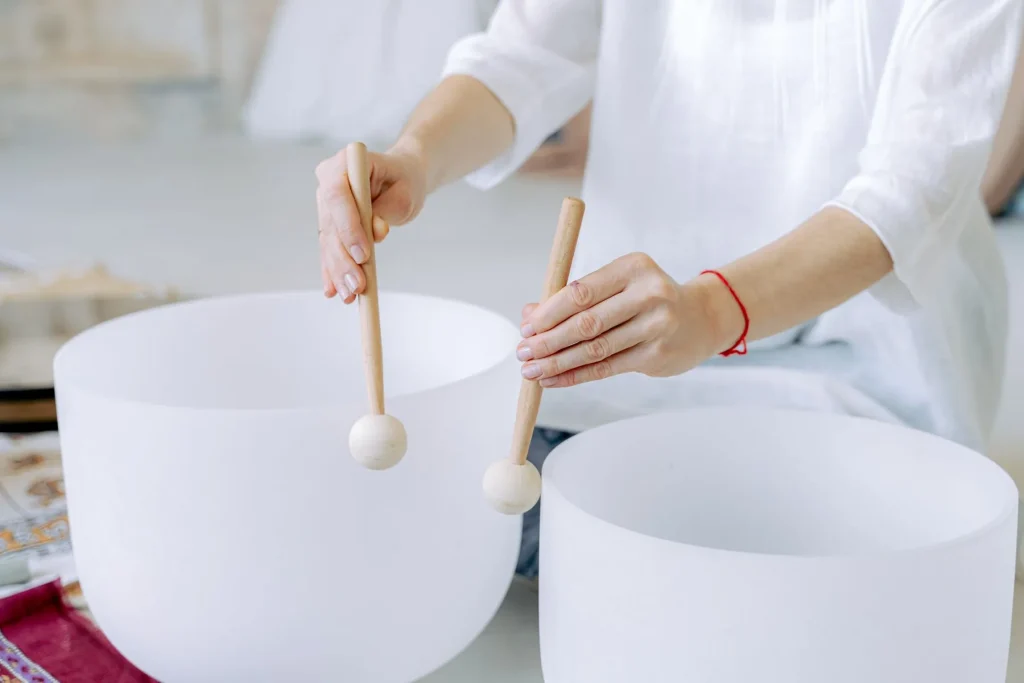
Incorporating a Tibetan singing bowl into your meditation practice requires informed choices.
Each instrument has a unique vibrational signature. The metal, crafting method, and size affect the sound and its depth.
Before buying, define your needs: relaxation, energy cleansing, or a specific musical application. Small instruments produce high frequencies, while larger ones create deep, enveloping sounds.
The market ranges from entry-level cast models to pieces hand-hammered by master craftspeople. Listening to the overtones remains the best way to assess the purity of the tone.
For more practical advice on selecting a bowl, consult this dedicated guide: choose a Tibetan singing bowl.
Tibetan Singing Bowl Training: How to Choose the Right Course
A bowl’s tone reveals as much about its history as it does about its material.
Nepalese craftspeople favor high-quality metals. A traditional singing bowl often contains an alloy of seven metals. These pieces are heavier than five-metal models because their composition includes gold and silver.
The manufacturing method matters. Hand-hammered bowls produce rich overtones.
- Fundamental note: each bowl produces a note determined by the density of its metals and the hammering process.
- Price: the complexity of the alloy and the craftsmanship have a major influence on cost.
- Size and thickness: these shape the sounds and identity of the bowl.
“Hand-hammered bowls reveal a depth that mass-produced models struggle to match.”
To explore the techniques in greater depth or find a craftsperson, consult a dedicated workshop guide or explore specialist retailers to compare instruments and prices: retailer guide.
Understanding the Nature and Origins of the Singing Bowl
Both a ritual and sound instrument, the singing bowl connects music with ancient spiritual practices.

History and Tradition
The Tibetan singing bowl has its roots in the Mahayana and Tantric rites of the Himalayan regions.
For millennia, these singing bowls have accompanied rituals, meditation, and prayers.
Hand-hammered pieces often bear sacred symbols that reinforce their cleansing dimension.
Therapeutic Benefits
The vibrations emitted by each bowl act on the chakras and the body’s energy field.
These frequencies can be used to release blockages and tension, thereby promoting relaxation and well-being.
In practice, the Tibetan singing bowl is used in sound therapy, yoga, or meditation to realign energies.
“The bowl’s harmonic sound encourages a state of release and a better flow of energy.”
| Use | Main effect | Characteristic |
|---|---|---|
| Meditation | Concentration | Stable frequencies |
| Sound therapy | Rebalancing | Targeted vibrations |
| Yoga | Relaxation | Rhythmic support |
To learn more about its origins and traditional use, consult a detailed guide to the singing bowl.
Differences Between Hammered, Cast, and Crystal Bowls
The way a bowl is shaped defines its sonic personality. Hand-hammered models require time and expertise. They offer rich overtones and a signature unique to each bowl.
Cast bowls have a more uniform response. Their shape is regular and their note is stable, but less complex than that of hammered pieces.
The Height of Quality: The Full Moon Bowl
Santa Ratna Shakya’s Full Moon bowl exemplifies excellence. Made during full-moon nights, its tin-rich alloy justifies a higher price.
- Quartz crystal bowls, which appeared in the twentieth century, produce a higher, clearer note.
- Kalyan Tamrakar, creator of PATAN bowls, demonstrates the effect of polishing on overtones.
- Comparing the resonance of metal with that of crystal helps you choose a bowl for musical or therapeutic use.
| Type | Characteristic | Recommended use |
|---|---|---|
| Hand-hammered | Rich overtones, unique signature | Sound therapy, deep meditation |
| Cast | Uniform response, affordable price | Group practice, beginners |
| Quartz crystal | High note, pure sound | High frequencies, bright spaces |
To compare models and find useful references, consult this specialist guide: everything you need to know about singing bowls.
How Size Affects Vibrational Frequencies
A wider bowl generates slow, enveloping vibrations that are useful in therapeutic practice.

The size of a Tibetan bowl determines its fundamental frequency. The larger the diameter, the lower and longer the note becomes.
For example, a 55 cm bowl produces very low notes. These sounds encourage grounding and deep meditation. In sound therapy, these instruments emit vibrations that travel through the body.
- A small bowl produces high notes that open up the soundscape.
- A large 55 cm bowl strengthens physical grounding and slows the breath.
- Each bowl has a fixed frequency; it cannot be changed through use.
- A good metal alloy, combined with an appropriate size, ensures rich overtones.
To choose a bowl for your intended use, select the diameter that corresponds to the desired note. Singing bowls of different sizes let you create a complete range of frequencies to balance energies.
Harmonizing the Chakras Through Musical Notes
A bowl emits a frequency that can act directly on an energy center.
Sound practice relies on the quality of the fundamental note. This serves as the instrument’s musical identity card.
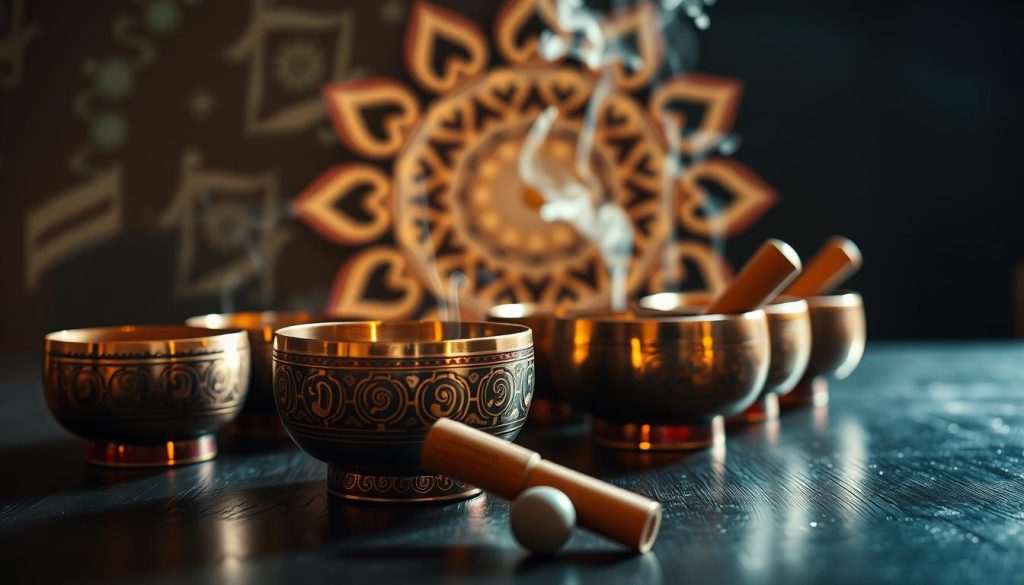
The Fundamental Note
The fundamental note stands out as soon as the bowl is struck. It depends on the shape and alloys. The seven traditional metals correspond to the seven chakras and the planets. This correspondence makes targeted harmonization possible.
Correspondence Between Notes and Energy Centers
The bowls use the seven musical notes to align internal energies.
- A bowl tuned to a specific note can be used to work on a particular chakra.
- Engraved symbols strengthen the spiritual connection and therapeutic scope.
- The music created helps align the body’s frequency with universal frequencies.
| Chakra | Note | Main use |
|---|---|---|
| Root | Do, C | Grounding, stability |
| Solar plexus | Mi, E | Confidence, energy |
| Crown | Si, B | Connection, transcendence |
To explore the relationship between the instrument and vibrations in greater depth, read everything you need to know about singing bowls.
Price Criteria and Alloy Quality
A bowl’s value can be assessed through its weight, alloy, and diameter.
A small 11 cm bowl costs about €60. A 55 cm model can cost more than €2,200.
The price reflects several factors: the presence of gold or silver in the metals, manufacturing time, and diameter. A seven-metal alloy provides greater sonic richness than simple quartz or a cast model.
Hand-hammered production takes more time. This is why these products are generally more expensive than cast pieces.

Engraving sacred symbols or precisely tuning a note also increases the price. For effective cleansing, choose a bowl at least 15 cm in diameter.
“Investing in a quality bowl ensures longevity and accurate sound.”
| Criterion | Impact on price | Result |
|---|---|---|
| Gold and silver alloy | High | Deeper, richer sounds |
| Manufacturing method | Medium to high | Hand-hammering: superior overtones |
| Diameter | Variable | Small bowl: high sound; large bowl: low sound |
To learn more and choose a Tibetan singing bowl for your intended use, compare the metals and dimensions before buying.
Essential Accessories for an Optimal Practice
Suitable equipment transforms sound practice. It improves sound quality and the transmission of vibrations through the body.
Choosing Your Mallet
The mallet determines the attack and warmth of the tone. A wooden striker produces crisp strikes.
A leather-covered mallet produces softer sounds. Each bowl requires a mallet suited to its diameter to deliver a rich response.
The Usefulness of a Cushion
The cushion stabilizes the bowl and allows vibrations to circulate freely.
A cushion suited to the bowl’s size prevents sound loss. Embroidered models add an aesthetic and spiritual dimension.
Striking Techniques
There are two basic movements: striking or rubbing the rim. Striking produces a precise note.
Rubbing with constant pressure allows the singing bowl to sing for a long time and promotes relaxation.
| Accessory | Effect on sound | Advice |
|---|---|---|
| Wooden mallet | Clear attack, defined note | Ideal for small bowls and musical sessions |
| Leather mallet | Warm sounds, amplified overtones | Recommended for hand-hammered bowls and sound therapy |
| Suitable cushion | Stability, optimal transmission of vibrations | Choose according to diameter for better cleansing |
Conclusion
Completing your search for an instrument involves listening carefully to what resonates within you. A singing bowl should meet your meditation needs and touch your body through its overtones.
Consider the quality of the metals, the alloy, the diameter, and the fundamental note. The price often reflects the craftsmanship and richness of the sounds.
Whether you choose a traditional metal model or a crystal one, each bowl influences the alignment of the chakras and the depth of your practice.
Choosing a Tibetan singing bowl remains a useful step in comparing and testing models before adopting an instrument that will become your traveling companion.