
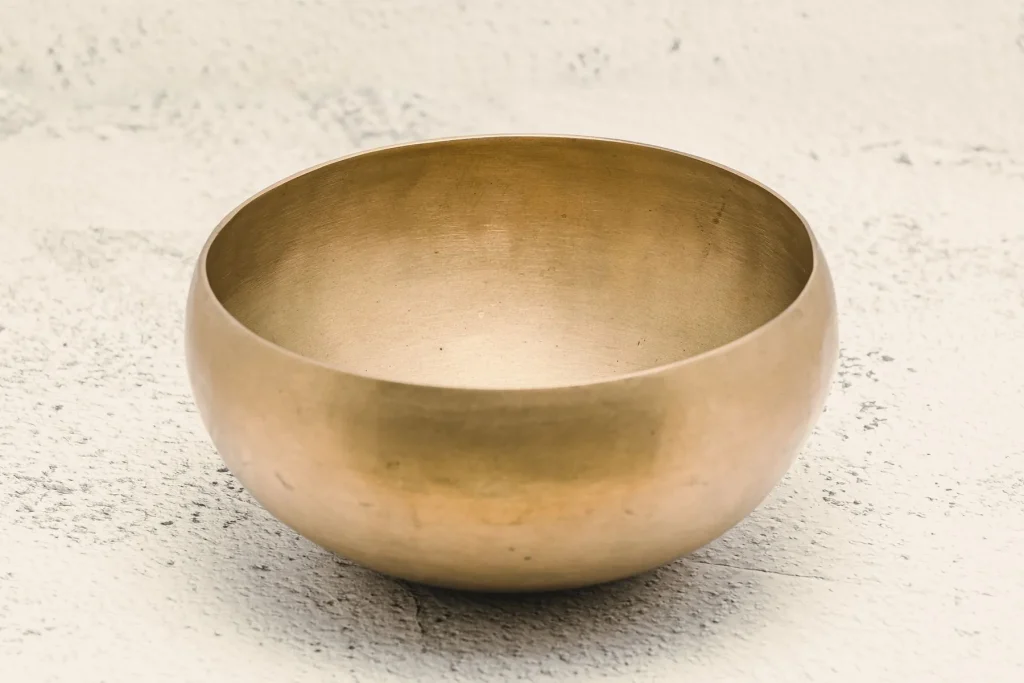
Choosing a singing bowl takes more than good taste. Prices vary widely, from affordable models to rare pieces.
Each instrument has a unique sound signature, shaped by its size, alloy and craftsmanship. These factors explain why some instruments remain affordable while others command high prices.
The market offers bowls for meditation, sound therapy and relaxation. Beginners will find simple options, while collectors may seek premium pieces such as Full Moon bowls.
To better understand singing bowl prices and avoid counterfeits, follow this guide. You can consult a comprehensive source on the subject for a detailed price guide.
Understanding the singing bowl market in France
In France, the market combines affordable products with handcrafted creations. Entry-level models start at €15, while hand-hammered pieces can cost more than €1,500.
The manufacturing method makes all the difference: industrial casting and handcrafting affect the resonance and sustain.
Value is determined by criteria including weight, diameter and alloy composition. These elements shape the tone, sustain and perceived effect.
“An instrument’s size and material shape its sonic character.”
- Sets often include a mallet and cushion, which are essential for getting started properly.
- A distinction is often made between seven-metal bowls and bowls made from simpler alloys commonly found in mass-market retail.
- Value for money can vary greatly depending on the metals used and the instrument’s origin.
| Range | Price range | Key feature |
|---|---|---|
| Entry level | €15–€60 | Simple, lightweight alloys |
| Mid-range | €60–€400 | Better composition, longer sustain |
| Handcrafted / rare | €400 and above | Hand-hammered, precious metals |
Tibetan singing bowl prices: how much should you budget?
The price range depends mainly on the alloy, hammering and diameter.
Price ranges by product tier
Typical ranges and costs
Entry-level models remain affordable, costing between €15 and €60 for lightweight cast pieces.
Mid-range bowls often cost between €100 and €400, with a better finish and longer sustain.
Premium versions, such as Full Moon bowls, easily exceed €500 and can cost several thousand euros due to an alloy rich in tin and copper.
Hidden costs and essential accessories
Accessories and additional expenses
- Buying a suitable mallet improves the attack and tone.
- A cushion or vibration-damping stand helps preserve the instrument’s lifespan and quality.
- Size, weight and thickness affect the final price.

| Category | Price range | Key feature |
|---|---|---|
| Entry level | €15–€60 | Simple alloy, cast production |
| Mid-range | €100–€400 | Better hammering, extended sustain |
| Premium / rare | €500 and above | Metal-rich alloys, hand-hammered |
For a complete overview of prices and models, see the detailed price guide.
How the manufacturing process affects cost
The way an instrument is made often explains both its price and its sound character.
Cast and hammered bowls
Cast bowls are produced quickly and sell for between €30 and €150 per kg. They sometimes use simpler alloys. Their sound is consistent, with a smooth surface and uniform effect.
Hand-hammered bowls cost more: from €100 to €300 per kg. Hammering involves at least four artisans and takes considerable time. This method raises the cost but enriches the harmonics.
Copper makes handworking easier because it is malleable, while tin improves resonance. Adding more metal increases the weight and therefore the final price.
- The patina and surface treatment affect the color and appearance.
- Irregularities in a hammered bowl create richer harmonics.
- Weight, diameter and alloy remain decisive factors in quality.
| Type | Range in €/kg | Feature |
|---|---|---|
| Cast | 30–150 | Fast production, smooth sound |
| Hand-hammered | 100–300 | Craftsmanship, rich harmonics |
The decisive role of size and weight
A model’s diameter and mass determine its tone and cost. Size, measured in centimeters, reflects the amount of metal and the alloy used.
Within the same range, a larger, heavier bowl requires more material. This raises the price and changes its register.
Small models produce high-pitched sounds. Large ones offer deep bass notes and longer sustain.
The metal’s thickness stabilizes vibration. Achieving a uniform wall in larger bowls requires more extensive handwork.
For group sessions, an 18–25 cm singing bowl offers a good balance of power and ease of handling.
It is advisable to try several similar diameters. Compare the tone, sustain and feel when using the mallet. For help choosing a suitable mallet, consult this guide: how to choose the right mallet.

| Criterion | Sound effect | Impact on price |
|---|---|---|
| Small diameter | Higher, more expressive sounds | Less metal → lower cost |
| Large diameter | Deep bass, extended sustain | More metal → higher cost |
| Thickness | Stability and sustain | Handcrafting increases the value |
Analysis of alloys and provenance
The quality of the raw materials and the supply chain affect both sustain and the asking price.

Why tin content matters for resonance
The tin content directly affects sustain. An alloy rich in tin provides longer sustain and clearer harmonics.
Visually, a platinum-like hue on an unfinished surface often indicates a high concentration of tin.
Quality of the metals used in the composition
The traditional seven-metal combination (gold, silver, copper, brass, mercury, tin, iron and lead) remains the benchmark for achieving a rich harmonic palette.
Nepalese artisans often favor pure copper imported from Malaysia. By contrast, some workshops in India use recycled metal, which can make certain bowls less stable.
Influence of the geographic area of production
Provenance changes both the manufacturing method and the time spent hammering.
- Nepalese workshops: exacting standards for composition and more handwork.
- Industrial centers in India: faster production, with examples such as the Rana Singing Bowl Centre.
- Work by makers such as Peter Hess: dissemination of standardized alloys in the Patan region.
| Criterion | Origin | Impact |
|---|---|---|
| Seven-metal alloy | Nepal / tradition | Harmonic richness, higher price |
| Tin content | Variable | Sustain and platinum-like color |
| Copper | Malaysia (pure) versus India (recycled) | Quality and durability |
“Careful control of melting temperatures is essential to incorporate each metal without impairing resonance.”
Differences between new models and antique bowls
Old pieces often retain a tone and history that newer models cannot match. Their sound evolves with their patina and use. You can hear it from the very first strike.
Examples such as large Jambati or Lingam bowls can be worth more than €1,000 per kg. Their value depends mainly on their historical rarity and demand from collectors.
Authenticity and quality can be assessed by sight and touch. Look for hand-hammering marks and check for structural cracks.
- Antique bowls do not meet modern industrial criteria; they are assessed according to their history.
- Modern engravings are rarely original; they were often added later.
- Always request certificates or an expert opinion before investing.

| Criterion | New models | Antiques |
|---|---|---|
| Alloy / metals | Standardized composition | Historical, sometimes unique variations |
| Sound / diameter | Predictable, controlled | Often richer, depending on its history |
| Value | Based on quality and finish | Linked to rarity and history |
For more information about Tibetan singing bowl prices and why they vary, consult this specialist guide.
Tips for buying online or in a store
Learning about a bowl’s origin and manufacture helps you choose a model that will last.
Compare before you buy:
- Buying online lets you compare bowl prices and listen to audio samples. It is a convenient way to identify models suited to your needs.
- In a store, test the mallet directly. This reveals how easily the bowl begins to vibrate and how rich its tone is.
- Be wary of marketplaces offering low-cost bowls without details about the alloy or manufacturing process.
Essential checks: check the stated diameter, weight and thickness. These criteria define the effect and sound quality.
Warranty and rights: in France, distance purchases come with a 14-day right of withdrawal and a two-year legal guarantee.
Favor specialist retailers that guarantee the origin (Nepal / India) and metal composition, including copper or tin. A hand-hammered bowl will often be more durable than an industrially cast bowl.
Conclusion
A good instrument is born from a combination of materials, craftsmanship and intended use.
Choose yours according to the quality of the metals, the type of alloy and the manufacturing method. Size and diameter influence tone and sustain.
Include accessories such as a mallet and cushion in your budget as well. Choose transparent sellers to ensure authenticity and reliable after-sales support.
To refine your selection, read a practical guide on which singing bowl to choose, and discover recommended places to buy or try one in this guide explaining where to buy.
Listen, feel and prioritize quality: a well-chosen instrument will enrich your practice for years to come.