

To become an orchestra conductor, you need to complete a comprehensive orchestral conducting program. A love of pursuing a musical career is crucial. This profession requires an in-depth knowledge of music and the ability to listen attentively.
The journey often begins in high school. Leading institutions, such as the Paris Conservatoire, are worth considering.
Candidates, generally aged 21 to 22, undergo a rigorous selection process. They demonstrate their musical skills and conducting abilities. Once selected, they complete five years of training.
This training prepares them to become orchestra conductors. They will then be ready to lead orchestras.
Their dedication and training prepare them effectively. They are consequently ready to meet the challenges of this exciting profession.
The responsibilities of an orchestra conductor
An orchestra conductor has many responsibilities. They must be energetic and have a strong personality. They must communicate their artistic vision to the musicians.
They oversee rehearsals and concerts. They select the musical works and prepare the scores. Ensuring that the musicians play together is crucial.
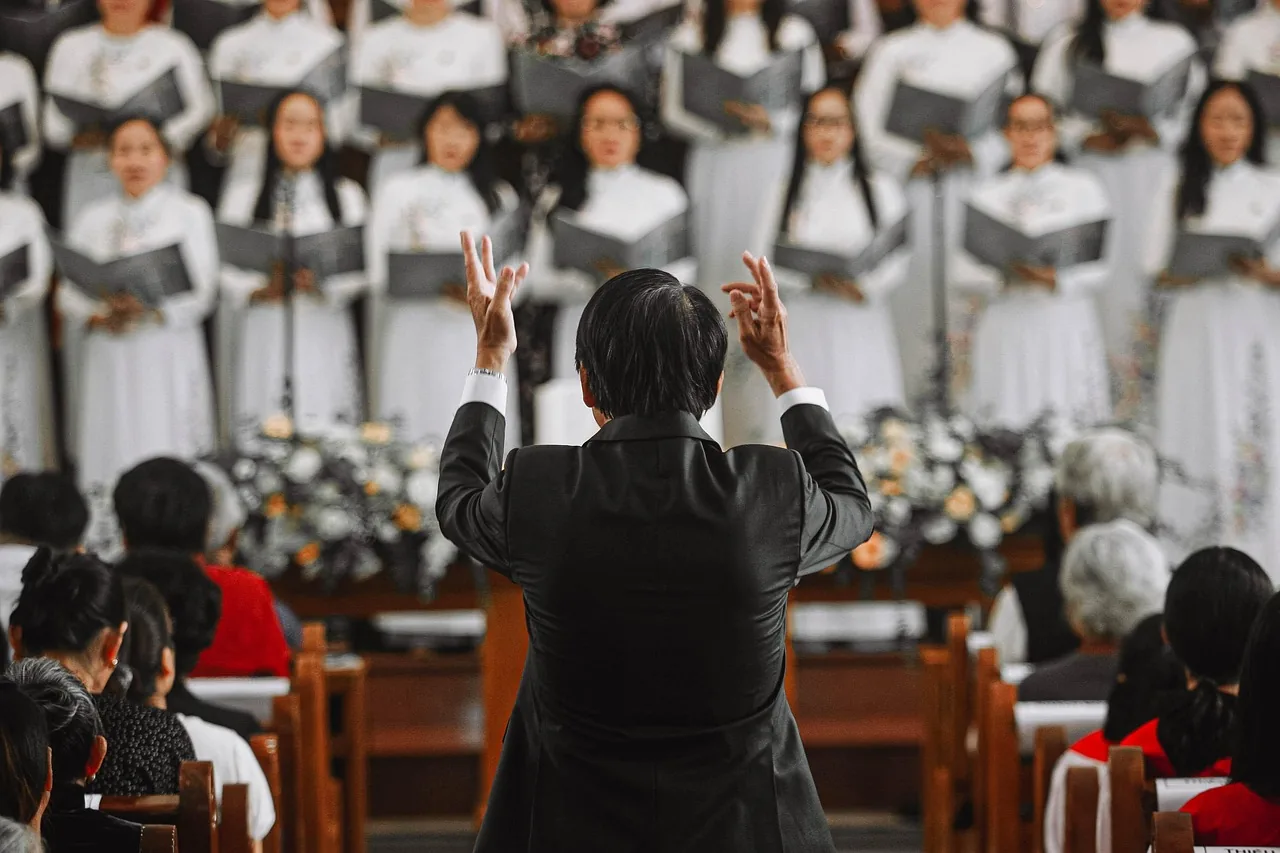
The conductor uses gestures and signals to communicate with the musicians. This ensures a harmonious interpretation. Orchestra conductors often train at conservatories.
Many have studied harmony and orchestration. They develop engaging teaching methods.
The choice of musical works is important. The conductor often seeks out lesser-known pieces. This enriches the orchestra’s repertoire and the audience’s experience.
For more information about training, read this informative article.
Why choose a career as an orchestra conductor?
Choosing to become an orchestra conductor is an exciting and demanding decision. This profession makes it possible to experience the magic of a passion for music. It offers the opportunity to lead unique interpretations with talented musicians from around the world.
This role provides opportunities to explore a varied repertoire. This enriches everyone’s artistic experience. However, this career is not without professional challenges.
Artistic pressure is constant, and expectations can be overwhelming. Building a reputation requires a combination of experience, passion, and resilience. Nearly 70% of successful orchestra conductors have experience in both music and management.
Concerts provide a shared space where everyone can showcase their talent. More than 80% of audience members perceive a connection between orchestral conducting and business leadership. Companies recognize orchestra conductors’ team-management skills.
Young musicians must contend with intense competition. Studying at a conservatory is often necessary. Success requires combining a love of music with practical skills.
- The essential skills of an orchestra conductor include:
- Musical leadership
- Communication skills
- Rehearsal management
- Artistic interpretation
- The influence of orchestra conductors extends beyond music and affects management practices in other sectors.
To learn more about the responsibilities and career progression associated with this profession, read this article about orchestra conductors.
Becoming an orchestra conductor: essential training
Becoming an orchestra conductor requires advanced orchestral conducting studies and musical training. The journey often begins at a conservatory. This enables aspiring conductors to acquire a solid foundation.
Advanced musical training
The first steps include obtaining qualifications such as the DEM or DNOP. These qualifications prepare students for higher education in music. Candidates must demonstrate active listening, leadership skills, and considerable musical sensitivity.
The program places a strong emphasis on practical work, with numerous rehearsals and interactions with professional musicians.
Orchestral conducting studies
The orchestral conducting program at the Conservatoire National Supérieur de Musique et de Danse de Paris is highly sought after. This five-year program combines theory, practice, and observation. Admission is highly selective.
After graduating, orchestra conductors can work in various fields. This illustrates the importance of rigorous training and mastery of conducting gestures.
| Qualifications | Duration | Institutions | Career opportunities |
|---|---|---|---|
| Diploma in Musical Studies (DEM) | 2 years | Conservatories | Assistant conductor |
| National Diploma in Vocational Guidance (DNOP) | 2 years | Conservatories | Music director |
| Bachelor’s and master’s degrees in music | 3 to 5 years | Higher-education institutions | Symphony orchestra conductor |
Renowned institutions offering orchestral conducting programs
Several institutions in France stand out for the quality of their orchestral conducting training. The Conservatoire National Supérieur de Musique et de Danse de Paris is highly renowned. It attracts students from all backgrounds. Its orchestral conducting programs prepare students to attain a high artistic level.
This conservatory emphasizes both practice and theory. It maintains high educational standards.
Conservatoire National Supérieur de Musique et de Danse
The Conservatoire National Supérieur offers a program rich in theory and practice. Students deepen their knowledge and have opportunities to perform with prestigious orchestras. Its qualifications are often highly regarded in the job market.
Private music schools
Private music schools, such as the École normale de musique Alfred Cortot, also offer orchestral conducting programs. However, the recognition of their qualifications must be verified. These schools are not always accredited by the French government, which may limit employment opportunities.
Soundpainting programs are available to those wishing to develop their creativity. These programs are based on specialized workshops and training courses.