

The 20th century transformed orchestral conducting. Conductors such as Arturo Toscanini and Herbert von Karajan left a profound musical legacy. Their work continues to influence musicians today.
Conducting became a professional occupation. Interpretations and styles evolved. Christian Merlin’s book The Great Conductors recounts the stories of fifty of these artists. It reveals their influence and passion for music.
We will explore their careers and the evolution of orchestral conducting. We will see how these conductors changed expectations in the musical world. Their performances and recordings attest to their talent. This is why they hold such an important place in the history of classical music.
Introduction to orchestral conducting
Orchestral conducting is a fascinating practice that has evolved over the centuries. It transformed the role of the conductor in the musical world. Ensembles were initially led by the first violin, but this method was soon overtaken by the growing complexity of compositions.
The 19th century saw the baton become more widely used, marking a new era in musical coordination.
Conductors such as Arthur Nikisch raised the technical standard of conducting. They added a commanding stage presence to their performances. Nikisch made historic recordings and influenced numerous conductors through his gaze and expressiveness.
Today’s conductors take a personal approach, making every concert unique.
Christian Merlin’s book provides an in-depth analysis of 20th-century conductors. It explores their impact on classical music. For more details, read about iconic conductors and their influence.
The great conductors of the 20th century
The 20th century produced many great conductors. Their biographies trace their impressive musical careers. They redefined their art and influenced the classical repertoire.
Their distinctive styles have touched many generations of musicians.
Iconic biographies and careers
Arturo Toscanini, Wilhelm Furtwängler and Herbert von Karajan rank among the greatest. Toscanini was known for his discipline and intensity. Furtwängler captivated audiences with his intuitive approach.
Karajan popularized classical music through new media. Their musical influence remains present in discussions about the role of the conductor.
Musical influence on the classical repertoire
Their contributions to music are immeasurable. They enriched the classical repertoire through their bold interpretations. Their commitment to lesser-known works changed how we perceive certain composers.
Their influence enriched orchestral programs and inspired new conductors.
| Conductor | Style | Impact on the Classical Repertoire |
|---|---|---|
| Arturo Toscanini | Rigorous | Rediscovery of classical works |
| Wilhelm Furtwängler | Emotional | Passionate interpretations |
| Herbert von Karajan | Modern | Popularization of music through the media |
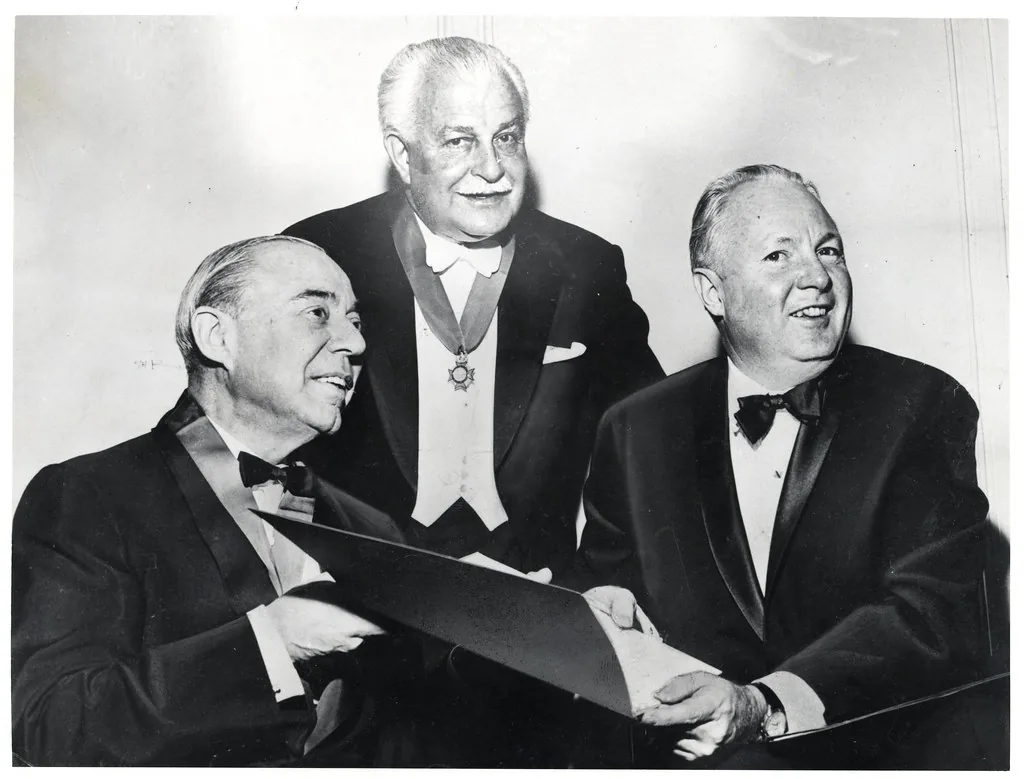
To learn more about these legends and their musical careers, consult this document containing information about the evolution of conducting.
The finest conductors and their artistic legacy
The finest conductors of the 20th century changed music. Their legacy still influences musicians today. Arturo Toscanini and Herbert von Karajan are among the best known for their distinctive styles.
Arturo Toscanini and his innovative vision
Arturo Toscanini was born in Italy in 1867. He conducted famous orchestras such as the New York Philharmonic. His conducting style was energetic and precise.
He was known for his pursuit of perfection. His legacy changed music and continues to inspire today’s conductors.
Herbert von Karajan: the essential conductor
Herbert von Karajan was born in Austria in 1908. He left his mark on the music of the second half of the 20th century. He combined tradition and modernity in his interpretations.
Karajan believed that the movements of his hands could convey a musical vision. His legacy continues to influence today’s conductors.
The evolution of orchestral conducting in the 20th century
The evolution of orchestral conducting in the 20th century was marked by major changes. Conductors became more aware of the importance of gesture. This made conducting more visual and compelling.
Technical and stylistic changes in conducting
Techniques evolved considerably, especially through the use of the baton. It helped conductors mark time precisely and improved coordination among musicians.
Music became more complex. Conductors had to apply greater rigor to interpret it correctly. A conductor could therefore master the orchestra’s “disorder” and ensure a harmonious performance.
Symphony orchestras and their influential conductors
Symphony orchestras became essential to the musical world. Conductors such as Herbert von Karajan transformed their sound. They harnessed new trends to deliver unforgettable concerts.
The personalities of these conductors changed their public image. They became central figures in musical and artistic debates.

| Period | Technical Changes | Impact on Orchestras |
|---|---|---|
| Middle Ages | Use of a staff by the choirmaster | Greater clarity in direction |
| Classical period | Gradual disappearance of the basso continuo | Growing importance of the strings |
| 19th century | Increasing complexity of musical composition | A single conductor leading the orchestra |
| 20th century | Strengthening of the conductor’s role | Transformation of conductors into charismatic figures |
The impact of conductors on contemporary music
Conductors play a very important role in modern music. They change how new music is performed and perceived. Their command of conducting strategies is essential to their success. They organize the musicians and adapt to complex music.
Conducting strategies for musical challenges
In contemporary music, conductors must meet new challenges. They use conducting strategies to address them:
- Identify key moments when the musicians need guidance.
- Manage dynamics and nuances to achieve a balanced interpretation.
- Encourage communication among the musicians to create harmony.
- React quickly to mistakes during concerts.
Their impact as conductors has transformed the role of conducting. Modern conductors bring their own vision, making every concert special and unforgettable.
Conclusion
The conductors of the 20th century left an immense musical legacy. They enriched the classical repertoire and opened new paths. Their passion and creativity established standards that remain influential today.
Orchestral conducting became a constantly evolving art. Conductors such as Herbert von Karajan and Leonard Bernstein introduced innovations. Today, conductors use modern techniques and have become creative visionaries.
Their legacy reflects the complexity of their relationship with musicians. Studies have demonstrated the challenges they face. This dynamic between authority and collaboration enriches orchestral conducting and shapes the future of symphonic music.
FAQ
Who were the greatest conductors of the 20th century?
How important was orchestral conducting to musical evolution?
How did orchestral conducting evolve during the 20th century?
What artistic legacy did conductors such as Toscanini and Karajan leave?
How did conductors influence contemporary music?
Source links
- https://www.renaud-bray.com/Livres_Produit.aspx?id=1446852&def=Grands chefs d’orchestre du XXe siècle(Les),MERLIN, CHRISTIAN,9782283025604
- https://iml.esm.rochester.edu/polyphonic-archive/harmony_archive/issue-no-4-april-1997/index.html
- https://en.wikipedia.org/wiki/Conducting
- https://www.cambridge.org/core/books/abs/conductors-in-britain-18701914/introduction/84FD35F737E6CAE0539110BEC514CD01