
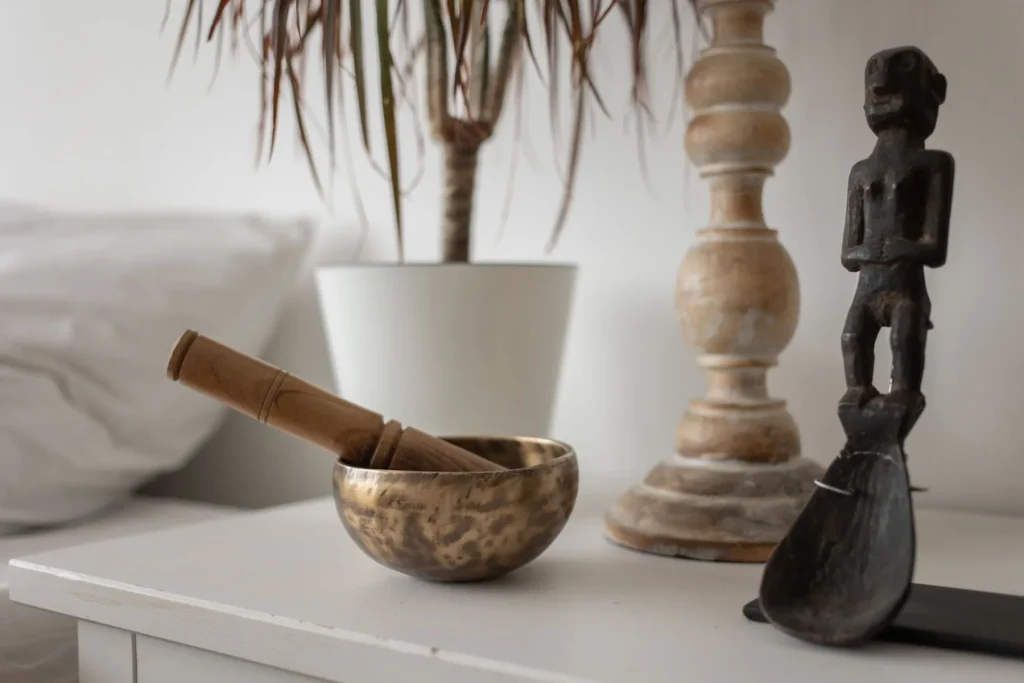
Brief introduction. This topic combines ancient traditions with metallurgical knowledge linked to the Himalayas. It attracts people curious about sound as well as historical researchers.
For centuries, these sacred instruments have fascinated people because of their supposed composition and ritual role. Accounts often associate each metal with a chakra, a planet and a color.
We will clarify the place of the seven metals in tradition, distinguishing popular beliefs from historical evidence. We will also explain why most antique objects are primarily made of bronze, and therefore of copper and tin.
To explore the history and scientific analyses in greater depth, consult the comprehensive guide available here: guide to composition and use.
Objective: to give you a clear foundation for appreciating the vibrational and cultural aspects of your instrument while remaining critical of legends.
Introduction to the ultimate guide to Tibetan singing bowls
Discover why these sound instruments have become so popular in wellness spaces since the 1960s.
Singing bowls have become established in meditation and deep relaxation. They accompany yoga sessions, sound therapy and mindfulness practices.
Each singing bowl has a unique sound signature. This timbre enriches your experience during a session and facilitates inner listening.
Using one requires a mindful approach. Understanding how these metal objects interact with space and the body improves the results.
- They are used both as meditation aids and ritual objects.
- Handcrafted models can be clearly distinguished from industrial products.
- An informed choice is based on sound quality, craftsmanship and origin.
| Aspect | Handcrafted | Industrial |
|---|---|---|
| Sound quality | Rich, complex | Uniform, often higher-pitched |
| Durability | High | Variable |
| Recommended use | Meditation, sound therapy | Decoration, beginners |
To learn more about composition and use, consult this guide to composition and use.
History and origins of Himalayan singing bowls
Before permanent settlement, itinerant blacksmiths hammered copper to make simple utensils. This everyday action laid the foundations for a sound practice far older than its religious use.
Nomadic roots
More than 5,000 years ago, people of the steppes were already hammering copper to make kitchen utensils and ritual objects. These techniques evolved over the centuries.
Blacksmiths tested more complex alloys to meet the needs of shamans. Encounters between Tibetan miners and Nepalese metalworkers accelerated the exchange of craft techniques.
The evolution toward Buddhism
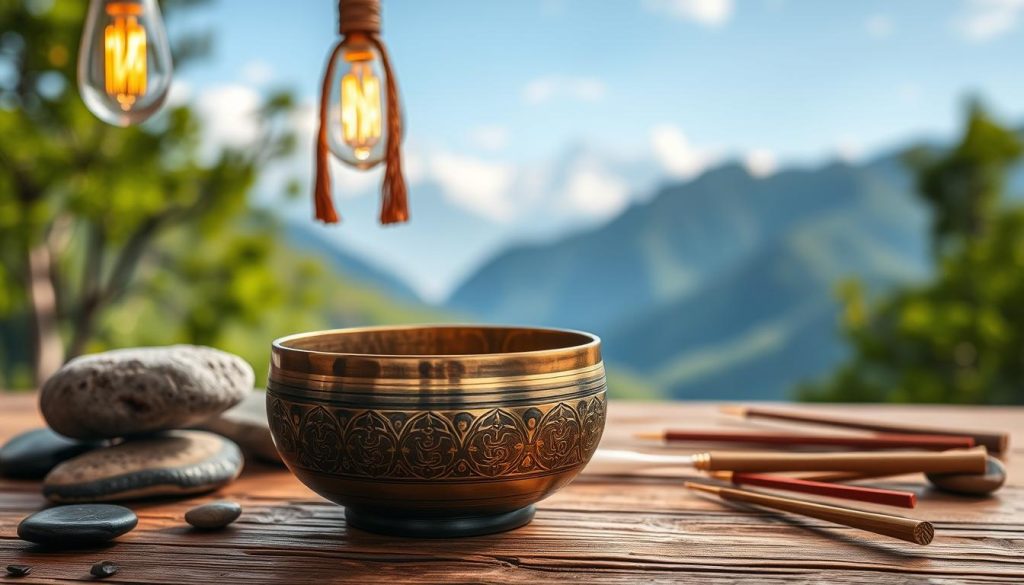
The singing bowl was incorporated into the Buddhist religion after the decline of the Bön faith. Ancient bronze, composed mainly of copper and tin, remained the material basis of the tradition.
Its transformation into a musical instrument is recent; tourism in the 1960s popularized singing bowls in the West. Understanding this history helps us appreciate the continuity of craftsmanship between Bengali artisans and modern practitioners.
| Period | Main use | Material |
|---|---|---|
| Antiquity | Utensils, rituals | Copper |
| Middle Ages | Shamanic objects | Simple alloy |
| Modern Buddhist era | Musical ritual | Bronze (copper + tin) |
For a detailed examination of composition and use, consult this guide to singing bowls.
7-metal Tibetan singing bowl: its true origin and meaning
Stories linking each metal to a planet have created an enduring myth around singing bowls.
The classical theory associates gold with the Sun, silver with the Moon, iron with Mars, copper with Venus, tin with Jupiter, mercury with Mercury and lead with Saturn.
The myth of planets and chakras
These correspondences serve as a symbolic tool. For many practitioners, linking a note to a chakra reinforces intention.
However, modern analyses show that most bowls are primarily made of bronze, dominated by copper and tin, with only traces of other elements.
- Vibration depends mainly on the quality of the alloy and the hammering.
- The myths have been amplified by commercial narratives surrounding singing bowls.
- The connection between a chakra and a note remains useful as an intention practice, even when the chemical composition does not always correspond to it.
| Claim | Historical observations | Scientific evidence |
|---|---|---|
| Presence of seven metals | Traditional accounts and legends | Minimal traces, predominantly bronze |
| Planet–chakra correspondence | Common symbolic tool | No direct chemical connection |
| Effect on vibration | Popular belief | Alloy quality + shape = key factors |
To explore the true composition and history in greater depth, consult this comprehensive composition guide.
Artisanal production: cast bowls versus hammered bowls
Artisanal production involves two very different approaches: hand hammering and mass casting. This choice influences the sound, price and lifespan of the products.
The hammering process
Hand hammering requires a coordinated team. Four workers operate under the direction of a master craftsman to shape each piece.
A head metalworker in Patan can earn about €1,500 per month, well above the average local wage. Sound quality depends on the bronze, the alloy and the precision of the hammering.
The importance of seasonality
Winter is often preferred. The cold is said to promote better molecular cohesion in the metal and improve the repeatability of the work.
Aesthetic finishes
- Cast bowls use limestone molds and are sometimes enhanced to improve their timbre.
- Some products are polished (the Shiny type), while others receive an acid bath to create an antique patina.
- The amount of manual work explains why hammered models remain the aristocracy of bowl making.
| Criterion | Hammered | Cast |
|---|---|---|
| Sound quality | High, complex | Uniform |
| Quantity produced | Limited | High |
| Price | Higher | Affordable |
Metallurgical composition and the reality of bronze
Modern chemical analysis dispels many misconceptions about the true composition of antique bowls.
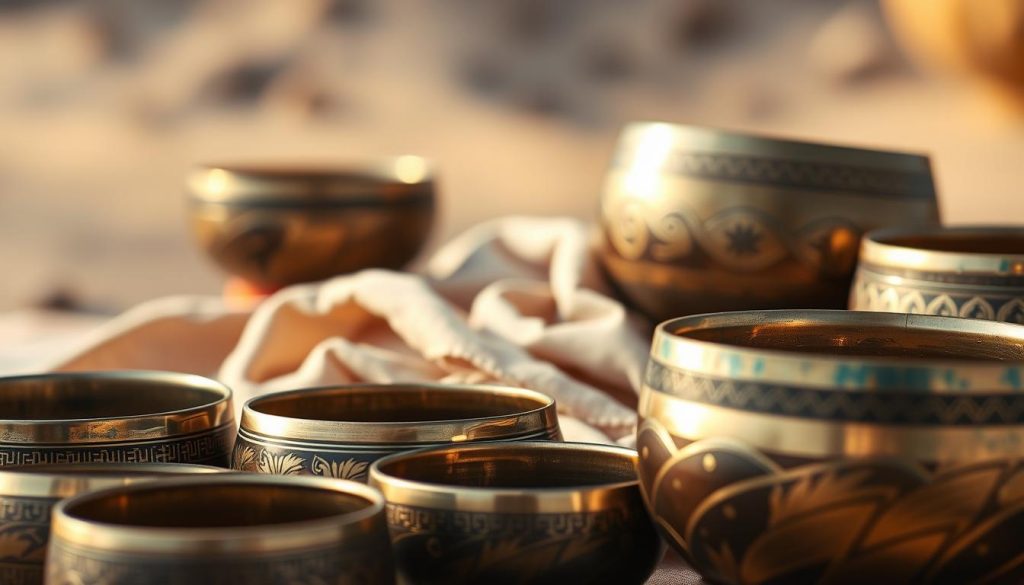
A 2010 Oxford University study of more than one hundred pieces confirms that bronze is the dominant alloy in singing bowls. Measurements show a typical composition of nearly 77% copper and 22% tin, providing clear resonance and excellent durability.
Traces of iron, arsenic or sulfur sometimes occur. These are impurities resulting from artisanal production. They do not impair sound quality when the master founder controls the melting process.
Contrary to popular accounts, the seven metals are not present in significant quantities. Mercury and lead, for example, do not produce good resonance and are rarely present.
| Element | Typical percentage | Role |
|---|---|---|
| Copper | About 77% | Base of the alloy, warmth of tone |
| Tin | About 22% | Rigidity and harmonic sustain |
| Impurities | Normal traces of iron or arsenic |
- Transmission of craftsmanship: mastery of copper and tin is passed down from generation to generation.
- Bell bronze: a brittle metal, but exceptional for music; it can last for millennia if properly maintained.
- Chemical balance: each singing bowl results from precise proportions that release rich harmonics.
Criteria for choosing a Tibetan singing bowl
The right instrument is recognized first by its resonance. Test the vibration by placing the bowl on your open palm so that you do not muffle the sound. This method immediately reveals its sustain and harmonics.
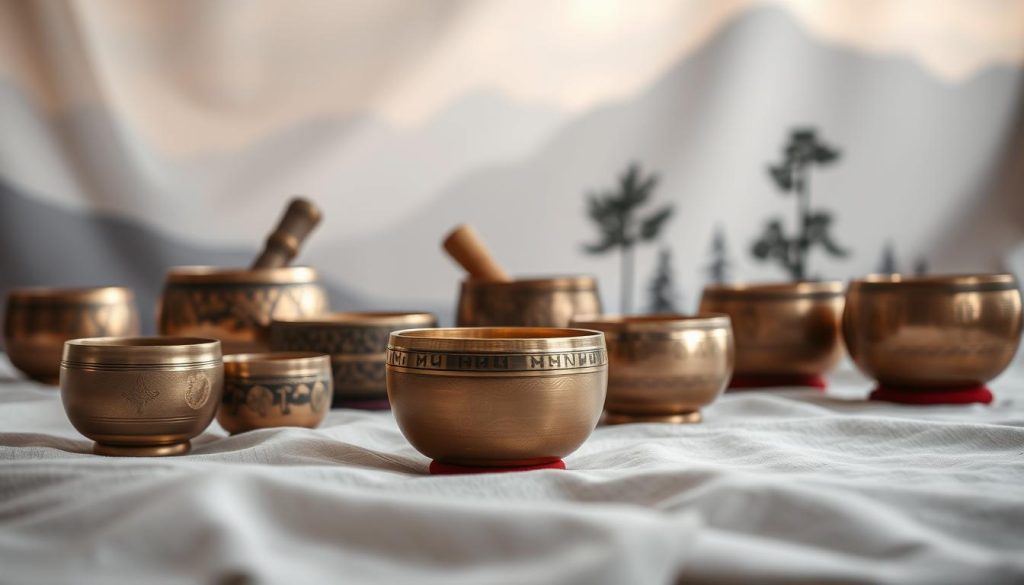
Size influences the note: models measuring from 12 to 30 cm produce very different frequencies. Small bowls favor higher notes, which are useful when working on the upper chakras.
Prioritize quality. A hammered bowl generally offers longer sustain and greater harmonic richness than a cast bowl. The manufacturing method influences the alloy and harmonic sustain, although bronze (copper + tin) remains the most common base.
Choosing a bowl also means choosing with your heart. The emotional connection to its timbre often matters more than the metals listed in its specifications. Try several pieces in a specialist shop; some local retailers allow customers to test them on site.
- Check the seller’s exchange guarantee to reduce risk.
- Adapt your choice to its intended use: sound massage, yoga or ritual punctuation.
- For a practical guide to making your choice, read an article devoted to choosing your bowl.
Playing techniques and sound practice
The way you touch the instrument directly influences its resonance and duration. Good technique allows you to harness the metal’s harmonic richness without forcing it.
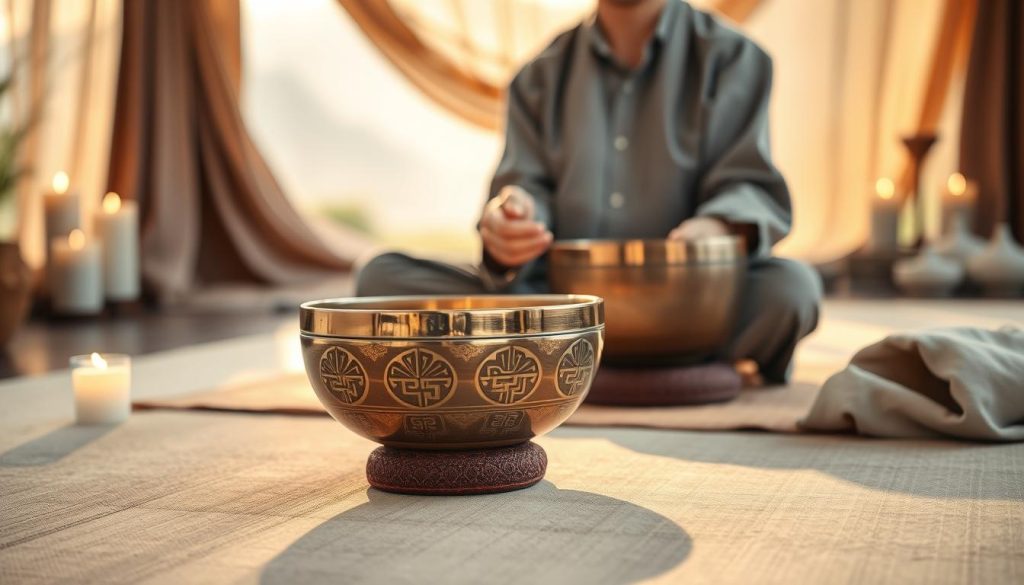
Striking and rubbing
To make the bowl sing properly, maintain constant pressure with the striker while moving it slowly around the rim. Do not hold the striker by its upper end, so that you retain optimal control.
Striking gently with a mallet releases a pure vibration. This is ideal for beginning a meditation session in a quiet place.
Tip: use the leather side of the striker for low notes and the wooden side to reveal midrange and high harmonics.
Chakra harmonization
Harmonization is based on the use of targeted notes: C for the root chakra and B for the crown chakra. The bowls’ vibrational power also makes sound massage possible when a practitioner places them on the body.
For example, a musician may use a large bowl tuned to C to accompany a Pan Drum during a performance.
| Technique | Effect | Practical advice |
|---|---|---|
| Slow rubbing | Long sustain, harmonics | Constant pressure, relaxed hand |
| Gentle strike | Clear attack, pure vibration | Felt mallet, quiet environment |
| Placement on the body | Sound massage | Check the patient’s comfort and safety |
To learn more about using and caring for your instrument, consult this care guide, which details choices, products and best practices.
Care and precautions for use
Caring for your instrument begins with simple, regular steps. Gentle cleaning preserves the sound quality and the metal’s patina.
To remove dust or stains, use whiting or a damp cloth. Wipe it immediately afterward with a dry cloth to limit oxidation.
Avoid harsh products such as Mirror: they often remove the patina and may affect vibration. Prefer natural methods to preserve the bronze and copper surface.
If you are sensitive to prolonged contact with metal, limit direct sound massages. Place a cloth between the skin and the instrument when necessary.
Store your bowls in a stable place between 15 and 25°C. A fabric cover protects them from impacts and preserves the alloy’s crystalline structure.
| Method | Advantage | Disadvantage |
|---|---|---|
| Damp cloth + wiping | Simple, safe for the patina | Requires careful drying |
| Whiting | Cleans without damaging | Gentle rubbing recommended |
| Chemical products (for example, Mirror) | Immediate shine | May alter the surface and vibration |
| Cover + temperature-controlled storage | Protects against impacts and moisture | Takes up a little space |
A regular routine preserves vibrational quality. For comprehensive advice on practice and care, consult this singing bowl user guide.
Conclusion on the vibrational experience
Conclusion on the vibrational experience
At the end of this guide, the vibration of singing bowls emerges as a simple and powerful language.
The singing bowl creates a living connection between a long tradition and our present-day need for calm. The reality of bronze, centered on copper and tin, does not diminish the emotional power of these instruments.
We have clarified the myths surrounding the seven sacred metals to help you choose according to sound quality and practical use.
To learn more, consult a comprehensive guide detailing their history, manufacture and effects on the chakras.
Whether you are a beginner or a practitioner, regular practice reveals their vibrational power and invites inner peace.