

With more than 10 years of experience, the author offers a clear guide to mastering this instrument. This short article explains the hand position, back posture, and patience needed for a calming practice.
In just a few minutes of reading, you will discover how the surface of the cushion and the movement of the tip of the mallet affect the tone. The warmth of the hands and steady friction create a stable sound.
This practical guide also explains the duration and role of each sonic intention, as well as the importance of silence between sounds. To explore the technique step by step, read this detailed guide.
Whether you are a beginner or an experienced practitioner, these simple pointers will help you make your bowl sing and resonate with confidence.
Understanding how a singing bowl works
The physics of vibration shows how an instrument transforms mechanical energy into waves. These waves travel through the air and then through the body, which is composed largely of water.
The body responds: tissues and bones vibrate, and these movements may affect muscular tension. A steady note helps regulate breathing and create mental space.
The physics of sound vibrations
When the bowl is rubbed or struck, its wall begins to oscillate. The emitted frequencies stimulate different areas of the body and create natural resonance.
Therapeutic benefits and relaxation
A session can affect the nervous system. It offers a simple way to unwind after a busy day.
- Breathing regulation through the emitted note.
- Release of tension through bodily resonance.
- Improved mental space and concentration.
| Effect | Mechanism | Expected result |
|---|---|---|
| Relaxation | Tissue resonance | Reduced stress |
| Breathing | Stable note | Slower rhythm |
| Nervous-system balance | Auditory stimulation | Feeling of calm |
To explore the theory and benefits further, read a detailed guide or explore some soothing playlists to accompany your sessions.
How to use a Tibetan singing bowl: essential techniques for beginners
Place the instrument on your bare hand without gripping it, allowing the first note to ring freely. This position prevents the vibration from being muffled and promotes good resonance.
First step: master the strike. A gentle, controlled tap lets you hear the object’s true timbre. Repeat the motion once or twice to remember the point of impact.
Second step: learn the mallet’s circular rubbing motion. This movement makes the bowl sing and creates a sonic intention. The note helps stabilize your breathing and mental space during the session.
- Hold the bowl on your open hand without gripping the cushion.
- Begin by striking it, then use the rubbing technique.
- After each sound, let silence mark the passage of time.
| Action | Purpose | Immediate effect |
|---|---|---|
| Holding it on the hand | Free the vibration | Clear note |
| Controlled strike | Establish the tone | Stable response |
| Rubbing | Sustain the note | Relaxation and concentration |
Tibetan singing bowls are traditionally said to be made from an alloy of seven metals. This composition produces a rich note that promotes bodily relaxation. For step-by-step guidance, read this detailed guide.
Adopting the ideal posture for a peaceful practice
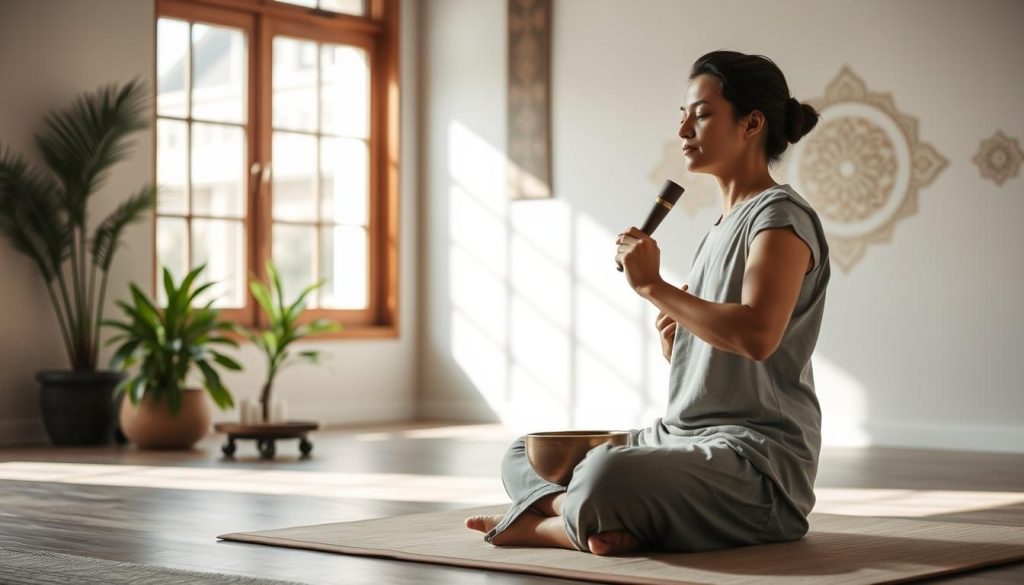
A simple, relaxed posture helps the instrument express its full resonance. Sit upright without becoming tense so that the vibration remains free.
Choosing a support that lets the sound ring freely
Support and cushion: a ring-shaped cushion or small pouf stabilizes the Tibetan bowl and prevents its surface from being muffled. This allows the sound to propagate naturally.
Hands and hand position: keep your hands relaxed. A tense hand blocks the vibration. Place the bowl on your open palm or on the cushion.
- Adopt a stable posture, either seated normally or on a cushion.
- Spend a few minutes adjusting your position before the session.
- Good body alignment promotes energy flow and comfort.
| Element | Reason | Effect |
|---|---|---|
| Suitable support | Frees the surface | Longer vibrations |
| Upright posture | Better breathing | Relaxed body |
| Relaxed hands | No muffling | Pure, stable sound |
Mastering the striking technique
A well-placed strike immediately reveals the instrument’s pure tonal color.
Where should you strike? Tap the sloping edge halfway up the bowl to obtain a clear, percussive sound.
How to strike: give the rim a crisp tap while keeping your wrist flexible. Do not hold the mallet against the wall after impact, as this would muffle the resonance.
Practical tip: place the object on a cushion or your open hand. This support frees the vibrations and allows the bowl to ring properly.
- Precise strike = clear, immediate note.
- A good strike creates the ideal soundscape for beginning or ending a session.
- Tibetan singing bowls respond best to a focused impact; the body can then feel the entire vibration.
Learning the rubbing technique to make the bowl sing
Moving from striking to rubbing transforms an impulse into a continuous song. Begin by positioning the wooden mallet at a 90-degree angle to the outer wall.

The mallet’s circular movement
Trace a steady circle with the tip of the mallet. Keep your wrist flexible and the movement fluid.
Maintaining constant pressure on the wall
Apply even pressure. Uneven force quickly stops the vibrations and breaks the note.
Controlling the rotation speed
The speed should remain constant. If you move too quickly, the sound becomes choppy.
Patience pays off: it may take several rotations before the Tibetan bowl begins to sing.
- Maintain the 90° angle and rotate without accelerating.
- The warmth generated by contact improves grip and prolongs resonance.
- Allow periods of silence between sounds so the note can stabilize.
| Element | Best practice | Effect |
|---|---|---|
| Mallet angle | Constant 90° | Optimal friction |
| Pressure | Even | Stable vibration |
| Speed | Constant and not too fast | Continuous singing tone |
Solving common difficulties during practice
When the bowl does not respond, the cause is generally the position of the hand or the speed of the movement. Check that your posture is relaxed and that you are not moving too quickly around the rim.
If the sound stops, maintain constant pressure on the wall. This prevents the vibration from ending prematurely and helps the body feel the resonance.
Use the strike as an initial impulse if you get stuck. A gentle tap clarifies the note and makes the subsequent rubbing easier. Also make sure your hand is not gripping the object: pressure suppresses the vibration.
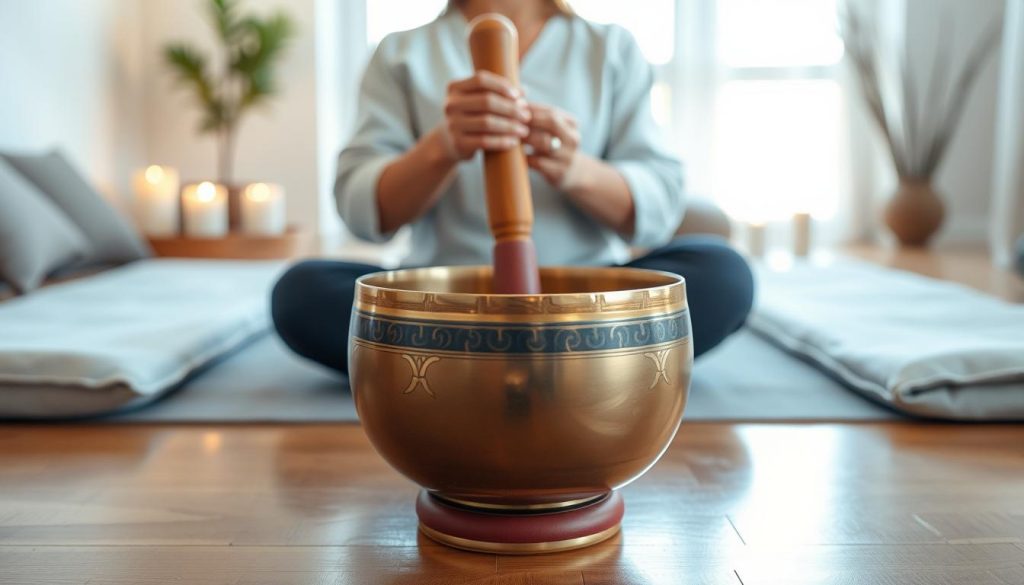
Poor posture or an irregular movement often produces unpleasant sounds. Adjust your position, try a cushion to stabilize the support, and observe periods of silence between sounds.
- Quick test: change the speed, relax your hand, and try striking again.
- For complete instructions, consult this detailed user guide.
Adapting your practice to your relaxation goals
Adjust the duration and intention of your session according to the desired relaxation effect.
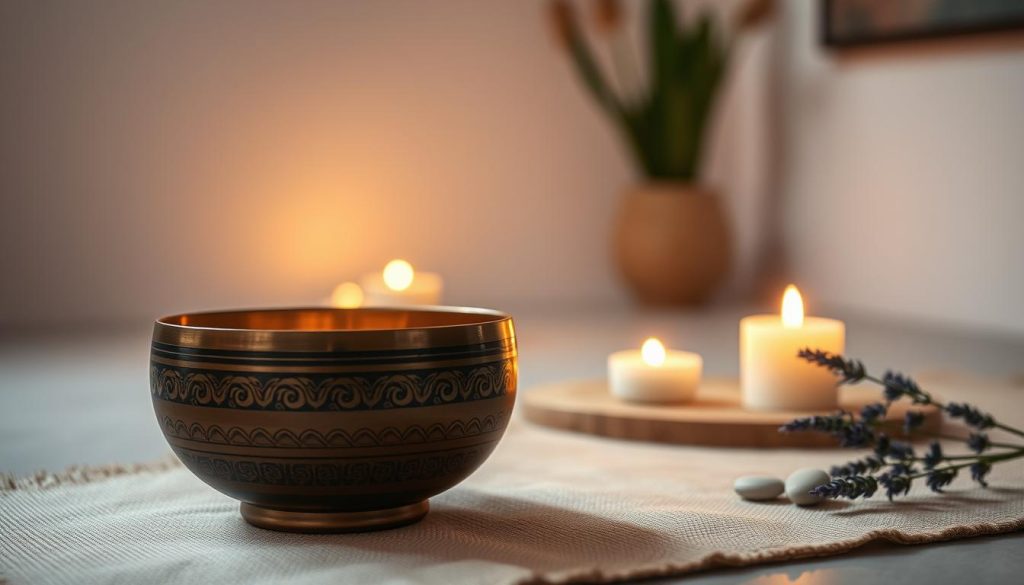
For deep relaxation, plan a long session of 40 to 60 minutes. This gives the body time to relax and allows the note to occupy the entire space.
A short 20-minute session is enough to refocus the mind. The intention you bring to the practice structures the time and creates a calm space.
Making the bowl sing while breathing slowly can promote cardiac coherence. The speed of the rubbing and the strike should remain constant to sustain the note.
“Listen to your body: it will tell you when to stop.”
- Tibetan singing bowls are suitable for both meditation and tension therapy.
- Alternate periods of sound and silence to let the note take effect.
- Respect how you feel: the duration depends on what you need that day.
Caring for your instrument to preserve its vibration
Taking care of your instrument ensures stable resonance during every session. Regular maintenance preserves the quality of its vibrations and prevents dust from dulling the note.
Clean the surface with a soft, dry cloth. Avoid abrasive products that could scratch the wall and alter its acoustic response.
Always store your bowl on a cushion or in a protected place. This reduces impacts and preserves the integrity of the metal.
When cleaning, move your hand at a slow, controlled speed. Sudden movements may damage the finish and alter the timbre.
In summary: careful maintenance, a soft cloth, a suitable cushion, and slow movements extend the life of your bowls and enhance the beauty of their song.
For practical, detailed advice, read these 5 tips for caring for your bowl.
Exploring the distinctive qualities of crystal bowls
Quartz crystal releases a clear frequency that penetrates deeply into the body and the surrounding space.
Crystal bowls offer a different relaxation experience. Their note is exceptionally pure and lasts longer than that of a metal-alloy bowl.
The rubbing technique is similar to the familiar method. However, the quartz surface requires precise intention to make the bowl sing correctly.
A session can be intense and may need to be limited to a few minutes for beginners. These instruments are often chosen for chakra work and to encourage conscious breathing.
- Deeper experience: the note travels through the body more effectively.
- Technique: a similar movement, with close attention to the surface.
- Duration: begin with short sessions while you become accustomed to it.
| Characteristic | Effect | Advice |
|---|---|---|
| Sound | Very pure and long-lasting | Listen before extending the session |
| Rubbing | More sensitive | Use a slow, deliberate movement |
| Use | Chakra work | Limit the duration at first |
Conclusion
This guide has given you the keys to approaching the practice with confidence. Keep these simple pointers in mind as you progress step by step.
A regular session of a few minutes each day promotes relaxation of the body and refines your ability to listen to sound.
Incorporate these small rituals to enjoy the benefits of Tibetan singing bowls and learn to make each bowl sing gently. To explore their use before bedtime, discover a sleep session.
Thank you for reading this article. Return to this guide often and let the practice transform your quiet moments.