
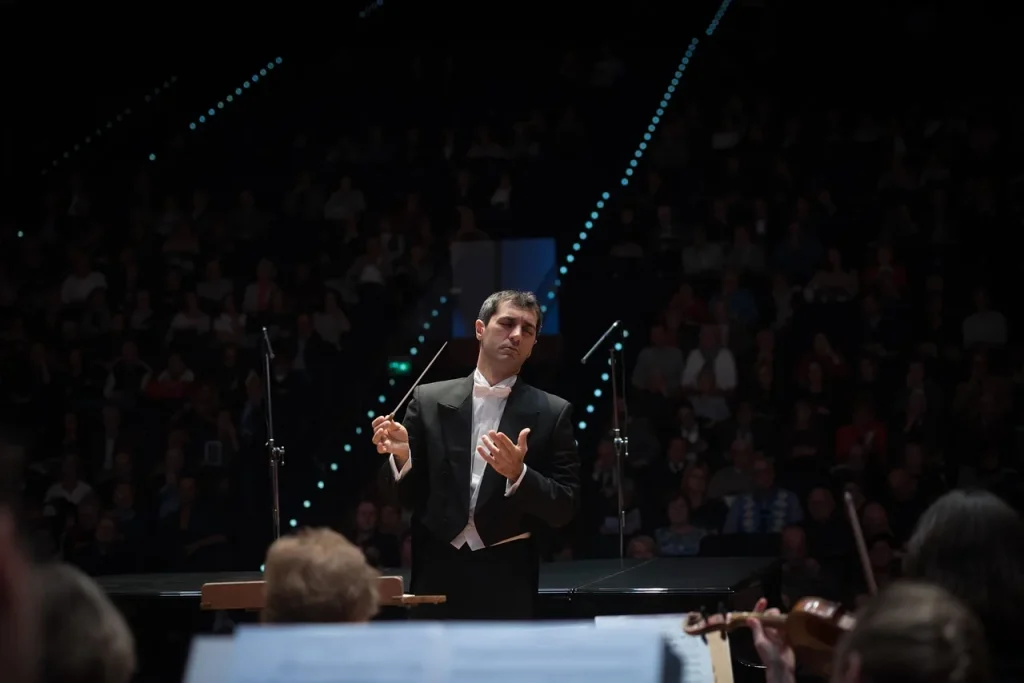
Soundpainting is an artistic technique that transcends cultural boundaries, connecting artists around the world through a shared visual and gestural language. In soundpainting, gestures are used as means of communication and artistic expression, allowing musicians, dancers, and actors to collaborate and improvise together.
Whether they are in Asia, Europe, or the Americas, artists use the same universal gestures to create a unique artistic experience. Soundpainting highlights cultural diversity and art’s ability to transcend differences and geographical barriers.
What is soundpainting?
Soundpainting is a form of collective artistic creation that allows artists to communicate and improvise interactively. It is a universal gestural language used by the conductor, known as the soundpainter, to direct performers such as musicians, dancers, and actors in creating a performance in real time.
Soundpainting is a multidisciplinary practice that combines music, dance, and theater to create a unique and captivating sensory experience for the audience. Collective creation is a key feature of soundpainting, enabling artists to work together to produce a truly collaborative work of art.
In soundpainting, the conductor gives visual instructions through specific, often simple gestures that performers can easily understand. These gestures may include arm movements, head movements, pauses, breathing movements, and much more. Each gesture has a meaning or corresponds to a direction understood by the performers, helping to create the performance in real time.
Soundpainting is an artistic practice that enables artists to communicate and collaborate creatively using a universal visual language. It is a living example of how the arts can transcend cultural and linguistic barriers to create a unique, shared experience.
Soundpainting gestures
Gestures lie at the heart of soundpainting and are used to communicate instructions to the artists involved in the performance. These gestures are universal and can be understood by artists from different countries and cultures. The same gestures used during a soundpainting performance in France can, for example, be used during another performance in China. This creates a shared language for artists.
Soundpainting gestures are divided into categories, each with a specific meaning. The first category includes gestures for beginning and ending a work. For example, when the conductor makes a start gesture, it tells the artists that the performance is beginning. Similarly, an ending gesture indicates that the performance is over.
| Gesture category | Examples of gestures |
|---|---|
| Beginning and ending gestures | Start gesture, ending gesture |
| Section gestures | Music section gesture, dance section gesture |
| Instrument gestures | Brass gesture, percussion gesture |
| Character gestures | Comic gesture, tragic gesture |
Another category includes gestures used to indicate the different sections of the performance. Using these gestures, the conductor can tell the artists when the musical section ends and when the dance section should begin.
Gestures can also be used to indicate specific instruments. For example, a brass gesture tells a trumpet player to begin playing. Similarly, a percussion gesture can tell a percussionist to begin playing.
Finally, character gestures are used to indicate the specific emotion or character of the performance. For example, a comic gesture can indicate that the performance should be funny, while a tragic gesture can indicate that it should be darker.

Soundpainting in different cultures
As a universal artistic language, soundpainting has resonated with many cultures around the world. Although North America and Europe were the first regions to adopt this form of artistic expression, soundpainting quickly spread to different parts of the world, taking on a unique character in every region where it is practiced.
In Africa, soundpainting has found a place within ancient musical traditions, where gestures are used to direct musical ensembles in a synchronized manner. In Asia, soundpainting has been used to connect different forms of artistic expression through clear gestures that synchronize dance, music, and theater.
In Australia, soundpainting has resonated with Aboriginal artists, who use it as a means of communicating with nature. In South America, soundpainting gestures are used to incorporate elements of folklore, dance, and traditional music.
These examples reflect only a few of soundpainting’s cultural interpretations, demonstrating its ability to transcend linguistic and cultural barriers. Whatever the artistic context in which it is used, soundpainting remains a universal form of expression that unites artists through a shared language.
International soundpainting gatherings
Soundpainting is not only an artistic technique but also an international community of artists who meet regularly to share their passion and expertise. International soundpainting gatherings are major events in the life of the soundpainting community, bringing together musicians, dancers, actors, and multidisciplinary artists from around the world.
These gatherings provide opportunities to take part in training workshops, conferences, concerts, and performances. Participants present their latest work and discover the newest trends and practices in soundpainting. International soundpainting gatherings offer artists a unique opportunity to share their passion and creativity, make new friends, and discover new cultures.
International soundpainting gatherings take place in various locations around the world, including France, the United States, Italy, and Australia. These events attract artists from all backgrounds, who often travel long distances to attend.
| Country | Year | Event name |
|---|---|---|
| France | 2019 | International Soundpainting Gathering |
| United States | 2019 | North American Soundpainting Festival |
| Italy | 2020 | Lorenzo Brusci Soundpainting Festival |
| Australia | 2021 | Melbourne Soundpainting Festival |
International soundpainting gatherings play an important role in promoting and disseminating soundpainting around the world. They also allow artists to become involved in international projects and establish long-term artistic collaborations.
The evolution of soundpainting in the contemporary world
Since its beginnings in the 1970s, soundpainting has evolved continuously, constantly adapting to new musical styles and modern technologies. Today, this artistic creation technique continues to reinvent itself, exploring new horizons and pushing the boundaries of contemporary art.
One of the most fascinating aspects of soundpainting’s evolution is the integration of new media and technologies. Artists now use synthesizers, samplers, computers, and even virtual instruments to create new and unique sounds. This allows greater artistic freedom, encouraging experimentation and innovation in live musical creation.
In addition to its use in musical creation, soundpainting is increasingly employed in other artistic disciplines, particularly dance and theater. Soundpainting gestures are increasingly recognized as a key element of communication between artists, enabling them to collaborate and express themselves in a unique and creative way.
Ultimately, the evolution of soundpainting reflects the nature of art itself: always in motion, always changing, always seeking new forms of expression and new paths. For artists around the world, soundpainting remains an essential tool for communicating, creating, and innovating in music and the performing arts.
Conclusion: the universal art of soundpainting
Throughout this article, we have seen how soundpainting is a universal art form that transcends cultural boundaries. The gestures used in this artistic practice make it possible to communicate and create together, regardless of the artists’ origins.
Soundpainting brings together musicians, dancers, and actors who work collaboratively to create unique and immersive performances. This improvisational technique allows artists to express themselves freely while working closely with one another.
International soundpainting gatherings give artists from around the world an opportunity to meet and collaborate, thereby creating a global network of passionate creators. Soundpainting is not only an art form but also a way to bring people together and celebrate cultural diversity.
Soundpainting is therefore a remarkable example of how art can transcend cultural barriers and build bridges between people. The beauty of this artistic practice also lies in its ability to evolve and adapt to modern times while preserving its universal essence.