
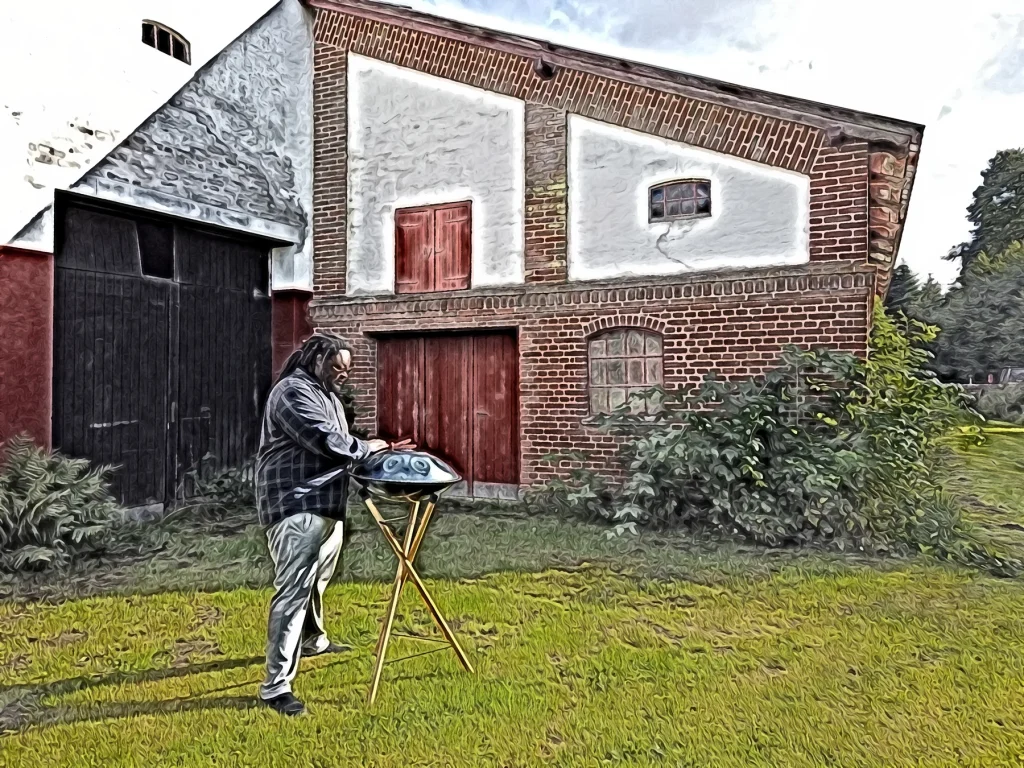
The handpan is a fascinating instrument that combines melody and harmony. Its price ranges from €700 to €3,500 depending on the quality and maker. Choosing the right model requires care, especially when buying online.
The risks include counterfeits and tuning problems. To avoid them, choose a certified craftsperson. The scale, materials, and sustain are essential criteria to check.
ZenaPan, for example, steers 90% of beginners toward D minor, an ideal key for getting started. Take the time to compare the options before making your final choice.
Introduction to the handpan
Created in Switzerland in 2001, the handpan captivates players with its unique design and enchanting sounds. Created by PANArt, this instrument combines two steel shells to form a harmonious sphere. Its notes, arranged in a circle, deliver exceptional sound quality that is ideal for meditation.
What is a handpan?
The handpan is a melodic percussion instrument. Its oval shape and hand-played technique make it intuitive. Unlike traditional drums, it produces precise notes without requiring any knowledge of music theory.
Inspired by the Hang drum, it has evolved to become more accessible. Nitrided steel provides excellent durability. Each model is tuned to produce prolonged vibrations.
Why choose this instrument?
The handpan is perfect for music beginners. Learning it does not require an excessive amount of time. Therapists use it for its relaxing benefits.
Compared with other percussion instruments, it offers rare versatility. Whether used for improvisation or composition, it adapts to every style. Its soothing timbre makes it an ally against stress.
Understanding the different types of scales
A handpan‘s sonic richness lies in its scale, its true musical signature. Each key creates a unique atmosphere, from radiant joy to deep melancholy. Choosing wisely means personalizing your experience.
Major or minor scales
Major scales, such as D major, evoke bright, energizing emotions. Ideal for lively melodies, they generally contain 8 to 10 harmonious notes.
By contrast, minor scales, such as D minor, offer a more introspective sound. Their soothing effect makes them popular in meditative or therapeutic music.
Eastern and special scales
Hybrid scales such as Celtic Minor or Hijaz add an exotic touch. Their unique intervals inspire original compositions, making them perfect for sonic explorers.
Remember to listen to samples before buying. Consistency between the notes is crucial for avoiding dissonance.
The D minor scale: ideal for beginners
D minor (Kurd) is favored by 90% of beginners. Its diatonic structure simplifies learning and encourages improvisation. It is a safe choice for a first handpan.
Versatile, it is equally suited to studio recordings and live sessions. Its warm timbre appeals to novices and professionals alike.
Choosing the right frequency: 432 Hz or 440 Hz
432 Hz or 440 Hz: a choice that goes far beyond mere vibrations. The frequency determines the emotion conveyed by your instrument. Some musicians swear by 432 Hz for its natural resonance, while others prefer 440 Hz, the international standard.
Acoustic differences
432 Hz vibrates in harmony with natural cycles, such as those of water. Studies show its soothing effect on the human body. It is ideal for meditation or music therapy.
Adopted by orchestras, 440 Hz offers brighter sound quality. Its vibrations per second (440 versus 432) create a different energy, perceptible even to untrained listeners.
- 432 Hz: greater relaxation, used in therapy.
- 440 Hz: compatibility with other instruments.
Impact on group playing
If you play in a group, 440 Hz is the natural choice. Most instruments are tuned to this frequency. A handpan tuned to 432 Hz could create dissonance.
For solo sessions, try both. The sound quality of 432 Hz can turn a simple melody into an immersive experience.
“432 Hz acts like a tuning fork for the nervous system, reducing stress within minutes.”
The importance of sustain
The resonance duration determines your instrument’s sound quality. Balanced sustain allows the notes to vibrate harmoniously, creating acoustic immersion. It is a key criterion when choosing a good handpan.

Definition and measurement
Sustain is the amount of time a note continues to resonate after being struck. To measure it, use a stopwatch: 8 to 12 seconds is optimal.
Watch out for unwanted resonance if the sustain is too long. Materials such as nitrided steel also affect this duration.
Ideal sustain for beginners
Beginners benefit from medium to long sustain. ZenaPan recommends this range to make rhythmic learning easier. Sustain that is too short limits expression, while too much can blur the notes.
- Meditation: choose long sustain (12 seconds or more).
- Rhythmic styles: medium sustain (8 to 10 seconds) prevents overlap.
“Well-calibrated sustain is the hallmark of a properly tuned handpan.”
Evaluating sound quality
The musical experience depends on flawless sound quality. A well-tuned handpan produces pure vibrations without interference. Two criteria are essential for achieving this: the balance of the notes and control of crosstalk.
Note balance
Each tone field should vibrate evenly. An imbalance results in muffled or overly sharp sounds. Test each note manually:
- Strike it gently with your fingers.
- Listen to the sound’s duration and stability.
- Use apps such as Spectroid to analyze the frequencies.
“An unbalanced note disrupts the overall harmony. A good maker acoustically isolates each area.”
Crosstalk problems
Crosstalk occurs when notes interfere with one another. It is common in low-cost models. To avoid it:
| Brand | Quality control | Crosstalk |
|---|---|---|
| ZenaPan | Strict | Low |
| Pantheon Steel | High | None |
| Budget models | None | High |
Choose a real-world trial whenever possible. The harmonics should remain clear, even during fast playing.
Manufacturing materials
Two types of steel dominate handpan manufacturing: nitrided steel and stainless steel. The choice affects sound quality, durability, and even ease of learning. A good balance between strength and acoustics is essential.
Comparison: nitrided steel and stainless steel
Nitrided steel produces a warm, deep sound favored by professionals. Its care, however, requires greater diligence: monthly cleaning with a special oil is necessary to prevent oxidation.
Stainless steel stands out for its resistance to humidity, making it ideal for maritime climates. Its slightly brighter timbre suits rhythmic styles. It costs 15% to 20% less than nitrided steel.
| Criterion | Nitrided steel | Stainless steel |
|---|---|---|
| Resonance | Warm and prolonged | Clear and precise |
| Weight | 8% to 10% heavier | Lightweight |
| Cost | Higher | Economical |
| Resistance | Sensitive to humidity | Water-resistant |
Advice for beginners
New players are generally better off choosing stainless steel. Its durability makes it more forgiving of maintenance mistakes. Its lower weight also makes it easier to carry while traveling.
For frequent travelers, models such as the ZenaPan Voyager combine the advantages of both materials: a stainless-steel shell and nitrided central notes for harmony.
“Since 2020, 60% of our beginner customers have chosen stainless steel. Its versatility meets 90% of their initial needs without compromise.”
Optimal number of notes
Choosing the right number of notes is crucial to a balanced musical experience. Too few limits creativity, while too many can make learning overwhelming. A balance between melodic richness and ease of use is essential.
Handpans with 9 to 10 notes
Configurations with 9 or 10 notes are ideal for beginners. They offer enough range to explore complex melodies without overwhelming the player. Below 9 notes, the melodic limitations become noticeable.
Ergonomics is another key consideration. Compact models are better suited to smaller hands, while larger playing surfaces promote precision.
Double-sided models
Double-sided models, such as the 17-note ZenaPan, double the creative possibilities. One side is dedicated to bass notes and the other to treble notes, enabling rich compositions. However, their greater weight—up to 5 kg—reduces their portability.
- Advantages: broader sound palette, adaptability to varied styles.
- Disadvantages: longer learning curve, higher cost.
“A handpan that grows with you supports your progress. Start with 9 notes, then move to a double-sided model after 2 to 3 years of practice.”
For fluid playing, try several configurations. Sound quality matters more than the number of notes: a well-tuned 9-note model outperforms a mediocre 17-note model. Think about your long-term plans before choosing.
Budget and price range
Investing in a quality instrument requires careful budget analysis. Prices vary considerably depending on origin, materials, and the maker’s reputation. Here is how to anticipate your expenses.

Average prices by quality
An entry-level handpan made in Asia costs between €700 and €1,200. High-end European models can reach €3,500. The warranty plays a key role in this difference.
| Brand | Average price | Warranty |
|---|---|---|
| ZenaPan | €2,500 | 5 years |
| Pantheon Steel | €3,000 | 10 years |
| Asian models | €900 | 1 year |
Accessories such as the case and stand add €100 to €300. Also allow €150 per year for maintenance and retuning.
Financing options
Several options can reduce the initial investment:
- Financing in 6 interest-free installments (ZenaPan).
- Buying second-hand (20% cheaper on average). Check the condition of the notes.
- Negotiating with local makers: some offer volume discounts.
“An excessively low price often conceals tuning defects. Choose a transparent maker.”
For professionals, specialized insurance costing around €50 per year covers damage while touring.
Choosing a reliable maker
A maker‘s reputation directly affects your instrument’s lifespan. Choose certified craftspeople, such as those with TÜV certification, which guarantees transparent manufacturing processes. Rigorous quality control helps prevent tuning or material defects.
Reputable European brands
Among the leading brands, ZenaPan and Pantheon Steel stand out for their craftsmanship. Their limited production ensures meticulous attention to every acoustic detail.
| Brand | Country | Specialty |
|---|---|---|
| ZenaPan | France | Balanced scales |
| Pantheon Steel | Germany | Prolonged sustain |
| Ayasa | Spain | Ergonomic design |
Warranty policies compared
Warranties range from 1 to 10 years depending on the maker. Choose a warranty of at least 2 years that covers manufacturing defects. Some makers, such as Pantheon Steel, even include a free retuning service.
- Key criteria: TÜV certification, validated acoustic tests, traceable materials.
- Warning signs: generic reviews, no legal notices on websites.
“A good instrument maker will always provide raw recordings of the instrument before purchase.”
For second-hand handpans, check the maintenance history and favor sellers who offer a trial period.
Precautions when buying online
Buying a handpan online requires essential checks. Uncertified sellers and fraudulent websites can compromise your purchase. Here is how to navigate safely.

Identifying reliable sellers
Favor specialist platforms such as Zikinf or Greenmusicians. These sites verify the authenticity of listings. Be wary of offers that seem too good to be true.
Always check:
- Customer reviews, looking for verified comments.
- HD photos taken from every angle.
- The presence of an invoice and certificate of authenticity.
“A serious seller will always provide raw audio recordings of the instrument before any transaction.”
Understanding return policies
The statutory withdrawal period is 14 days in France. Make sure the seller complies with this rule. Some offer extensions of up to 30 days.
To maximize your protection:
- Use PayPal to benefit from its dispute-resolution service.
- Keep all records of communications, such as emails and screenshots.
- Require tracked delivery with a signature.
In the event of a dispute, platforms such as Greenmusicians offer free mediation. Act quickly to secure a refund.
Inspecting a handpan before purchase
A thorough inspection of a handpan ensures its quality and durability. This crucial step reveals potential defects that cannot be seen in photos. Here is how to proceed methodically.
Visual inspection: key points
Start by examining every inch of the instrument. Use a flashlight to spot:
- Dents or deformation affecting resonance.
- Deep scratches, which indicate intensive use.
- Rust marks, which reveal a maintenance problem.
Check that the serial number matches the one on the certificate of authenticity. A discrepancy may indicate a counterfeit.
“90% of second-hand handpans have small dents. Only those deeper than 2 mm genuinely affect the sound.”
Performing acoustic tests
Acoustic tests determine the instrument’s sonic health. Proceed as follows:
- Strike each note with a rubber mallet.
- Measure the vibration duration with the Spectroid app.
- Compare the frequencies using an electronic tuner.
A deviation greater than 3 Hz requires retuning, which costs an average of €150.
For remote purchases, request a test video showing the instrument from every angle. The key points to observe are:
- Slow playing on every tone field.
- A demonstration of sustain lasting at least 8 seconds.
- No unwanted noise.
Buying new or second-hand
The choice between new and used often divides musicians. Each option has specific advantages depending on the budget and desired experience. A thorough analysis is essential to avoid unpleasant surprises.

Advantages of buying second-hand
The second-hand market saves an average of 30% off the original price. Some discontinued models even become collectors’ items, such as the earliest PANArt instruments.
For tight budgets, it is an opportunity to access premium materials such as nitrided steel at a lower cost. Well-maintained instruments retain 90% of their sound quality after 5 years.
| Criterion | New | Second-hand |
|---|---|---|
| Average price | €2,000 | €1,400 |
| Warranty | 5 years | 1 year (transferable) |
| Availability | 3 to 6 months | Immediate |
Risks to avoid
The main danger is irreversible tuning damage. Always check:
- That there are no major impacts, with dents deeper than 2 mm.
- The stability of the notes with an audio test.
- The maintenance history, supported by invoices.
Favor specialist platforms such as Zikinf to benefit from legal protections. Transactions between private individuals require mandatory shipping insurance.
“A handpan under 3 years old with an invoice is often better than a low-end new model.”
For rare models, consult a network of experts before the purchase. Some sellers offer 7-day trial periods, which can be a decisive criterion.
Care and maintenance
Taking care of your handpan ensures optimal sound quality. Rigorous maintenance prevents wear and protects your investment over the long term. Here are the essential practices.
Regular cleaning
Monthly cleaning prevents oxidation and residue buildup. Use:
- A slightly damp microfiber cloth.
- A special oil, such as linseed oil, for nitrided steel.
- A moisture-resistant storage case.
Avoid abrasive or alcohol-based products. Consult experts to learn about proven maintenance methods.
Professional retuning
Annual retuning keeps the notes in tune. It costs an average of €150 to €300 depending on the craftsperson. The following signs indicate that work is needed:
- Dissonance between notes.
- Sustain reduced by more than 30%.
- Dents affecting resonance.
“A well-maintained handpan retains 90% of its sound quality after 5 years.”
Store the instrument in a temperature-controlled room between 18 and 22°C to minimize deformation. Plan seasonal checks of the seams and notes.
Conclusion: making the right choice
Finding the perfect instrument requires a methodical approach. Prioritize sound quality, sustain, and materials suited to your playing. These criteria ensure a harmonious experience.
Avoid common pitfalls: neglecting an in-person trial, choosing an overly complex model, or ignoring the maker’s reputation. A thoughtful choice will serve you over the long term.
To refine your decision, try several scales and consult feedback from experienced users. Platforms such as Zikinf offer comprehensive guides for comparing the options.
Finally, remember that a good handpan becomes a musical partner. Take the time to find the one that resonates with you.