
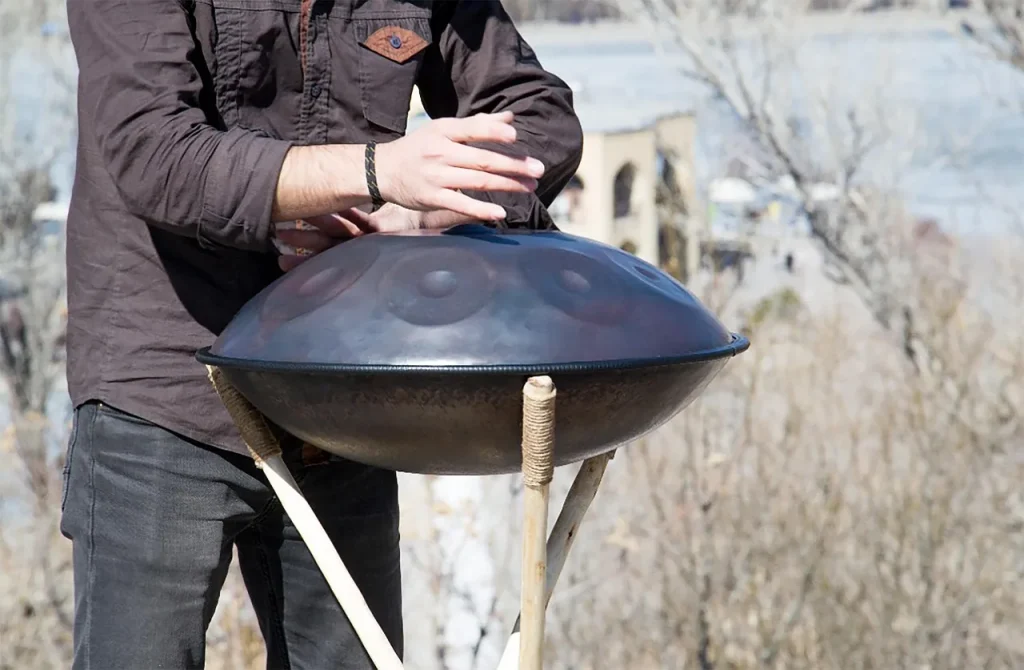
Buying a used handpan is an appealing alternative for musicians. According to a recent study, 72% of buyers say they are satisfied with their purchase. Savings can reach 50% compared with buying new, with almost immediate delivery.
This market offers undeniable benefits, but it requires particular care. The quality of the instrument must be checked carefully to avoid unpleasant surprises. Nearly 15% of online transactions encounter problems, often because of stolen photos or hidden defects.
For a successful purchase, it is best to know the essential criteria to examine. Our complete guide will help you identify common pitfalls and make the most of this opportunity.
Why choose a used handpan?
Choose a quality instrument without waiting for months. Unlike new handpans, which are often subject to long manufacturing lead times, used models offer a quick and economical alternative.
Significant savings
Buying a second-hand instrument can save you up to 50%. These savings are ideal for musicians who want to invest without breaking the bank.
Access to rare models
Some limited editions or discontinued series circulate only on the second-hand market. This is an opportunity for collectors.
Immediate availability
There is no need to wait 6 to 18 months. Platforms such as Zikinf or Greenmusicians offer stock verified in real time. Find out why a good deal is not always a trap.
Used instruments can be excellent if they are selected carefully. Express delivery and streamlined procedures make the experience easier.
The 5 essential checks before buying
Before finalizing your purchase, five key points deserve your attention. According to a Fnac study, 63% of disputes concern tuning. A thorough inspection prevents disappointment.

- Note balance: each area should vibrate harmoniously.
- Crosstalk: check that there is no interference between notes.
- Materials: favor nitrided steel for its durability.
- Frequency: 440 Hz is standard, but some models use 432 Hz.
Essential tools: a chromatic tuner and a UV lamp for detecting hairline cracks. Jean-Luc M., an authorized repairer, emphasizes:
“Beginners often overlook crosstalk. Yet it is a crucial criterion for sound quality.”
Avoid common mistakes such as ignoring the overall condition or failing to test every note. For a complete list, download our professional checklist.
1. Check the handpan’s tuning
A poorly tuned handpan can quickly turn a beautiful melody into a cacophony. This check is essential to ensure that the instrument produces harmonious sounds. A recent study reveals that 63% of disputes concern tuning problems.
How to test each note
Use a chromatic tuner to check each area of the instrument. The notes should be stable and clear, without interference. Listen carefully to the resonances to detect any dissonance.
Some authorized workshops offer free diagnostics. A manufacturer’s warranty may be transferable if the instrument is still covered.
What to do if it is out of tune
The average cost of complete retuning ranges from €150 to €400 depending on the severity. Avoid do-it-yourself techniques, such as striking the notes with tools, which may damage the steel.
“Professional retuning preserves the instrument’s longevity. Traditional methods, such as cold hammering, are more durable than temporary solutions.”
Negotiate the price with the seller if retuning is necessary. Insurance specifically covering percussion instruments may cover these costs.
2. Examine the instrument’s physical condition
According to experts, the central dome accounts for 92% of damage. This area, which is often mishandled during transportation, requires particular attention. A thorough inspection prevents unpleasant surprises.
Signs of wear to look for
Use a flashlight to detect hairline cracks. Light directed across the surface reveals scratches or deformation. Touch-up paint can sometimes conceal deep impacts.
Here are the key points to check:
- Central dome: check for dents or cracks.
- Edges: chips may affect resonance.
- Surface: signs of oxidation indicate storage in damp conditions.
Sensitive areas to inspect
Structural damage compromises durability. Measure the metal’s thickness with a caliper. Manufacturers’ standards allow a maximum variation of 0.3 mm.
“Even minor deformation can distort the tuning. Favor instruments with an intact dome.”
Avoid models whose notes have been hammered by an amateur. These makeshift repairs weaken the steel.
3. Assess the sound quality
An instrument’s sound quality often reflects its overall condition. Balanced resonance and clear notes are signs of good acoustic health. For beginners, a few tips make assessment easier.

Criteria for good resonance
A quality handpan produces stable, sustained notes. Here are the points to check:
- Resonance duration: at least 8 seconds for the central notes.
- Tonal balance: no distortion at high volume.
- Pitch consistency: coherence between high and low notes.
The SoundProfile 3.2 app analyzes these parameters using a 7-point protocol. It compares the results with prerecorded references.
How to assess it without being an expert
Practical advice will help you assess it confidently:
- Record audio samples and compare them with professional models.
- Use a basic microphone to detect interference.
- Take part in online acoustic-analysis workshops.
“Mutual-support networks for musicians provide valuable feedback. An outside opinion often complements self-assessment.”
Avoid common mistakes such as neglecting the testing environment or confusing tone with volume. A 30-minute crash course is enough to learn the basics.
4. Check its age and history
Knowing a handpan’s past helps you anticipate its musical future. A DGCCRF study reveals that 58% of sellers fail to mention major repairs. This crucial check has a direct impact on the instrument’s value and longevity.

The importance of the manufacturing date
Early models made before 2010 often have distinctive technical characteristics. Nitriding techniques have evolved, improving impact resistance. A certificate of authenticity can establish the instrument’s precise date.
Three points to consider:
- The materials used vary by period
- Manufacturers’ warranties often have a limited duration
- Older tuning methods differ from current standards
Communicating effectively with the owner
Prepare a structured interview to obtain clear answers. Open questions (“Can you describe the storage conditions?”) provide more information than closed questions.
“A good seller knows the complete history of their instrument. Be wary of vague or overly general answers.”
Cross-check statements against records from authorized workshops. Our sample questionnaire helps you formalize this discussion. Reputable professionals always keep records of work performed.
5. Analyze the price of the used handpan
Accurately assessing the price of a second-hand instrument requires analysis based on multiple criteria. Prices may vary threefold depending on the model’s condition and rarity.

How to compare it with a new instrument
A simple rule: the second-hand price should be 40% to 70% of the new price for an instrument in good condition. Consider these points together:
- Year of manufacture (a multiplier of 1.2 for special tunings)
- Cosmetic condition (a rating scale for scratches and impacts)
- Accessories included (case, stands, mallets)
Factors that influence the price
Acoustic quality remains the main criterion, but other factors also come into play:
- Custom modifications (engravings, unique finishes)
- Certificates of authenticity from recognized workshops
- Famous former owners (a 15% to 30% premium)
- Geographic origin (a premium for certain manufacturing countries)
“An excessively low price should raise a warning. Genuine bargains are generally around 60% of the new price for recent, well-maintained models.”
Do not hesitate to request detailed justification for every component of the advertised price. Reputable sellers always provide this kind of information.
Where can you buy a used handpan safely?
Finding the right instrument in the right place requires a strategic approach. Some platforms offer more guarantees than others. Here is how to navigate this market while avoiding risks.
Specialist platforms
Zikinf and Greenmusicians dominate this segment with dedicated tools:
- Advanced filters by brand, key and condition
- Verified ratings for sellers
- 14-day money-back guarantees
Handpan Village reports an 82% success rate thanks to its sponsorship system. Experienced members support new buyers.
General marketplaces
Leboncoin and eBay offer a wide selection, but require greater vigilance:
- Systematically check the transaction history
- Favor sellers who provide real photos from every angle
- Require a certificate of authenticity for high-end models
“Closed Facebook groups reduce the risk of fraud by 67%. Active moderation makes all the difference.”
Enthusiast communities
These networks offer unique benefits:
- In-person testing events throughout France
- Free advice from volunteer experts
- The possibility of temporary exchanges between members
The calendar of national meetups lets you test several models in person. This is a rare opportunity in the world of acoustic instruments.
For more information, consult our best-practices guide. This advice will help you make an informed choice based on your budget and experience level.
Pitfalls you must avoid
Certain deceptive practices can ruin your buying experience. The used-instrument market presents specific risks that you need to understand.
Common scams to know about
Nearly 23% of instruments sold as handmade are actually mass-produced. Here are the signs of abnormal wear to watch for:
- Blurry photos or photos taken from only one angle
- An abnormally low price without justification
- No certificate of authenticity
Magnetic tests quickly reveal the quality of the steel. A genuine handmade handpan has specific properties.
How to recognize inauthentic instruments
Sound quality and finishes often expose counterfeits. Check the following:
- Manufacturer’s logo: compare it with the trademark database
- Finishes: the edges should be perfectly smooth
- Certifications: require the original documents
“A quick metallurgical analysis can identify 95% of fakes. Authorized workshops offer this service for less than €50.”
If in doubt, favor sellers who provide a written guarantee. Remedies against counterfeiting exist, but they take time.
Negotiation and a secure transaction
The final stage of the purchase requires a methodical approach to ensure a smooth transaction. Experienced musicians follow precise procedures to minimize risk.
Strategies for balanced negotiation
Good preparation helps you obtain a fair price without jeopardizing your relationship with the seller. Here are some proven techniques:
- Objective comparison: create a comparison table of similar models
- Justifying requests: link every proposed reduction to concrete evidence
- Flexibility: suggest alternatives (deferred payment, exchange of services)
Professionals recommend keeping a negotiation margin of 10% to 15%. Excessive pressure can cause the transaction to fail.
Protected payment solutions
Your choice of payment method has a direct impact on your security. The statistics reveal significant differences:
| Method | Fraud rate | Guarantees |
|---|---|---|
| Bank transfer | 38% | Limited |
| Escrow | 0.2% | Comprehensive |
| Secure platform | 1.5% | Variable |
Escrow services such as PayEscrow or MusiProtect offer optimal protection. They hold the funds until the instrument has been received and inspected.
“Installment payments multiply the risks by four. Always favor single transactions with proof of delivery.”
For online purchases, systematically check:
- The seller’s rating history
- Whether transaction insurance is provided
- The refund conditions
Trust is built through cross-checking, never intuition. Tools such as TrustVerify automatically analyze anomalies.
Caring for your handpan after purchase
Regular care preserves your instrument’s sonic magic. Simple actions extend its lifespan and maintain its sound quality. Here is how to care for it every day.
Cleaning and protection
Use a microfiber cloth to remove fingerprints. Avoid harsh chemicals. Favor a solution made from water and white vinegar in a ratio of 3 to 1.
Protect it from climate variations:
- Humidity: store it with silica-gel packets
- Temperature: keep it away from direct heat sources
- Transportation: use a padded case
Retuning frequency
Professional retuning is recommended every 2 years. Average cost: €80 to €150. Watch for these signs:
- Shorter resonance
- Dissonance between adjacent notes
- Difficulty staying in tune with other instruments
| Technique | Duration | Warranty |
|---|---|---|
| Cold hammering | 3 to 5 years | 2 years |
| Thermal correction | 2 to 3 years | 1 year |
“Monthly monitoring with apps such as TunerPro helps detect tuning drift early.”
Conclusion
The second-hand market offers opportunities that should be approached with discernment. With a 94% satisfaction rate, a carefully chosen used handpan becomes a lasting musical companion.
Remember these principles: check the tuning, inspect the physical condition, test the sound, learn the history and compare prices. Resources such as authorized workshops and specialist forums can guide your decision.
Join enthusiast communities to exchange advice. The market is evolving with more secure platforms and accessible analysis tools.
Finally, always prioritize acoustic quality. As one instrument maker reminds us: “A good instrument does not grow old; it improves with age.” It is up to you to make an informed choice!