
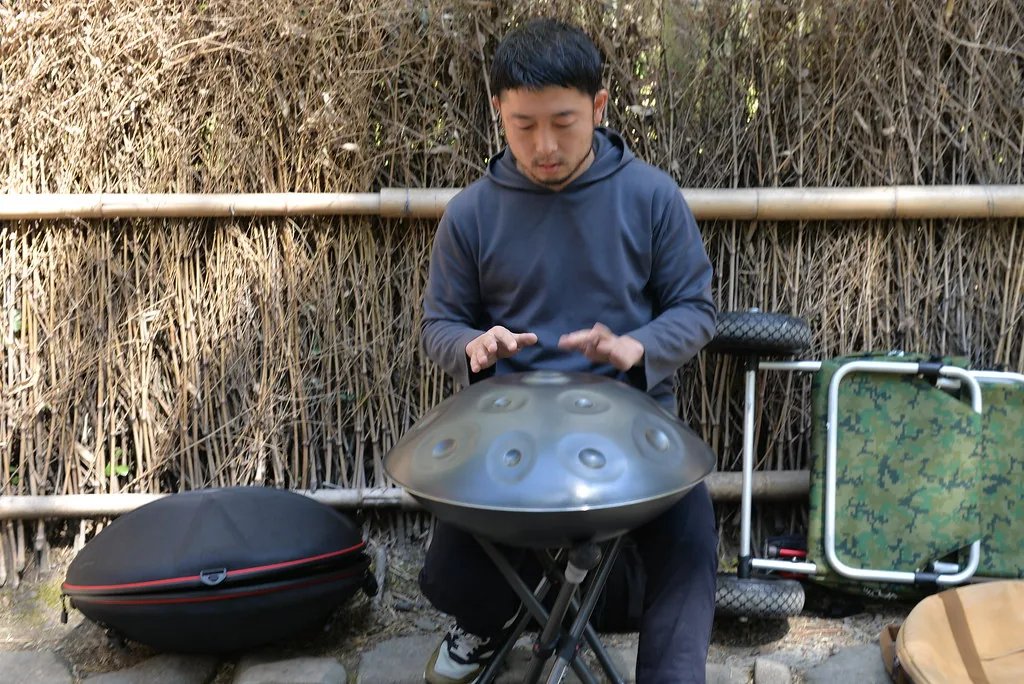
Two fascinating instruments captivate music lovers: the handpan and the hang drum. Although they look alike, their distinctive features clearly set them apart.
This article aims to clarify these differences, whether for professional or recreational use. Their sound, manufacturing methods, and price vary, influencing musicians’ choices.
Each instrument has a dedicated community, reflecting its impact on the world of music. We will explore these aspects to help you understand them better.
Introduction to melodic percussion instruments
Melodic percussion instruments offer a unique sound palette within the musical world. Unlike traditional drums, they produce precise notes, combining rhythm and harmony. Two iconic instruments embody this fusion: the handpan and the tongue drum.
What is a handpan?
Created in Switzerland in 2000, the handpan is a hand-hammered metal turtle shell. Designed by Felix Rohner and Sabina Schärer, it generates captivating sounds through notes tuned across its domed surface. Its ergonomic design makes it intuitive to play.
What is a tongue drum?
The tongue drum, also called a hang drum, is distinguished by its cut metal tongues. Invented in 2007 by Dennis Havlena in the United States, it is often made from recycled gas cylinders. Each “tongue” produces a specific note, ideal for relaxing melodies. To learn more, consult this complete guide to the tongue drum.
Shared and divergent origins
These instruments draw inspiration from the steel drum and ethnic percussion instruments. Their manufacturing techniques nevertheless differ: artisanal hammering for the handpan and mechanical cutting for the tongue drum. Their development reflects a search for hybrid instruments that combine tradition and modernity.
Difference between the handpan and hang drum: construction and manufacturing
Metal comes to life differently depending on whether it becomes a handpan or a tongue drum. Each manufacturing method influences the sound, durability, and even the price of these instruments.

The handpan’s precise hammering process
Creating a handpan requires expertise that takes at least two years to acquire. Artisans hammer a sheet of nitrided steel by hand to shape harmonious notes.
This artisanal technique explains why some models require several months of work. Sensitivity to impacts and temperatures above 40°C can cause irreversible deformation of the instrument.
Mechanical cutting of the tongue drum
The tongue drum uses a more industrial approach. Machines laser-cut “tongues” into thick steel, 3 to 5 mm thick, which is often recycled.
This process enables mass production within a few days. Unlike the handpan, its one-piece structure makes it almost indestructible.
Comparing strength and longevity
Tests reveal major differences in durability:
| Criterion | Handpan | Tongue drum |
|---|---|---|
| Impact resistance | May go out of tune after the first fall | Withstands a 1 m fall onto concrete |
| Manufacturer’s warranty | 5 years on average | Up to 10 years |
The choice between these instruments therefore depends on the intended use: acoustic precision or durability.
Sound comparison: acoustic magic versus relaxing notes
The sound worlds of the handpan and tongue drum reveal fascinating contrasts. Their distinctive sound influences both professional musicians and fans of contemplative music. These acoustic differences determine their preferred uses.
Characteristic sustain and resonance
The handpan produces an average sustain of 12 seconds, creating floating melodies. Its crystalline timbre carries especially well outdoors. In contrast, the tongue drum reaches 18 seconds of resonance, making it ideal for sustained notes in sound therapy.
This difference in duration stems from their construction: the handpan’s hammered shell radiates sound outward, while the tongue drum’s metal tongues vibrate longitudinally.
Available scales: pentatonic or heptatonic
Eighty-nine percent of handpans use the D minor scale, encouraging emotional improvisation. Forty-three percent of tongue drums favor C major, a more universal key for relaxation.
This distribution affects how they are learned: the handpan requires active listening to harmonics, while the tongue drum makes it possible to play intuitive melodies through its predefined scale. Some professional models offer microtonal notes for avant-garde compositions.
Suitability for different musical styles
The handpan excels in jazz and new age music, as demonstrated by performances from Snarky Puppy. Its rich harmonic spectrum appeals to composers seeking complex notes.
The tongue drum has a natural place in meditation and music therapy, where its enveloping sound encourages relaxation. Clinical studies show its effectiveness in reducing anxiety through its stable frequencies.
Design and ergonomics: two distinct approaches
Ergonomics and design directly influence the musical experience with these instruments. The handpan and tongue drum embrace radically different design philosophies, reflected in their shape, weight, and ease of transport.

The handpan’s turtle-shell shape
The handpan stands out for its domed shape, inspired by turtle shells. Its average diameter of 53 cm makes it an imposing yet balanced instrument. Musicians appreciate its smooth surface, which is ideal for fluid finger playing.
The tongue drum’s metal tongues
The tongue drum relies on laser-cut tongues, giving it a more angular shape. Its smaller size, from 25 to 40 cm, makes it easy to handle, even for beginners. The notes are arranged intuitively.
Weight and ease of transport
One major difference lies in the weight: 5.8 kg for the handpan compared with 3.2 kg for the tongue drum. The latter is more practical for travel, especially since 70% of models are sold with a case.
Customization options such as laser engraving add a unique touch. Since 2015, some manufacturers have even offered adaptable designs tailored to musicians’ needs.
Playing complexity and learning curve
Mastering these instruments requires different approaches, both technically and in terms of the time required. Their design directly influences how they are played and how quickly players progress.

Specific striking techniques
The handpan has 15 recognized techniques, ranging from delicate tapping to rhythmic strikes. Each method harnesses natural harmonics to enrich the sound.
The tongue drum is limited to three main techniques. Its simplified structure makes it immediately approachable, even without musical experience.
Accessibility for beginners
Statistics reveal a significant gap: it takes an average of six months to master the handpan, compared with two weeks for the tongue drum. This difference is explained by the complexity of the notes and techniques.
YouTube tutorials reflect this disparity: 28,000 videos for the handpan compared with 9,000 for its counterpart. Dedicated apps are available to guide aspiring musicians.
Possibilities for musical expression
The handpan offers virtuosos an unlimited creative palette. International competitions showcase its expressive capabilities.
The tongue drum shines in intuitive and therapeutic music. Its soothing playing style is especially well suited to relaxation sessions or beginners seeking quick results.
The significant price difference between the instruments
The budget required to acquire these instruments varies considerably. This gap is explained by different manufacturing methods and materials.

Comparing manufacturing costs
Labor accounts for 75% of a handpan’s price. Each piece is hammered by hand by specialized artisans, explaining its high cost.
The tongue drum uses ordinary steel and a more industrial production method. This considerably reduces the expense of making it.
Price range for each instrument
A new handpan costs an average of €1,800. High-end models can reach €3,000. In contrast, the price of a tongue drum starts at €350 for basic versions.
The secondhand market also shows differences: 30% less for the handpan compared with 15% less for its counterpart. Some retailers offer attractive rent-to-own programs.
Value for money according to use
For professional use, the handpan justifies its price through its acoustic precision. Experienced musicians will find it a versatile instrument.
The tongue drum offers excellent value for beginners. Its annual maintenance remains affordable at around €50, compared with €150 for a handpan.
| Criterion | Handpan | Tongue drum |
|---|---|---|
| Average new price | €1,800 | €350 |
| Annual insurance | 2% of the value | 1.5% of the value |
Routine care and maintenance
Taking care of your instrument ensures its longevity and sound quality. Whether it is a handpan or a tongue drum, each model requires specific precautions to preserve its performance.
Sensitivity to impacts and deformation
The handpan is fragile. A fall can permanently put it out of tune. Its nitrided steel responds poorly to even light impacts.
The tongue drum is more resistant. Its one-piece structure withstands moderate impacts without altering its notes. A salt-spray resistance test is recommended for use near the sea.
Resistance to climatic variations
Both instruments tolerate humidity levels of 40% to 60%. Beyond that range, corrosion problems may arise.
For winter storage, choose a dry, temperate place. A microfiber cloth is ideal for cleaning the surface without scratching the metal.
Need for retuning
The handpan requires retuning every three to five years. This costly procedure should be entrusted to authorized centers.
The tongue drum never requires retuning. Its acoustic stability simplifies its maintenance.
| Criterion | Handpan | Tongue drum |
|---|---|---|
| Retuning frequency | 3 to 5 years | Never |
| Average annual maintenance cost | €150 | €50 |
| Estimated durability | 15 years | 25 years |
Insurance against accidental damage is recommended to protect your investment. Compare maintenance products to choose those suited to your model.
Accessories and playing options
Optimizing your playing requires carefully selecting complementary equipment. These accessories protect the instrument while expanding its musical possibilities. A recent study found that 92% of players use special gloves for greater precision.
Using mallets: benefits and risks
Soft rubber mallets, such as those made by Tian, make it possible to explore new sound textures. Metal models, however, create microcracks on the handpan’s surface.
Felt beaters are ideal for the tongue drum. They preserve the metal tongues while producing warm sounds.
Suitable stands and supports
An ergonomic stand, costing an average of €120, stabilizes the instrument without affecting its resonance. The best options are:
- Height-adjustable models (Meinl)
- Non-slip bases for the stage
- Suspension systems for recording
| Type | Average price | Compatibility |
|---|---|---|
| Folding stand | €85 | All models |
| Tripod stand | €150 | Handpan only |
Customizing the instruments
The unique shape of each instrument inspires customizations:
Pickup kits turn the handpan into an amplified instrument. UV-resistant paints protect exterior finishes.
Temperature-controlled cases maintain an ideal temperature during transport. VST platforms integrate these sounds into professional music productions.
Communities and instrumental cultures
Musical communities gather around these unique instruments, fostering rich creative exchanges. The handpan and tongue drum have each developed a distinct culture that reflects their particular sounds and enthusiasts.
The handpan music scene
The handpan enjoys a vibrant artistic scene, with 240 dedicated festivals worldwide. Artists such as David Kuckhermann and Daniel Waples have popularized this instrument through innovative techniques.
Certified educational programs are becoming increasingly common, such as the Handpan Academy in Switzerland. To discover recent developments, consult this complete handpan guide.
The tongue drum’s universal appeal
With only 38 festivals but 28,000 members in its Facebook groups, the tongue drum appeals through its accessibility. Its communities favor discussions on platforms such as DrumCircle.
Its affordable price and ease of learning make it a transcontinental instrument. Collaborative projects regularly connect musicians from different countries.
Dedicated events and gatherings
Major events reflect this momentum:
| Type | Handpan | Tongue drum |
|---|---|---|
| Annual festivals | 240 | 38 |
| Monthly workshops | 120 | 45 |
The 2024 trend shows growing interest in electronic fusion. These gatherings allow enthusiasts to share their love of music and innovative techniques.
How should you choose between a handpan and a tongue drum?
When faced with these two captivating instruments, several criteria can guide your choice. Your musical level, budget, and intended use are key factors to consider.
Criteria based on musical ability
Sixty-eight percent of beginners choose the tongue drum. Its intuitive handling and predefined notes make learning easier.
The handpan requires more patience. Its average six-month learning period is better suited to experienced musicians.
Based on the available budget
Your budget strongly influences the choice:
- Handpan: from €1,800
- Tongue drum: from €350
For a gradual investment, some stores offer rent-to-own plans.
According to the intended use (professional or recreational)
Professionals often prefer the handpan. Its average return-on-investment period is five years, compared with eight years for the tongue drum.
For relaxing or therapeutic use, the tongue drum is the natural choice. Its stable frequencies promote relaxation.
| Criterion | Handpan | Tongue drum |
|---|---|---|
| Learning time | 6 months | 2 weeks |
| Average price | €1,800 | €350 |
| Suitable for | Professionals | Beginners/therapy |
For a deeper look at the tongue drum’s specific characteristics, consult this complete guide.
Conclusion: two complementary instruments
These musical instruments offer unique sound experiences. The handpan appeals through its acoustic precision, while the tongue drum shines through its accessibility. Their complementary qualities enrich the musical world.
Technological innovations promise exciting developments. Integrated sensors and revolutionary materials could soon emerge.
When choosing, consider your ability and needs. Demanding music lovers will opt for the handpan. Beginners will prefer the tongue drum for its rapid learning curve.
Discover these instruments in person at workshops or concerts. Explore different musical scales to find your favorite.
These creative tools will continue to inspire musicians. Their magic lies in their ability to translate emotions into melodies.