
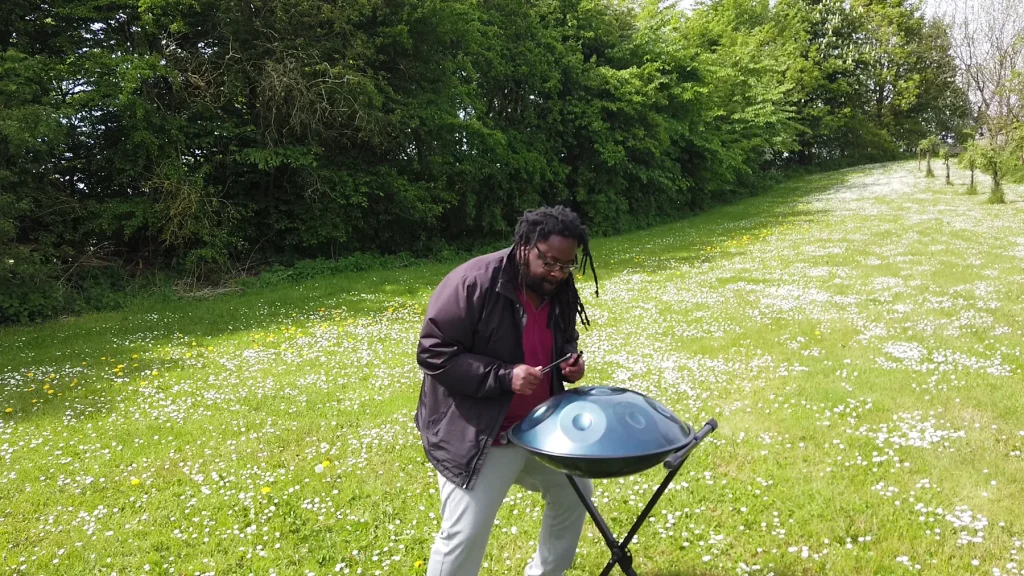
Steel musical instruments offer unique sounds that captivate musicians and enthusiasts alike. Among them, two models stand out for their resonance and design. This guide will help you understand their differences so you can make the right choice.
Precision-made, these percussion instruments differ in their tuning and sustain. Their prices and playing techniques also vary. Experts such as Handpan Musique and Handpan France share their knowledge to help inform your decision.
Discover their essential characteristics: materials, tones, and ease of learning. A detailed analysis awaits, exploring every aspect.
Introduction: two captivating percussion instruments
Among modern percussion instruments, two instruments captivate listeners with their unique resonance. The first, born in Switzerland, combines craftsmanship and harmony. The second, of American origin, favors structural simplicity.
Their similar appearance can be misleading. Yet their sound-production mechanisms differ radically. One relies on vibrations in hemispherical surfaces, while the other uses metal tongues.
These creations are suitable for everyone. Beginners and experienced musicians alike can find an instrument suited to their level. Both meditation and complex composition are possible.
The choice depends on how the instrument will be used. The differences between these percussion instruments affect their sound and practicality. The following sections examine every aspect to guide you.
Operating principles: how do they produce sound?
The sonic magic of these percussion instruments is based on distinct physical principles. Although both are made of metal, their acoustic mechanisms follow opposing approaches, influencing their sounds and expressiveness.

The handpan: harmonic vibrations across a hemispherical surface
The handpan generates notes through hammered dimples on a curved surface. Each indented area vibrates to create a precise frequency, while the central ding produces deep bass notes.
Its hemispherical shape naturally amplifies resonance. The nitrided steel used provides greater durability and richer harmonics.
The tongue drum: oscillations of cut-out tongues
Here, sound comes from the flexibility of laser-cut tongues. Each individually tuned strip of metal oscillates to produce a specific tone.
Unlike the handpan, its flatter structure slightly limits sound projection. However, this simplicity makes production and maintenance easier.
The differences between these mechanisms explain their distinct uses. One excels at complex melodies, while the other is ideal for meditative rhythms.
Manufacturing process: craftsmanship or technical precision
The creation of these instruments reveals two distinct approaches. One values artisanal expertise, while the other relies on modern technology. These methods directly influence their quality and price.
Hand hammering and meticulous tuning
The first instrument is born from meticulous work. A sheet of steel is shaped by hand over several weeks. Each hammer blow forms its unique shape and determines its future sound.
Tuning requires specialized expertise. A specialist adjusts every note with extreme precision. This delicate process explains the 3 to 6 months required for its complete manufacture.
Laser cutting and structural simplicity
The second instrument takes a different approach. Machines use lasers to cut perfectly calibrated tongues. This industrial cutting process guarantees millimeter-level accuracy in just a few hours.
Unlike the first instrument, its flat structure greatly simplifies production. The materials used are less sensitive to climatic variations. This robustness also makes potential repairs easier.
| Aspect | Handpan | Tongue drum |
|---|---|---|
| Manufacturing time | 3 to 6 months | A few hours |
| Main technique | Hand hammering | Laser cutting |
| Precision | Depends on craftsmanship | Programmed machinery |
| Repairability | Difficult | Relatively simple |
If you are interested in other unusual instruments, discover our complete guide to the kalimba. This small African instrument also offers captivating sounds.
Sound qualities: clarity, sustain, and emotion
Each instrument has its own acoustic signature. Their sounds reflect distinct musical intentions, ranging from dynamic expressiveness to peaceful contemplation.

The handpan’s crystalline clarity
The handpan produces warm, enveloping sounds. Its precise, well-defined notes make it possible to create complex melodies. Sustain ranges from 8 to 15 seconds, making it ideal for evolving compositions.
Its harmonically rich timbre is well suited to stage performances. One musician says:
“It tells a story, one note at a time.”
The tongue drum’s meditative sustain
With sustain lasting up to 20 seconds, this instrument encourages introspection. Its low, stable frequencies create an atmosphere conducive to relaxation.
Its more uniform sound makes it suitable for sound therapy or meditation rituals. The simplicity of its scale makes it accessible to beginners.
| Characteristic | Handpan | Tongue drum |
|---|---|---|
| Average sustain | 8 to 15 seconds | Up to 20 seconds |
| Recommended use | Concerts, composition | Meditation, well-being |
| Emotional nuance | Dynamic expressiveness | Calm introspection |
Resources are available for exploring playing techniques. These two instruments offer complementary listening experiences.
Melodic range: number of notes and creativity
Melodic range determines the creative potential of each percussion instrument. These instruments offer different possibilities depending on their number of notes, which directly influences the musical styles they can play.

The first stands out for its harmonic richness. With up to 21 tone fields, it enables complex, nuanced compositions.
Complex compositions
Its D Kurd scale tuning provides an ideal foundation for jazz or improvisation. Experienced musicians will find it a complete expressive tool.
The second instrument favors simplicity. Limited to a maximum of 14 notes, its structure encourages repetitive, meditative melodies.
Accessible melodies
Its pentatonic scale is ideal for beginners. As this complete guide shows, this simplicity makes it quick to learn.
Your choice will therefore depend on your level and ambitions. Creativity is expressed differently depending on the available melodic range.
Purchase cost: investment and affordability
The investment required to acquire these instruments varies considerably. Their price reflects the complexity of their manufacture, the materials used, and their musical potential.
Premium craftsmanship
The first model requires a substantial budget, ranging from €1,500 to €5,000. Its cost is explained by weeks of hand hammering and meticulous tuning. One expert confirms:
“Each piece is unique, like a sound sculpture.”
The secondhand market sometimes offers discounts of 30%. However, these opportunities remain rare because of these instruments’ durability.
Accessible to everyone
The second instrument is available from €50 for entry-level models. Its value lies in its simple production and robustness. Perfect for occasional use, it offers an excellent quality-to-price ratio.
Unlike the first instrument, secondhand models are common. New models generally cost between €100 and €600.
Buying tips:
- Favor manufacturer warranties.
- Try the instrument in a store to check its tuning.
- Compare the materials used (steel or alloys).
Size and weight: portability and space requirements

Ergonomics play a key role when choosing a percussion instrument. These two instruments have distinct physical characteristics that affect their everyday use.
Handpan dimensions and transport
With a diameter of 50 to 60 cm and a weight of 4 to 5 kg, this instrument requires some logistical planning. Transporting it requires a specialized hard case to protect its delicate structure.
Traveling musicians often face constraints. One professional says:
“Traveling with this instrument requires careful organization: an aircraft cabin or a dedicated seat.”
The tongue drum’s compact design
More compact (30 to 40 cm) and lighter (1 to 3 kg), this model excels in portability. Its smaller size makes it easy to take on trips or use in confined spaces.
The difference is also evident in the playing supports:
- The first often requires an adjustable stand.
- The second simply rests on the player’s lap.
For children or frequent travel, discover our selection of models suited to young musicians. Your choice will depend on your mobility and the space available.
Playing techniques: fingers or mallets
Your hands interact differently with these metal surfaces. Playing these instruments involves opposing approaches, which influences their musical expressiveness.
Delicate hand strikes
The first instrument is played exclusively with the fingers. Light touches are enough to make the steel vibrate. The palms can also create echo effects.
Advanced techniques include:
- Fluid rolls across adjacent notes.
- Rhythmic tapping for complex melodies.
- Sustain effects achieved by controlling pressure.
Warning: mallets may damage the surface. One manufacturer warns:
“A poorly placed strike can permanently detune the notes.”
The flexibility of mallets
The second instrument allows greater freedom. Bare hands are suitable, but rubber mallets are recommended. They provide greater power without risk.
This flexible use makes it ideal for:
- Children (lightweight mallets).
- Music-therapy sessions.
- Outdoor performances.
| Aspect | Handpan | Tongue drum |
|---|---|---|
| Basic learning time | 6 months | 2 weeks |
| Recommended tools | Bare fingers | Soft mallets |
| Precision required | High | Moderate |
Video tutorials are available for beginners. Each method has its advantages depending on your musical style.
Durability and maintenance: robustness and sensitivity
An instrument’s longevity depends on its design and maintenance. These metal percussion instruments react differently to impacts, humidity, and climatic variations. Here is how to preserve their lifespan.
Handpan: delicacy and precautions
This instrument is fragile because of its hammered surface. An impact can permanently detune the notes. Although durable, nitrided steel requires retuning every 5 years.
Experts recommend:
- A waterproof case to prevent oxidation.
- Storage at a stable temperature (15 to 25°C).
- Cleaning with a microfiber cloth after each use.
Tongue drum: resilience and simplicity
More resistant, this model copes better with climatic variations. Its laser-cut tongues oxidize more slowly. Only minimal maintenance is required:
- Occasional cleaning with a dry cloth.
- No retuning required.
- Can be stored without a specialized case.
| Criterion | Handpan | Tongue drum |
|---|---|---|
| Impact sensitivity | High | Low |
| Maintenance frequency | Monthly | Occasional |
| Humidity resistance | Moderate | High |
For traveling musicians, the second model offers unrivaled practicality. Your choice will depend on your ability to protect the instrument.
Conclusion: which instrument should you choose for your needs?
Your final choice will depend on your musical goals and budget. Despite their differences, each instrument offers a unique experience.
Choose quality and harmonic richness for complex compositions. If price is an obstacle, opt for a more affordable and portable model.
Try them in a store to experience their resonance. To get started, explore our free tutorials and find inspiration.