

The handpan is a fascinating instrument capable of creating captivating sounds. Perfect for beginners, it offers an intuitive approach to music. Its unique design and ease of play make it an ideal choice for discovering improvisation.
According to Handpan France, this instrument offers benefits such as stress reduction and creative stimulation. Beginners particularly appreciate its wide range of scales, suited to different musical styles. The D minor scale, for example, is favored by 90% of new players.
Choosing your first model can seem complicated. Materials, keys, and budget are essential criteria. To learn more, read our complete guide.
Testimonials from ZenaPan confirm the satisfaction of new musicians. With a little practice, this instrument opens up a world of harmonious possibilities.
Introduction to the handpan: the ideal instrument for beginners
Discover a revolutionary instrument that redefines musical learning. The handpan combines an innovative design with captivating sounds to provide a unique sensory experience. Its growing success is due to its immediate accessibility.
What is a handpan?
Created in Switzerland in the early 2000s, this percussion instrument consists of two tuned metal half-shells. The upper surface features 8 to 9 notes arranged in a circle around a central dome. Unlike traditional percussion instruments, it is played simply with the hands.
The quality of the materials (nitrided or stainless steel) directly affects the richness of the harmonics. As Handpan France confirms, this particular construction generates especially soothing vibrations.
Why choose a handpan as your first instrument?
According to ZenaPan data, 85% of new players manage to create coherent melodies within their first few hours. This fast learning curve contrasts with that of the piano or guitar.
Three major advantages explain this success:
- Accessibility: no musical knowledge is required to play harmonious sounds easily
- Well-being: vibrational frequencies effectively reduce stress
- Versatility: equally suited to meditation and musical creation
“My handpan reconnected me with music after 10 years without playing. Within a week, I was already creating my own melodies.”
The market confirms this enthusiasm: sales among 25- to 35-year-olds have jumped by 300% since 2020. To explore the selection criteria in greater depth, our complete buying guide explains all the technical specifications.
Understanding the different handpan scales
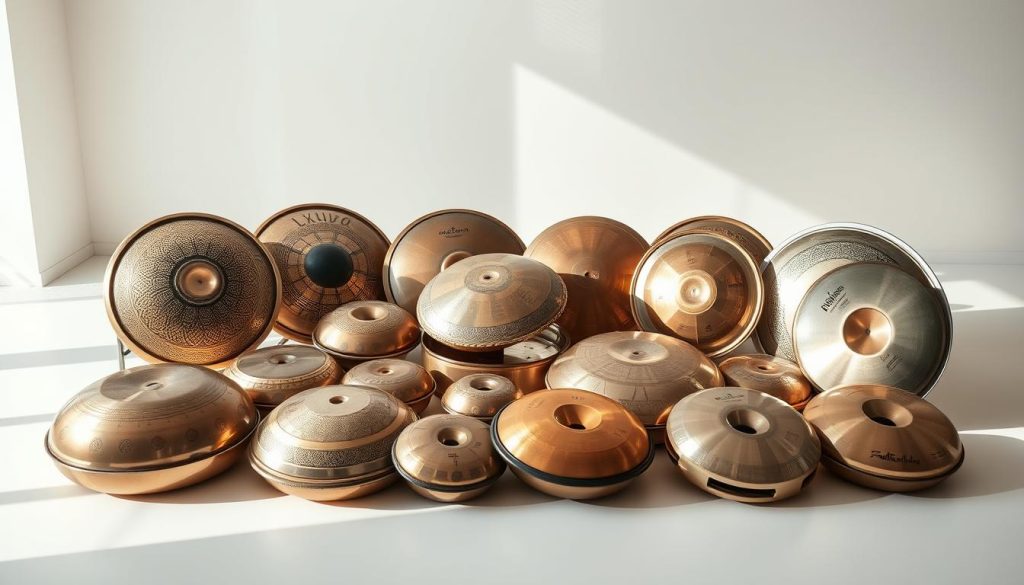
The magic of the handpan lies in the diversity of its scales, each of which tells a different story. These musical variations shape the atmosphere and evoke unique emotions with every note.
Major scales: joy and positivity
Ideal for bright compositions, major scales evoke cheerfulness. Their simple harmonic structure makes them accessible, even without extensive musical knowledge.
Perfect for outdoor improvisations or group sessions, this scale appeals through its contagious energy.
Minor scales: depth and melancholy
With their lower notes, these scales inspire introspection and emotion. They are often chosen for meditation or cinematic compositions.
D minor, in particular, is favored for its balance between softness and intensity.
Eastern scales: exoticism and spirituality
Popularized at world-music festivals, the Hijaz scale stands out for its quarter tones. These micro-intervals create a mystical sound appreciated in Kundalini yoga.
- Tip: try it in a store to become familiar with its nuances.
- Specialist manufacturers: ZenaPan and Cosmos Handpan offer models tuned specifically to these scales.
“The first time I played an Eastern scale, I felt an immediate connection with ancient traditions.”
Top handpans for beginners: which scale should you choose?
Choosing the right scale for your first instrument is a crucial step. It directly affects your musical experience and progress. Here is how to identify the one that matches your expectations.
The D minor scale, a suitable classic
D minor is favored by 70% of beginners. Its balanced notes provide an ideal foundation for exploring improvisation. This scale is versatile and suits both meditation and composition.
Its advantages:
- Intuitive harmonies: the intervals make composition easier.
- Soothing resonance: perfect for relaxation sessions.
- Broad compatibility: blends well with other instruments.
Alternatives for varying emotions
The Celtic Minor scale appeals to 18- to 25-year-olds (sales up 40%, according to ZenaPan). Its slightly lower tones add a melancholic touch. It is ideal for cinematic atmospheres.
Other options:
- Hybrid scales: good value for exploring several styles.
- Verified pre-owned instruments: the INA certifies used models for a secure purchase.
“My Celtic Minor opened up creative horizons I never knew existed. Within a week, I was composing original melodies.”
Warning: avoid experimental scales with fewer than 7 notes. Their limited number of notes reduces learning possibilities. For a complete guide, see our detailed recommendations.
Tuning frequency: 432 Hz or 440 Hz?
432 Hz or 440 Hz? This technical choice affects your musical practice. The frequency determines the sound atmosphere and interaction with other instruments. It is a crucial decision for personalizing your experience.
The vibrational world of 432 Hz
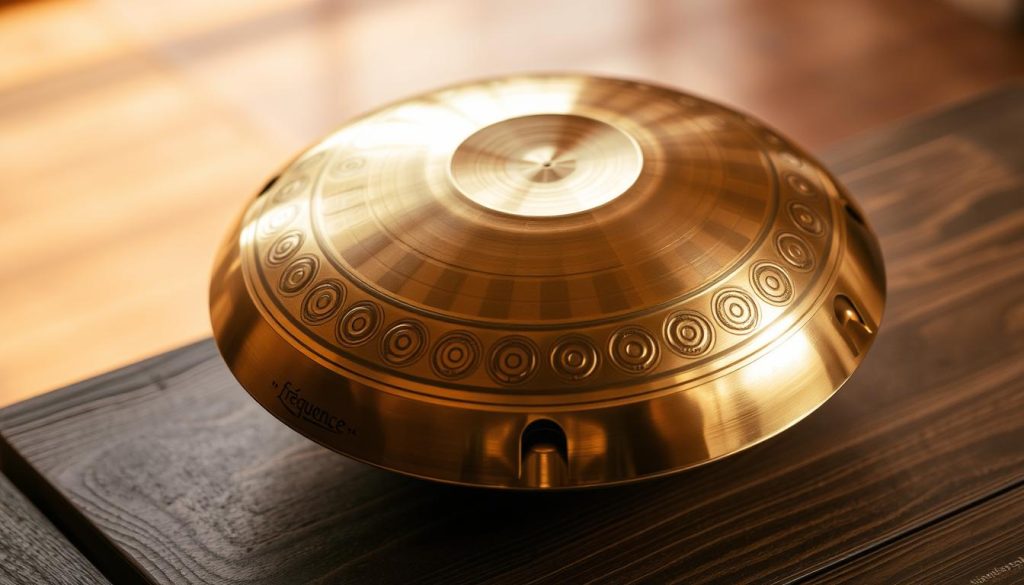
The 432 Hz frequency produces warm, low sounds that are ideal for meditation. Its vibrations are said to resonate with the body’s natural rhythms. It is perfect for creating introspective atmospheres.
Notable features:
- A gentle sound appreciated in music therapy
- Alternative tuning requiring specific adjustments
- Used by 15% of sound-therapy practitioners
The 440 Hz standard: guaranteed versatility
440 Hz predominates in schools and studios. According to Handpanmaster, 95% of institutions use this frequency. Its main advantage? Universal compatibility.
Its practical benefits:
- Interoperability with apps such as Yousician
- 50% easier to resell than a 432 Hz model
- Simplified tuning with tuners such as the Korg CA-50
“My 440 Hz handpan lets me play with any group without tuning problems.”
Some manufacturers offer both options. This comparison guide explains the acoustic differences. For beginners, 440 Hz remains the most practical choice.
The importance of sustain in your choice
Sustain is the length of time a note continues to resonate after being struck. This often underestimated criterion directly affects the musical experience and creative potential.
What is sustain?
Unlike sound volume, sustain measures the persistence of vibrations. A good balance allows smooth transitions between notes. High-end instruments generally offer longer resonance.
Three main factors affect it:
- Steel thickness: thinner models vibrate for longer
- Tuning quality: precise craftsmanship improves resonance
- Playing technique: finger pressure alters the duration
Ideal duration for beginners
According to Handpan France, 72% of instructors recommend a duration of 9 to 11 seconds. This range optimizes learning without overwhelming the ear.
| Type of sustain | Duration | Recommendation |
|---|---|---|
| Short | < 8 s | Poorly suited to complex compositions |
| Ideal | 9 to 11 s | Perfect for improvisation |
| Long | > 12 s | Risk of harmonic confusion |
“My first handpan had too little sustain. Since switching to a model with 10-second sustain, my progress has been remarkable.”
Avoid extremes such as the 14-second Bali Steel: its extended sustain makes learning more difficult. To control resonance artificially, use adjustable mutes or change your striking technique.
Evaluating a handpan’s sound quality
The musical experience offered by a handpan depends above all on its sound quality. A properly tuned instrument offers pure harmonies and balanced resonance. For beginners, this feature is essential for making rapid progress.
The harmonic balance of the notes
Each note must vibrate independently while blending into a coherent whole. Craftspeople check this balance through precise tests:
- Practical test: isolate each area with felt to assess its purity
- Premium materials: nitrided steel ensures stable harmonics
Managing crosstalk
According to Handpanmaster, an interference threshold of less than 5% between notes is acceptable. Early PANArt models suffered from this flaw, which has since been corrected through:
- Silicone damping rings that limit unwanted vibrations
- Careful adjustment of the interstitial areas between notes
“The 5 most renowned craftspeople (including ZenaPan) have mastered this technique perfectly. Their secret? Hammering with millimeter precision.”
To explore these technical criteria further, read our guide to acoustic characteristics. The structure of the ding and tone fields directly affects this performance.
Manufacturing materials: nitrided or stainless steel
A handpan’s durability depends largely on its construction materials. This criterion affects its sound, strength, and even its weight. Two options dominate the market: nitrided steel and stainless steel.
Characteristics of nitrided steel
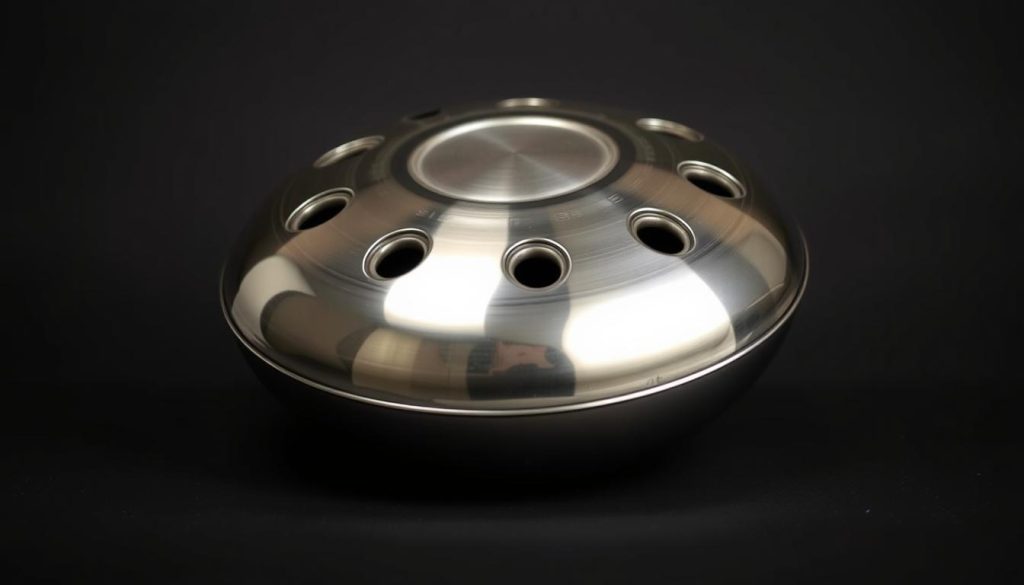
Traditionally used by craftspeople, this material offers increased rigidity. Its heat treatment improves rust resistance while making it easier to shape the notes.
Its main advantages:
- Structural stability: ideal for precise tuning
- Balanced resonance: warm, deep harmonics
- Lower weight: 300 g lighter on average than stainless steel
Advantages of stainless steel
According to Handpan France, its corrosion resistance is 8 times greater. It is perfect for humid climates or intensive touring, as David Charrier confirms.
Notable innovations:
- IceStone treatment for lasting shine
- Extended sustain (+15% compared with nitrided steel)
- A slightly softer tone, appreciated for meditation
| Characteristic | Nitrided steel | Stainless steel |
|---|---|---|
| Corrosion resistance | Average | Excellent |
| Average weight | 4.2 kg | 4.5 kg |
| Cost | 15% cheaper | Premium |
“Stainless steel is my choice for touring. Its resistance to humidity is unmatched.”
To understand the manufacturing processes, read our detailed guide. Each material suits specific needs, depending on your playing style and environment.
Number of notes: how to make the right choice
The number of notes directly affects your progress. A balance between simplicity and creative potential is essential when starting out.
9-note handpans: the standard for beginners
Models with 9 notes offer the perfect compromise. According to ZenaPan, 100 hours of practice are needed before moving on to a more complex instrument.
Key advantages:
- Progressive learning without cognitive overload
- A sufficient range for exploring different styles
- A more accessible price than extended versions
When should you choose more notes?
Instruments with 12 or more notes suit experienced players. Their harmonic richness requires greater technical mastery.
Interesting alternatives:
- Double-sided models for varying scales
- Modular systems with interchangeable notes
Avoid overly complex models before reaching the 100-hour threshold. To explore the subject further, see our selection of compatible extensions.