

Tibetan singing bowls are ancient instruments from Asia. They are used for meditation, relaxation, and sound therapy. This article explains how to make a bowl sing and get the most from this instrument.
Learning requires patience and regular practice. We describe the techniques for striking and rubbing the bowl, as well as the common mistakes beginners make.
Proper use transforms daily practice. You will learn how to handle the bowls to produce rich, harmonious sounds during every session.
This guide offers clear, progressive advice. In a few simple steps, you will know how to use your new instrument and experience its lasting benefits.
Understanding the Origin and Nature of the Tibetan Singing Bowl
The earliest bowls originated in the Himalayan mountains thousands of years ago. Some remains date to 5,000 BCE, reflecting a long history connected with local peoples.
Originally, these objects were used by shamans during incantations and sacred rituals. They were later incorporated into the traditions of Buddhism in Tibet, Nepal, Bhutan, and ancient India.
Traditional production combines several precious metals. This unique alloy gives the instruments a rich resonance. Artisans across the Tibetan cultural region preserve this expertise to create bowls said to help release energy blockages.
The energy produced by these bowls is believed to promote well-being and help harmonize the chakras. Historically, some bowls were even used to store food before the metal became reserved for musical or sacred purposes.
- Origin: the Himalayas in ancient times.
- Uses: rituals, meditation, and inner journeys.
- Materials: metal alloys for improved resonance.
Tibetan Singing Bowl: A Complete Beginner’s Guide
Each alloy tells a unique sonic story connected with the celestial bodies and the artisan’s touch. A traditional Tibetan singing bowl contains seven metals, each associated with a celestial body such as the Sun or Moon. This combination creates a harmonic richness that is difficult to reproduce in any other way.
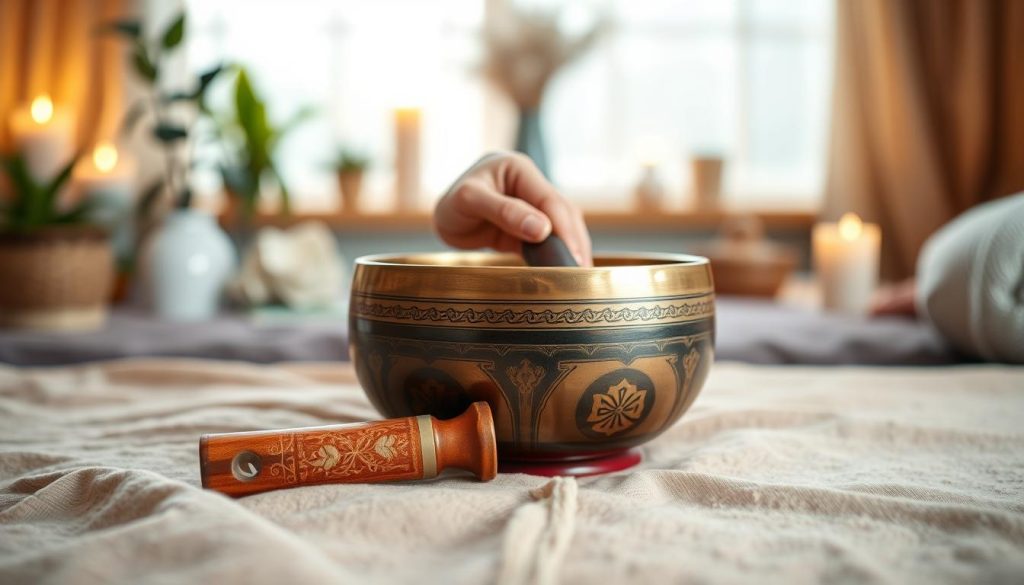
Handcrafted instruments bear visible hammer marks. These traces attest to manual workmanship that gives the body of the bowl its distinctive vibration.
By contrast, cast models are mass-produced. They offer a more uniform tone but have less harmonic complexity.
- Seven metals: harmonic richness and celestial symbolism.
- Handcrafted: hammer marks, character, and unique resonance.
- Cast: consistency, often a lower price, and a simpler sound.
Your choice depends on what you expect in terms of pitch, authenticity, and meditation. Take time to listen to each piece: the difference can be heard from the very first note.
The Therapeutic Benefits of Sound Vibrations
The sound vibrations of a Tibetan singing bowl are said to make the water in the body vibrate, encouraging rapid, deep relaxation.
Studies suggest that these sound waves may reduce cortisol levels and lower stress in some people. They may also encourage alpha-wave activity in the brain, associated with a state of well-being and calm.
Reported benefits include reduced muscle tension and better regulation of the autonomic nervous system. Some people report relief from chronic pain due to the waves’ massaging effect on tissue.
“Music therapy using singing bowls helps the body return to more harmonious functioning.”
Practical tip: never strike the bowl too hard. An overly powerful impact creates disharmony and disrupts relaxation. The strength of the vibrations depends on the bowl’s size and the intention brought to the session.
- Effect on the body: immediate relaxation.
- Effect on the mind: alpha waves and reduced stress.
- Responsible use: avoid striking too hard to preserve the desired effects.
Choosing an Instrument to Suit Your Needs
Your choice of instrument directly affects the quality of the vibrations you experience. Begin by defining your intention: grounding, energy cleansing, or chakra work.
For a first experience, choose a Tibetan singing bowl measuring 15 to 20 cm. This size offers a good balance between ease of handling and harmonic richness.
How Size Influences Sound Frequency
Small bowls produce higher-pitched sounds. They are suited to the upper chakras and focused cleansing.
A larger bowl produces a lower note and promotes grounding. Match the size to your build to optimize its effect on the body.
- 15–20 cm: recommended for beginners.
- Small bowls: high notes and subtle chakra work.
- Large bowls: lower sound, grounding, and stabilization.
Every piece remains unique: its metal alloy changes the harmonics and dominant note. Let listening and intuition guide you.
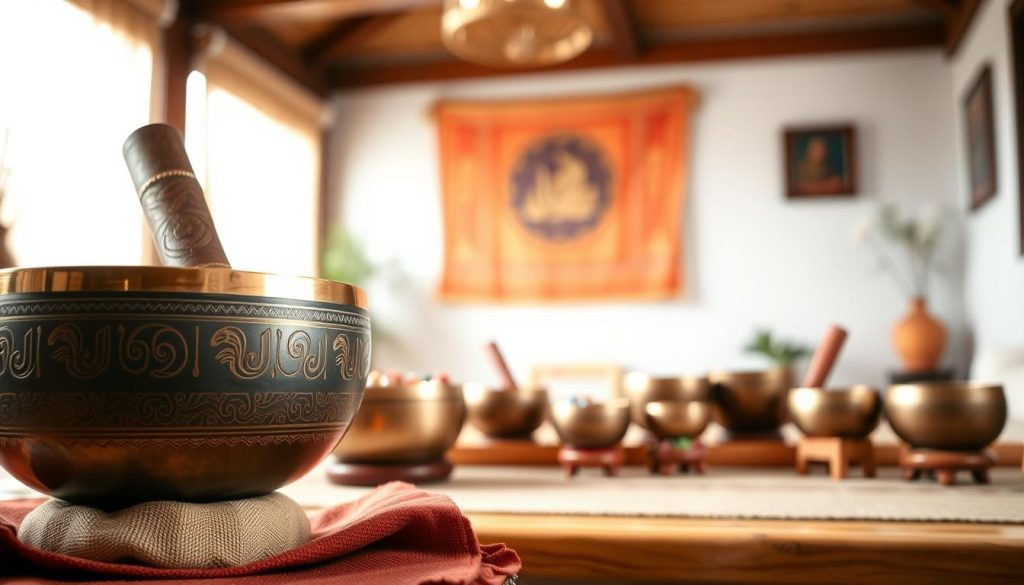
To learn more about choosing and caring for these instruments, read everything you need to know about singing bowls.
Preparing Your Posture for a Successful Session
Before making a Tibetan singing bowl sing, adopt a posture that promotes stability and relaxation.
Sit on a cushion or chair. Make sure you can remain comfortable for at least ten minutes. An effective session generally lasts between 10 and 20 minutes.
Some people prefer sitting cross-legged or in a half-lotus position. These postures provide a more stable seat and help the body remain still.
Place the bowl on your open palm. Keep your fingers from touching its sides: direct contact dampens the vibrations.
Never grip the instrument. The key is to prepare the body so the waves can circulate freely. Taking a moment to center yourself before the first sound helps you reach a calm state more quickly.
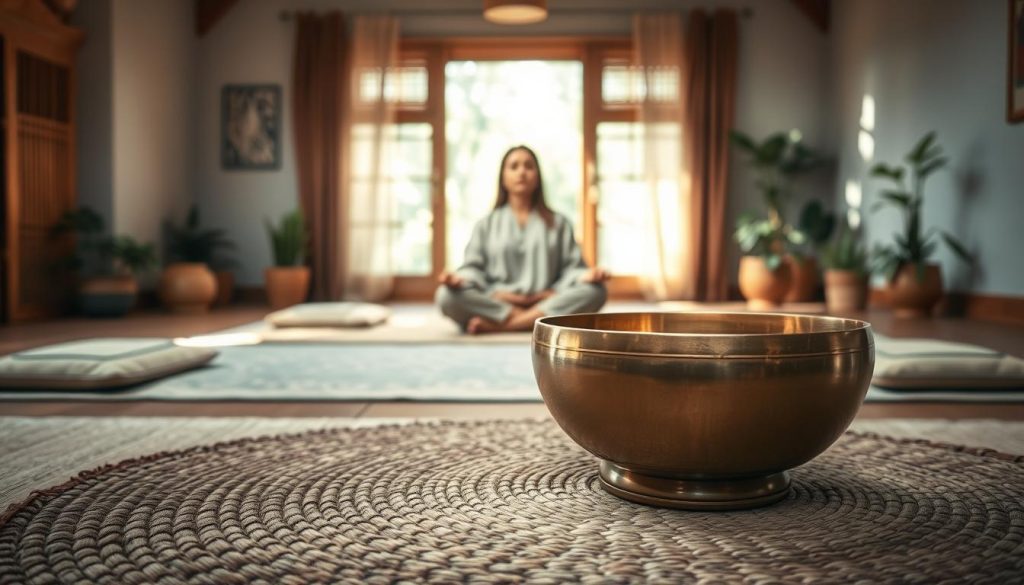
To learn how to use this tool every day, read our practical article on how to use a Tibetan singing bowl in daily life. A relaxed position supports relaxation and prolongs the benefits of each session.
Mastering the Striking Technique
A controlled strike on the rim reveals the bowl’s true voice. The striking technique involves giving the rim of the bowl a sharp tap with a stick or mallet.
Hold the instrument on your open palm. Keep your hand relaxed so the vibration can spread through the body.
Strike without applying excessive force. Never strike too hard: the sound becomes harsh and may hurt your eardrums.
Keep the stick in contact with the wall only very briefly. The upper section near the rim consistently produces a rich, balanced sound.
The wrist movement takes practice. Alternate between a wooden stick and a mallet to vary the tone colors.
This technique is the first step for any beginner who wants to learn to make a bowl sing. After a few repetitions, you will find the appropriate strength and precision.
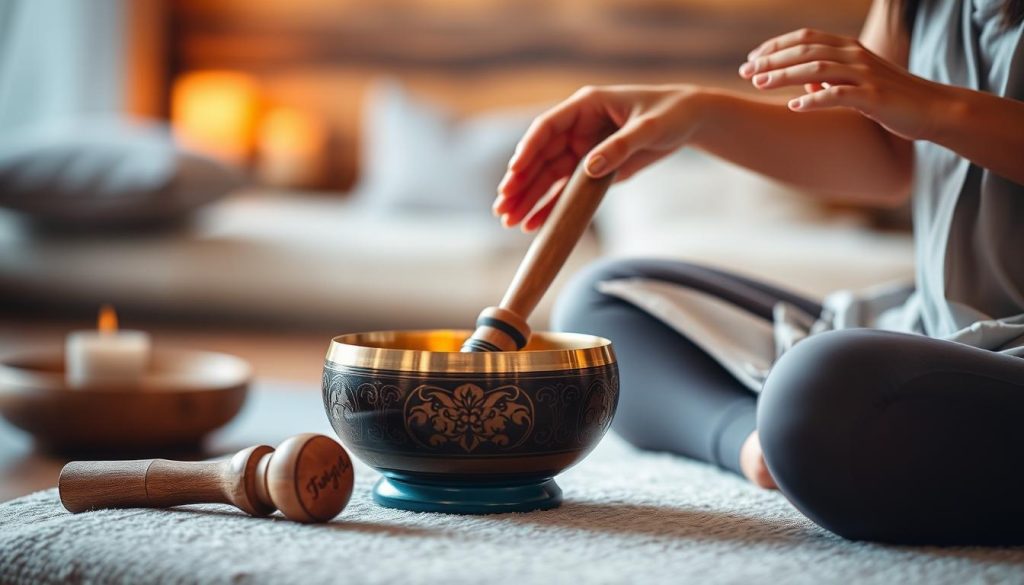
To deepen your practice and find usage tips, read this practical article.
Learning to Make the Bowl Sing by Rubbing It
A slow, steady movement reveals the bowl’s hidden harmonics. The rubbing technique requires concentration and a steady tempo.
The Role of the Stick and Mallet
A wooden stick produces a higher-pitched sound. The suede-covered side produces a lower note.
Maintaining the Best Contact Angle
Hold the tool perpendicular to the rim of the bowl at a 90-degree angle. Constant, even pressure is essential for triggering intense vibrations.
Rub slowly, tracing small circles around the rim. Never move the tool toward the inner wall, and keep the motion fluid.
Solving Resonance Problems
If the instrument does not sing, check the angle and pace. Adjust the pressure and slow the movement. A few minutes of practice is often enough.
To see the waves, add a little water: the ripples reveal the quality of the resonance.
- Check that the angle is perpendicular.
- Maintain even pressure.
- Alternate between wood and suede to vary the tone colors.
To explore the technique and its practical application in greater depth, see our techniques and instructions.
Using the Bowl for Meditation and Cleansing
The vibrations emitted by a Tibetan singing bowl support meditation. They calm the mind and reduce stress over the course of repeated sessions.
To cleanse a space, make the bowl sing while walking slowly from one room to another. Spend extra time in the corners and let the sound spread before moving to the next area.
The vibrations are believed to help harmonize the chakras and release energy blockages in the body. Some people place stones in the bowl to recharge them while it sings.
You can punctuate a session with regular strikes on the bowl to anchor your attention. Vibrating water may then be used for energy work or as a cleansing spray, depending on the practice.
| Use | Recommended Duration | Main Effect |
|---|---|---|
| Silent meditation | 10–20 min | Relaxation and centering |
| Space cleansing | 5–15 min per room | Cleansing corners and harmonizing the space |
| Recharging stones or water | 3–10 min | Energy enhancement |
Regular singing-bowl practice offers lasting benefits: reduced stress, better sleep quality, and deep relaxation. For technical guidance, see our techniques and instructions.
Precautions and Metal Care
Regular care preserves your instrument’s unique voice.
Avoid prolonged contact with water. Pieces containing copper or iron oxidize quickly. Clean the bowl with a slightly damp cloth or a little white vinegar, then dry it immediately.
Handle the object gently. Falls can crack the alloy and make the sound disharmonious. Play the bowl often; this maintains its resonance and its effects during your sessions.
“A well-maintained bowl retains its patina and continues to bring well-being to body and mind.”
- Limit moisture and prolonged contact with water.
- Clean gently with a cloth and diluted vinegar if necessary.
- Avoid impacts and falls; handle it with both hands when necessary.
| Risk | Recommended Action | Frequency |
|---|---|---|
| Oxidation caused by water | Wipe, dry, and limit moisture | After every contact |
| Patina wear | Clean with a soft cloth; use vinegar occasionally | Once a month |
| Impacts or cracks | Handle with both hands; use padded storage | At all times |
Take time to greet your bowl every morning. This simple ritual strengthens your connection with it and optimizes its use. For practical care advice, read about care and use.
Adding Crystal Bowls to Your Practice
Adding a quartz bowl changes the sonic texture of a practice and extends its resonance. Crystal bowls produce an exceptionally pure sound, often tuned to a specific note associated with the chakras.
Unlike a metal Tibetan singing bowl, crystal offers a longer resonance and a highly directional wave. The crystal’s vibration is intense and can be felt deeply in the body during meditation.
Dedicated mallets often have a plastic or rubber tip. This provides a better grip on the wall and triggers a pure resonance without damaging the rim.
These instruments perfectly complement metal bowls during sound baths. Alternating between metal and crystal enriches the experience and allows you to explore other tone colors.
“Crystal targets a precise frequency; metal provides complex harmonics.”
One small precaution: avoid putting water in crystal bowls. Thermal shock can crack the instrument. To explore the methods in greater depth, see our techniques and instructions.
Conclusion
In conclusion, sound practice offers a gradual path toward greater inner peace.
This guide presents the essential techniques for making a bowl sing and benefiting from its effects. Learning requires time and gentleness.
Whether you use metal or crystal bowls, intention matters as much as technique. An instrument becomes more alive through regular practice.
Include it in your daily meditation to experience its benefits for body and mind. Explore its sounds and let your personal connection guide each session.