

With more than 10 years of experience, I explain here how to identify an instrument suited to your practice. The essential criteria are simple: material, size, weight, frequency, and note.
Hand-hammered metal offers deep vibrations and diffuse resonance. A quartz crystal model produces a more precise note and clearer sounds. Consider its intended use: meditation, purification, or music.
Each bowl affects the body differently depending on its diameter and alloy. Also check the engraved symbols, the worked surface, and your available budget. To compare prices and instruments, consult a practical buying guide.
In summary: test the note, feel the weight, and prioritize a model that suits how long you plan to use it and your energetic intention.
Understanding the World of Tibetan Singing Bowls
For centuries, inverted bells without clappers have resonated in Mahayana Buddhist schools. These instruments come from Himalayan regions: Tibet, Nepal, Bhutan, and Ladakh.
Tibetan bowls are used for meditation, tantric rituals, and purification. Each piece carries a history connected to local practices and the artisans who shape it.
Today, these singing bowls are also prized for relaxation. Their vibrations help harmonize body and mind, and accessories such as wooden mallets are often essential.
There is great variety: materials, sizes, and finishes differ. Understanding this world helps you recognize an instrument suited to your intended use, whether spiritual or musical.
To learn more about their characteristics and selection, consult a practical buying guide.
Tibetan Singing Bowl: How to Choose One Based on Its Material
An instrument’s material directly affects its tone color and its use in meditation.
Metal-alloy bowls
Alloy models often use seven metals—gold, copper, silver, mercury, lead, tin, and iron—and are frequently hand-hammered by Nepalese artisans.
This craftsmanship produces rich harmonics and diffuse resonance. These deep vibrations are well suited to chakra work and relaxation music.
Quartz crystal bowls
First appearing in the 1980s, quartz instruments are made from powder melted in molds. Industrial production makes it possible to tune each piece to a precise note.
The result is a clear, stable sound suited to energy healing, where precision matters.
- The price varies: the cost of an alloy bowl depends on its complexity, while crystal may require a larger investment.
- When comparing these instruments, the difference between diffuse resonance and purity of tone becomes apparent.
To explore manufacturing and material-based selection in greater depth, consult a metal buying guide or a reference on quartz configurations.
How Size and Weight Affect Your Vibrations
An instrument’s size and weight directly shape the character and duration of its vibrations. Frequency changes with its dimensions: small pieces produce high, dynamic sounds, while large ones create deep, enveloping low tones.
The Role of Diameter in Sound
Diameter remains the key factor in determining the intensity of the vibrations felt during meditation. A smaller diameter favors higher notes, which are useful for energizing a short session.
Conversely, a large diameter generates slow vibrations that are ideal for deep relaxation and grounding. One telling example: a 16 cm model weighs much more than twice as much as an 8 cm model; mass increases nonlinearly.
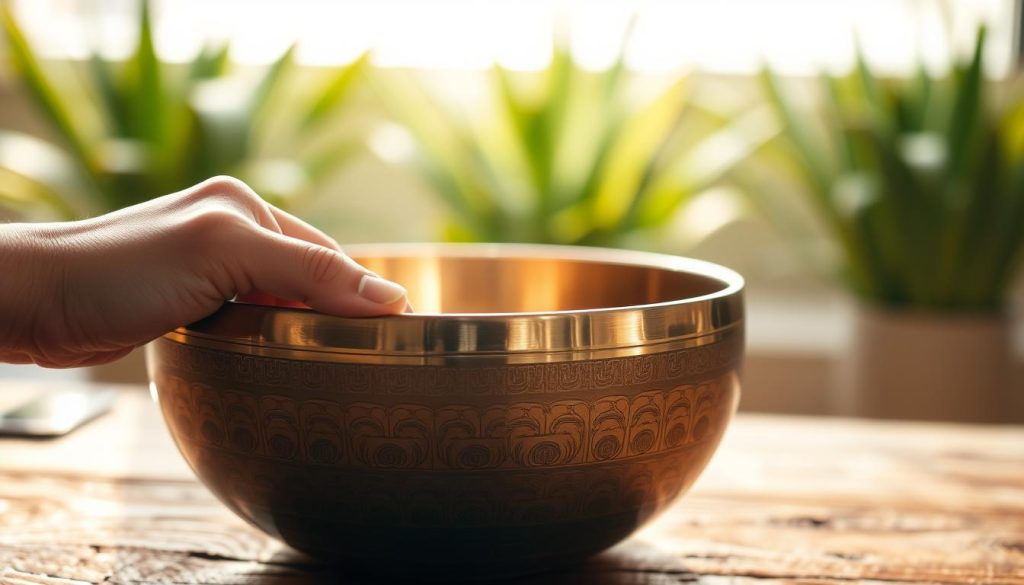
- Frequency: small size = high-pitched sounds, large size = low-pitched sounds.
- Use: medium sizes = versatility for beginners.
- Practicality: a 16 cm hand-hammered model may weigh more than 1 kg, making it difficult to hold for long periods.
“The vibrations of larger models fill a room more effectively and encourage a state of calm.”
Selecting the Right Note and Frequency for Your Needs
The correspondence between a note and an energy center guides a bowl’s therapeutic use.
The current standard is A at 440 Hz, but many practitioners prefer 432 Hz for a more natural feeling. Frequencies such as 528 Hz are also used for their purported healing qualities.
Each note is traditionally associated with a chakra: for example, the note C supports Muladhara for grounding. In meditation, choosing a specific note helps focus energy and vibrations.
- Precision: quartz crystal bowls offer more accurate tuning for targeted treatments.
- Complexity: metal alloys provide rich harmonics but less exact tuning.
- Test them: size and alloy strongly influence the note; try several models.
| Frequency | Note | Target chakra |
|---|---|---|
| 432 Hz | A or G depending on the tuning | General harmonization |
| 440 Hz | A (standard) | Musical and meditative use |
| 528 Hz | E | Energy rebalancing |
“Accurate tuning is essential for serious therapeutic practice.”
To explore the subject further and identify the right note, test several models and listen to their sound signatures.
The Importance of Craftsmanship and Symbols
Each hammer strike leaves a unique sound signature on the metal surface. Hand-hammered models have irregularities that add complexity to the harmonics and enrich the sound.
Renowned artisans such as Santa Ratna Shakya shape these pieces using ancestral Nepalese techniques. Their expertise ensures lasting resonance and remarkable durability.

Hand-hammered bowls
Sound advantage: the uneven texture creates a richer harmonic palette.
- They are made by expert artisans, ensuring superior sound quality.
- The complexity of the sound comes from the worked surface.
- The investment is often higher, but long-lasting.
The Prestige of Full Moon Bowls
Full Moon models are made only on full-moon nights. This practice, followed by some artisans, is said to produce a denser, more precious alloy.
“A Full Moon bowl is often regarded as the pinnacle of sound and aesthetic quality.”
Symbols and spirituality: Buddhist engravings, mantras, and motifs such as the Flower of Life reinforce the instrument’s sacred dimension. They also serve as reference points for chakra work.
To continue your research and compare prices and origins, consult a specialized buying guide.
Choosing a Tibetan Singing Bowl for a Specific Practice
Depending on your practice, some models promote grounding, while others stimulate creativity.
Meditation and sound therapy: prioritize a stable note and deep resonance. Large instruments spread vibrations through a room more effectively and support longer sessions.
Purification and crystal healing: to recharge crystals, choose a diameter of at least 15 cm. This size provides enough projection to purify stones and objects.

- Relaxation: low-pitched sounds help release tension and encourage letting go.
- Chakra work: the selected note should correspond to the targeted energy center.
- Mobile practitioners: consider weight and size to make transportation easier.
“By clearly defining your intended use, you maximize the sound and energetic effectiveness of each bowl.”
Tips for Giving a Singing Bowl as a Gift
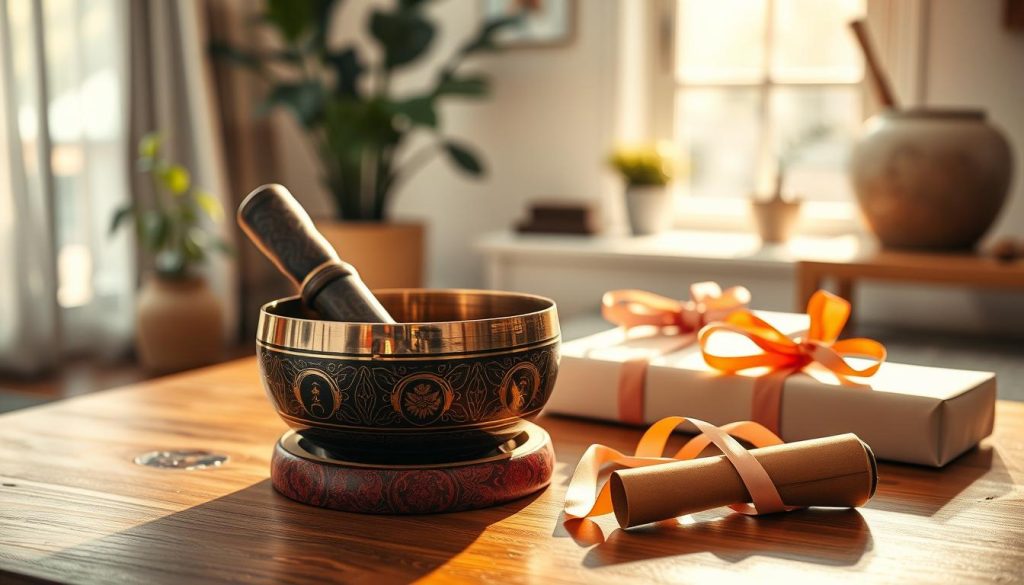
A complete set makes the experience more accessible for a beginner.
To give a suitable instrument, choose a medium-sized metal model. A diameter between 12 and 17 cm remains versatile for meditation and relaxation.
Selection Criteria for a Beginner
Choose a set that includes a cushion and mallet. These accessories make learning easier and ensure the gift is ready to use.
- Small metal bowl: easy to handle and ideal for the home.
- A smooth surface or simple engravings for easy handling.
- Subtle symbols add an aesthetic and spiritual dimension.
- At first, the note and frequency matter less than ease of use.
- Keep your budget in mind; a quality product remains a lasting gift.
| Criterion | Recommendation | Why |
|---|---|---|
| Size | 12–17 cm | Versatility for beginners |
| Material | Metal | Rich harmonics, with the option to move to crystal later |
| Accessories | Mallet and cushion | Ready to use |
“A practical gift invites someone to explore music and energy without barriers.”
Conclusion
Nothing can replace listening and feeling when assessing an instrument. Test the material, size, note, and intended use before buying.
Metal alloys offer a deep sound rooted in tradition. Quartz crystal, meanwhile, provides modern, stable vibrational precision.
Remember: size = frequency. Choose low sounds for relaxation and high sounds to energize a session. Define your goal: meditation, chakra work, or object purification.
Finally, give importance to visual appeal and ease of use. With these guidelines, you are ready to bring the serenity of a Tibetan singing bowl into your daily life.