
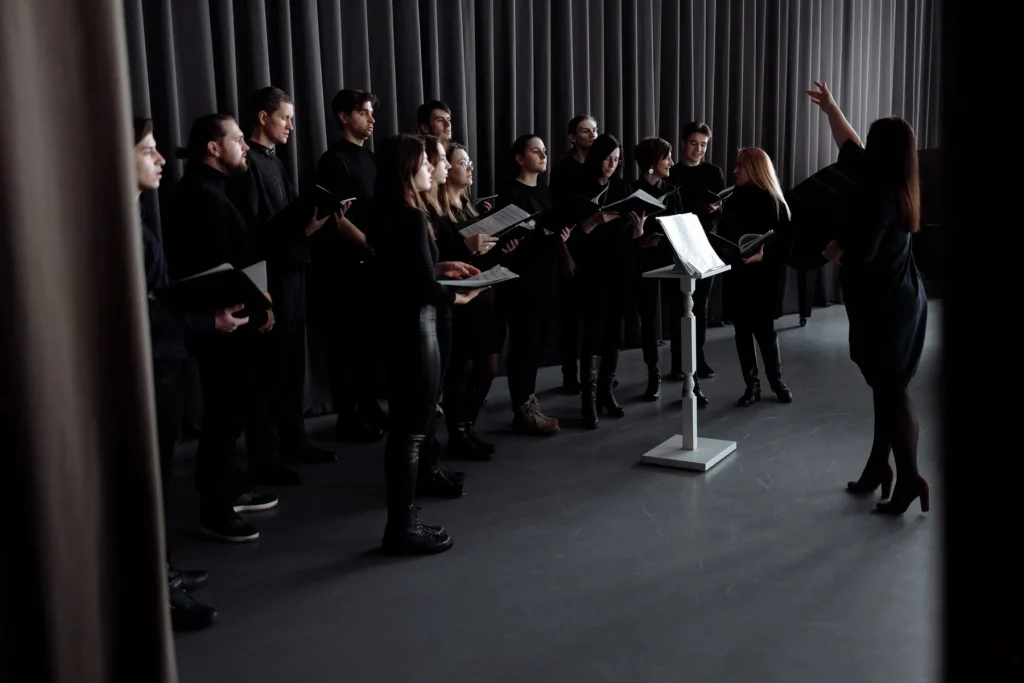
In the world of musical direction, the gestures of the orchestra conductor are essential. They are more than simple movements. They demonstrate the artistic leadership required to unite the musicians. These gestures reveal a profound knowledge of music and an ability to communicate with the orchestra.
Throughout history, conductors have adopted various styles. But their goal remains the same: to transform written music into a living experience. Claire Gibault, who began at the age of 14 and founded the Paris Mozart Orchestra, illustrates the impact of an innovative vision. Her actions help musicians progress. The orchestra conductor’s gestures thus become the link between notes and emotions.
Introduction to musical direction
Musical direction is a complex art combining leadership and musical knowledge. Orchestra conductors are at the heart of this practice. They play a crucial role as coordinators and communicators. Their influence goes beyond merely following the score: they bring compositions to life for audiences and musicians.
The essential role of the orchestra conductor
The role of the orchestra conductor extends beyond directing musicians. It also involves interpreting works with skill. A good conductor possesses technical expertise and emotional authority that enable them to guide the orchestra. Their behavior on stage is crucial to the group’s dynamics and cohesion.
The fascinating history of orchestra conductors
The history of musical direction is rich and fascinating. Figures such as Leopold Stokowski transformed the conductor’s role. Over the centuries, conductors have adopted new techniques and styles. The 20th century saw the exploration of complex synchronization, demonstrating conductors’ adaptability.
Methods such as “Mickey Mousing” in film illustrate an innovative approach to musical synchronization. This history reflects the evolution of the role of the orchestra conductor under the influence of culture, technique, and artistic innovation.
Essential gestures of the orchestra conductor
An orchestra conductor’s gestures are crucial to musical direction. They enable clear communication, particularly through tempo signals and dynamic cues. These signals are essential for musicians to play in harmony.
The conductor uses their right hand to guide the tempo and dynamics. This helps maintain the music’s fluidity. For example, in “The Rite of Spring,” every gesture is crucial to keeping the ensemble in time.
Tempo management is essential to harmony. It ensures that the musicians play together as intended.
Orchestral gestures and their impact on musicians
Orchestral gestures form a language that goes beyond technical signals. They create an atmosphere and convey emotions. Through their gestures, conductors establish a profound connection with their musicians.
A study shows that most musicians consider the conductor to be the musical leader. This highlights the importance of the conductor’s presence on stage. Varied, dynamic movements can make a performance memorable.
Young conductors must learn this nonverbal language. They may have difficulty balancing their gestures with the musicians’ expectations. By conducting pieces such as those by Stravinsky, they can improve their technique and energy.
By mastering orchestral gestures, they improve musician coordination. This increases the quality of the collective performance.
| Statistics about orchestra conductors | Percentage | Observations |
|---|---|---|
| Musicians who consider the conductor the musical leader | 75% | Reflects the importance of the role of the orchestra conductor |
| Proportion of conductors who use a baton | 60% | There is a marked preference for using a baton |
| Occasions on which the conductor’s importance is discussed | 80% | Raises essential questions about musical direction |
| Musicians who perceive the gestures as complex | 65% | Shows the need for rigorous training for new conductors |
| Understanding of gestures while performing complex pieces | 70% | Demonstrates the effectiveness of continued practice and learning |
Conducting technique and the conductor’s tools
Conducting technique relies on essential tools. The baton is an iconic symbol. It helps refine the conductor’s gestures and facilitates communication with the musicians.
This instrument makes musical intentions clearer. It provides a visual reference that stabilizes the orchestra’s dynamics. Conductors use it to mark the tempo and direct complex passages.
The importance of the baton
The baton improves the precision of gestures and creates a strong stage presence. It becomes an extension of the conductor’s arm. This makes it possible to convey subtle nuances, such as crescendos or delicate dynamics.
This technique enriches the musical interpretation. It creates a profound connection between the conductor and the musicians. During performances, using the baton promotes discipline and commitment.
Conducting without a baton: an innovative approach
Some orchestra conductors opt for conducting without a baton. This innovative method emphasizes hand movements to convey the musical content. By dispensing with the baton, conductors can create a more authentic interaction with the musicians.
This conducting technique offers a new perspective on performance. It highlights the importance of gestures in musical interpretation.
Nonverbal communication in orchestral conducting
Nonverbal communication is crucial for an orchestra conductor. Gestures are not merely directions. They convey emotions in music that influence the interpretation. A good conductor knows how to communicate these emotions through precise gestures.
Reading emotions through gestures
Understanding emotions in music through gestures is essential. Every movement and every hand position conveys a message. Conductors must adjust their direction according to the musicians’ reactions.
This interaction creates an atmosphere conducive to musical success. Emotions such as joy or melancholy must be felt and shared.
The importance of synchronizing movements
The synchronization of movements between the conductor and the musicians is crucial. A good conductor coordinates their gestures with the instruments. This ensures a harmonious interpretation.
Clear signals allow every musician to feel included and involved. This process goes beyond tempo. It combines technical and emotional aspects.
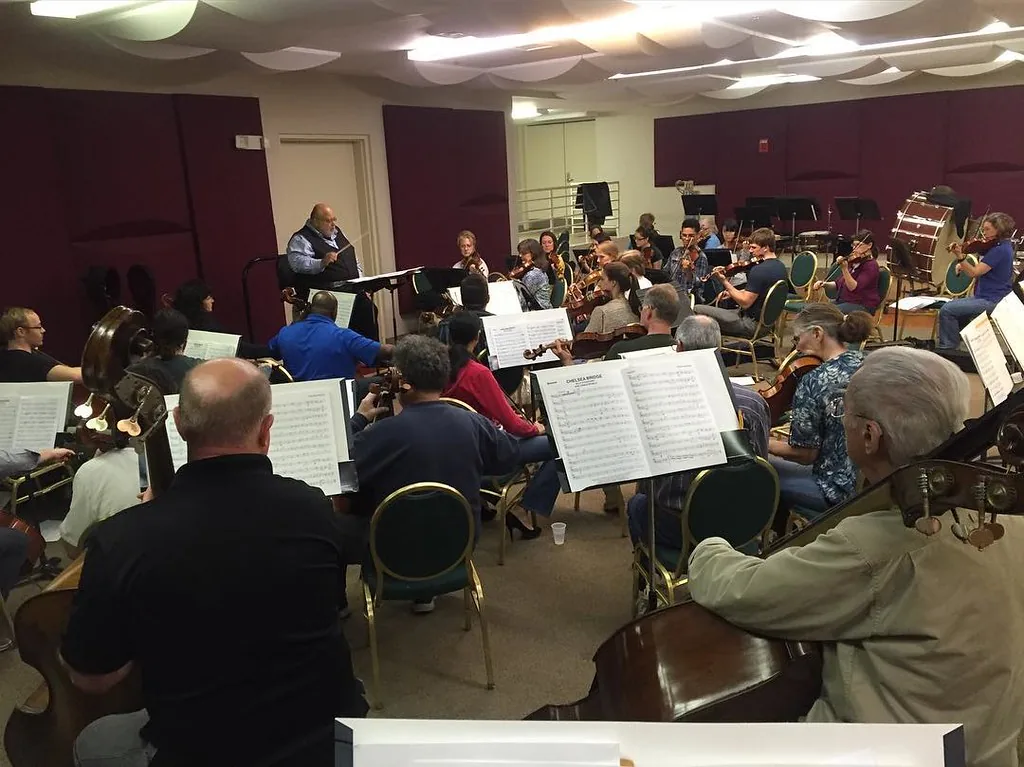
| Elements of nonverbal communication | Impact on musicians |
|---|---|
| Expressive gestures | Reinforce the emotion being conveyed |
| Eye contact | Creates an immediate connection |
| Body position | Indicates dynamics and tempo |
| Facial expression | Communicates emotional intensity |
Artistic leadership and orchestra management
An orchestra conductor’s artistic leadership is crucial to orchestra management. The conductor must establish a relationship of trust with the musicians. This creates an environment in which everyone feels valued and heard. This collaborative atmosphere is essential for unleashing creativity.
Creating a climate of trust with the musicians
A good orchestra conductor knows that trust is essential. They engage in open discussions to share ideas and concerns. This creates team spirit and encourages innovation.
Orchestra conductors adopt various conducting styles. Some are more directive, while others are more participative. Continuing education, such as that offered by Cadence, strengthens these skills.
Examples of great conductors and their unique styles
Conductors such as Daniel Taylor and Renée Fleming possess unique conducting styles. Taylor combines tradition and innovation, attracting high-level musicians. Fleming brings remarkable sensitivity to her collaborations, creating unforgettable moments.
These examples demonstrate the importance of artistic leadership in orchestra management. It is both a science and an art, requiring technique and empathy.
Conclusion
The gestures of the orchestra conductor are essential to success. They help coordinate the musicians and improve their performance. The conductor is more than a guide to the tempo.
They create emotional bonds with the musicians. This makes every concert unique and rich in emotion.
The conductor’s gestures are essential for conveying the nuances of the music. They influence the collective emotion, making the concert vibrant and unified. Every concert is an experience in which the music comes to life.
Conducting an orchestra is a complex art. It requires technical skills as well as a sound understanding of music and human beings. For more details, see this article here. It explores the importance of the orchestra conductor and gestures in music.
FAQ
What is the role of an orchestra conductor?
How do the orchestra conductor’s gestures influence the musicians?
What tools does an orchestra conductor use to conduct?
What is nonverbal communication in orchestral conducting?
How does an orchestra conductor establish a climate of trust?
What conducting styles can influence an orchestral performance?
Links to sources
- https://parismozartorchestra.com/claire-gibault/?lang=en
- https://www.frontiersin.org/journals/psychology/articles/10.3389/fpsyg.2016.01049/full
- https://experts.umn.edu/en/publications/gestural-analysis-and-classification-of-a-conductors-movements/
- https://www.berliner-philharmoniker.de/en/programme-notes/franz-schubert-symphony-no-7-in-b-minor-d-759-unfinished/