
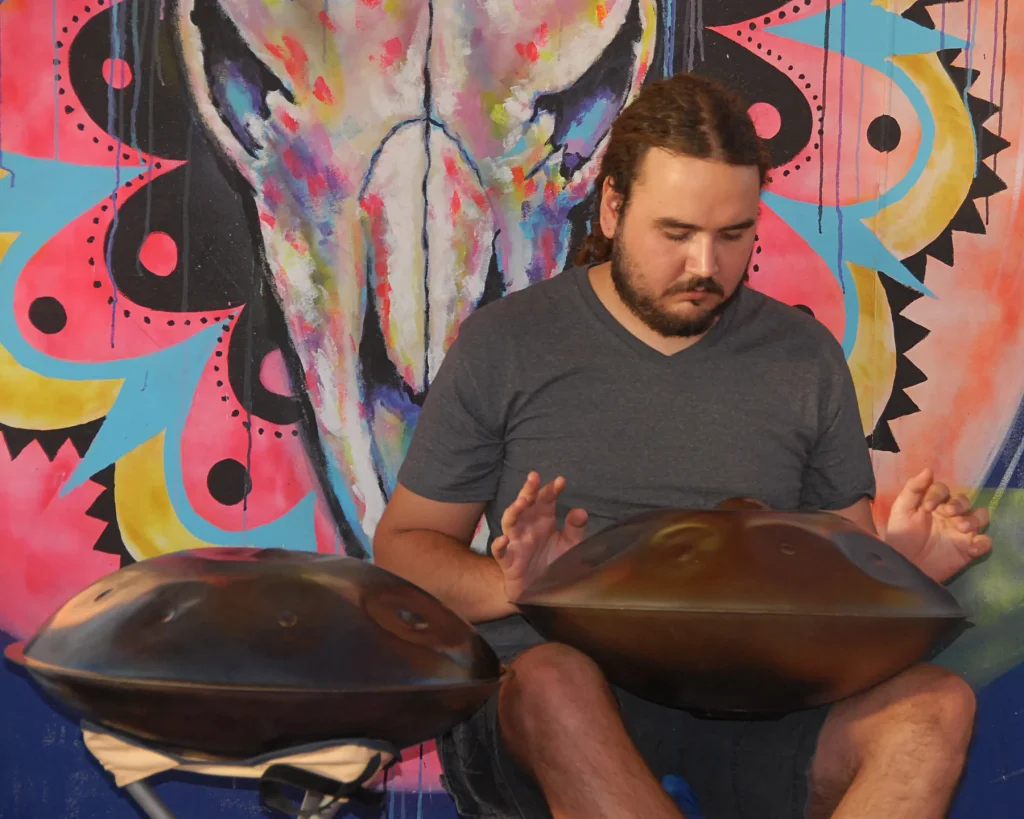
Purchasing a unique instrument such as a handpan is an exciting choice for music lovers. Interest in this artistic object and its captivating sounds continues to grow. However, buying one requires careful consideration.
Variations in quality and manufacturing methods have a considerable influence on prices. An entry-level model may cost a few hundred euros, while high-end versions command much higher sums.
To make the right choice, it is essential to understand the technical criteria. The musician’s experience, the materials used and the maker’s reputation all play a decisive role. This comprehensive guide will help you navigate the available options.
Our goal is to give you the information you need to make an informed purchase suited to your musical aspirations and budget.
Introduction to the world of handpans
Created in Switzerland in 2000, the handpan has its roots in the Hang Drum. This instrument fascinates people with its saucer-shaped design and captivating sounds. Within just a few years, it found a place on music stages and in relaxation spaces.
Its popularity can be explained by its unique emotional impact. Its deep, melodic vibrations create an intense sensory experience. Many people use it for meditation or live performances.
The market has evolved rapidly. In ten years, hundreds of makers have emerged, offering a wide variety of models. Each creation reflects expertise and a passion for music.
For beginners, choosing a handpan may seem complicated. Technical criteria, materials and the maker’s reputation all play a key role. A good experience begins with understanding these elements.
“The handpan is much more than an instrument; it is a gateway to inner harmony.”
Today, this instrument continues to win people over. Whether you are a musician or simply curious, its world is well worth exploring.
Handpan price range
The world of handpans offers a broad range of prices that reflects their diversity. Depending on the maker and materials, prices range from €400 to more than €5,000. This difference is due to the complexity of the manufacturing process and the makers’ reputations.

From basic to high-end
Entry-level models, such as those mass-produced in China, start at around €500. They are suitable for beginners but may lack tonal nuance. At the other end of the spectrum, handcrafted European instruments, such as a custom Hijaz, often cost more than €3,500.
Comparing price tiers
Here is an overview of average prices by category:
| Type | Notes | Price range |
|---|---|---|
| Entry-level | 9 to 10 notes | €800 to €1,500 |
| Mid-range | 11 to 12 notes | €2,000 to €3,000 |
| Luxury | Custom-made | €3,500 and above |
Beware of offers that seem too good to be true
A second-hand handpan priced below €600 may have tuning defects. Choose instruments that have been tested or come with a warranty. Their acoustic quality often justifies the investment.
“A good handpan retains its value over time, unlike low-cost imitations.”
How manufacturing quality affects the price
Behind every handpan lies craftsmanship that justifies its cost. The quality of its manufacture directly affects the sound and durability of the instrument. Let us look at how production methods radically transform the musical experience.
Craftsmanship versus industrial production
Makers such as PANArt hammer the metal for 30 to 50 hours per instrument. This manual method enables precise control over the harmonics. Industrial versions, by contrast, use mechanical pressing, which reduces manufacturing time but diminishes the richness of the sound.
Invisible expertise
Creating a handpan requires rare skills. Tuning the tone fields requires an exceptional ear and years of experience. An hourly cost of €40 to €60 reflects this outstanding technical expertise.
Recognizing excellence
Several signs indicate superior quality:
- Subtle irregularities in the notes are evidence of hand hammering
- Perfectly finished edges prevent unwanted vibrations
- The absence of crosstalk between notes ensures acoustic purity
Brands such as ZenaPan systematically incorporate these criteria. Their reputation fully justifies their premium positioning.
“A well-made handpan sings for decades, not merely a few years.”
This difference in manufacturing explains why two apparently similar instruments can have vastly different prices. The value of investing in an exceptional instrument is measured by the lasting musical enjoyment it provides.
How the number of notes influences the price
A handpan’s sonic richness depends largely on its number of notes. The more notes the instrument has, the more complex its melodies can become, but this polyphony comes at an additional cost.
Additional cost per extra note
Each note requires meticulous tuning work. Makers generally charge between €100 and €200 for each additional note. A basic nine-note model priced at €1,200 may therefore cost €1,800 with 13 notes.
Nine-note handpans versus more extensive models
Nine- or ten-note versions are ideal for beginners. They provide a sufficient scale without creating excessive acoustic complexity. Beyond 17 notes, the instrument’s overall resonance may be compromised.
Low notes
Low notes often double the technical challenge. Their inverted tuning requires rare expertise, which explains their impact on the final price.
“A well-balanced handpan is better than a model overloaded with poorly harmonized notes.”
- The limited space on the shell requires strategic choices
- Standard scales such as D Kurd reduce costs
- Prioritize tuning quality over the number of notes
The role of the musical scale in the price
The scale chosen for a handpan directly influences its cost. Some standardized scales offer savings, while custom creations require extensive work.

Standards and unique creations
Popular scales such as D Kurd benefit from optimized production. Their popularity, especially among 90% of beginners, allows makers to reduce costs. A custom scale, by contrast, requires hours of acoustic research.
Here are the main differences:
- Standard scales use proven patterns
- Custom versions involve additional testing
- Tuning to 440 Hz ensures universal compatibility
A practical example: D Kurd
This model remains the most accessible option. Its balanced tuning suits most musical styles. Makers have fully mastered its production, which limits unpleasant surprises.
The additional cost of unique instruments
Choosing a rare scale such as Celtic Minor or Magic Hour increases the budget by 20% to 40%. These creations require:
| Scale | Average surcharge | Lead time |
|---|---|---|
| Standard, D Kurd | 0% | 1 to 2 months |
| Celtic Minor | +20% | 3 months |
| Magic Hour | +40% | 6 months |
“A well-mastered standard scale is better than a poorly tuned original creation.”
Experienced musicians value custom models for their uniqueness. For beginners, however, D Kurd offers excellent value for money.
Choosing the metal and its effect on the budget
The material used to make a handpan plays a key role in its sound and cost. Three types of steel dominate the market: nitrided steel, stainless steel and Ember Steel. Each offers unique characteristics.

Comparing alloys
Nitrided steel is chemically treated to strengthen its surface. It produces exceptionally long sustain, making it ideal for deep melodies. Stainless steel is more resistant to moisture and suits maritime climates.
Rarer Ember Steel offers warm nuances. Its complex production process explains its higher cost. Pantheon Steel uses this alloy for its high-end creations.
Impact on costs
Here is how the materials affect the price:
- Nitrided steel: €1,200 to €2,000
- Stainless steel: €1,500 to €2,500
- Ember Steel: €2,500 to €4,000
Nitriding requires less energy than the heat treatment of Ember Steel. This difference is reflected in the final price. This comprehensive guide explains these variations in detail.
Service life and maintenance
Stainless steel offers better corrosion resistance without special treatment. Nitrided steel requires regular cleaning to preserve its acoustic qualities. More delicate Ember Steel requires additional care.
“The choice of metal determines both the instrument’s sonic personality and its longevity.”
For humid regions, stainless steel remains the most practical choice. Purists may prefer nitrided steel for its resonance, despite its more demanding maintenance requirements.
Why is a handpan so expensive?
Making a handpan is a complex process that justifies its high price. From artisanal expertise to quality materials, several factors explain its value.

Meticulous, time-consuming work
Creating a handpan requires an average of 50 hours of work. Every stage demands extreme care:
- Precise hammering to form the notes
- Hardening the metal to optimize resonance
- Fine-tuning by ear to achieve perfect pitch
Makers use specialized tools such as pneumatic hammers. The time devoted to each instrument directly affects its final cost.
Rare and valuable skills
Few instrument makers have mastered this complex technique. It is estimated that fewer than 200 qualified makers work worldwide. This scarcity of skills partly explains the prices charged.
Training requires years of practice. Perfect tuning demands an exceptional musical ear. These specialized talents are reflected in the instrument’s value.
A substantial investment in equipment
Professional workshops require expensive equipment:
- Hydraulic presses for shaping
- Precision tuning tools
- Premises suited to acoustic work
Other expenses must also be added to these costs: insurance, machine maintenance and workspace rent. As this comprehensive guide explains, these factors influence the final price.
“Making a handpan is like sculpting sound in steel. Every hammer blow matters.”
Makers’ gross margins range from 40% to 60%. This figure accounts for all these technical and logistical constraints. The price is high, but it is justified by an exceptional creation.
The second-hand market: benefits and risks
Buying a second-hand instrument is an appealing alternative for budget-conscious musicians. It provides access to quality models at a lower cost but requires greater vigilance.
Significant savings
Second-hand instruments often offer discounts of up to 30% compared with new ones. This price difference can be explained by:
- The absence of a waiting period
- The natural depreciation of cultural goods
- Sellers’ varying motivations
Specialist platforms such as dedicated Facebook groups are full of interesting listings. Checking them regularly can reveal some real gems.
The delicate issue of instruments going out of tune
One in four handpans reportedly develops tuning problems after three years of use. This increased risk can be explained by:
| Cause | Impact | Solution |
|---|---|---|
| Repeated impacts | Deformed notes | Physical inspection |
| Climate variations | Changes in metal tension | Humidity monitoring |
Using an electronic tuner such as the Korg OT-120 is essential for detecting these issues.
Checklist for a safe purchase
Here are the seven critical points to examine before buying:
- Acoustic test across the entire scale
- Visual inspection for signs of wear
- Verification of the certificate of authenticity
- Checking the instrument’s age and history
- Assessing its price against the market
- Meeting in person if possible
- Asking about any remaining warranty
“A good second-hand purchase begins with careful listening and ends with a transparent transaction.”
Favor local transactions so that you can test the instrument. Well-maintained models retain 80% of their value after five years, making this type of purchase a sensible choice.
How to choose the right handpan for your budget
Finding the ideal handpan requires a balance between passion and practicality. Your budget guides your choice, but acoustic quality remains paramount. Here is how to reconcile these considerations.
Prioritizing the essentials
Good value for money is based on three criteria:
- Sound: prioritize clear notes, even on an entry-level model
- Materials: nitrided steel offers an excellent compromise
- Finish: smooth edges prevent unwanted vibrations
Beginners can choose nine- or ten-note models. This comparison explains the options for each ability level.
Recommended brands and makers
Reputable French makers include:
- Ayasa, for tuning precision
- Onda, for ergonomic design
- ZenaPan, for acoustic innovation
Their expertise justifies a larger budget but ensures good durability.
After-sales service and warranties
Good service includes:
- A minimum two-year warranty
- Free tuning during the first year
- A maintenance kit containing mallets and a case
“Choosing a handpan also means choosing a relationship of trust with its maker.”
Some workshops offer payment in six interest-free installments. This can make the purchase easier.
Conclusion: making the right investment
A successful purchase combines passion and reason. The quality of the metal, the number of notes and the maker’s expertise remain decisive criteria. Choose durable materials such as nitrided steel for optimal sound.
In the long term, a good instrument retains 70% of its value. Avoid impulse purchases: test several models in a showroom or with a transparent maker to confirm your choice.
Above all, this musical investment should enrich your experience. Take the time to listen, compare and fall in love with the perfect sound.