
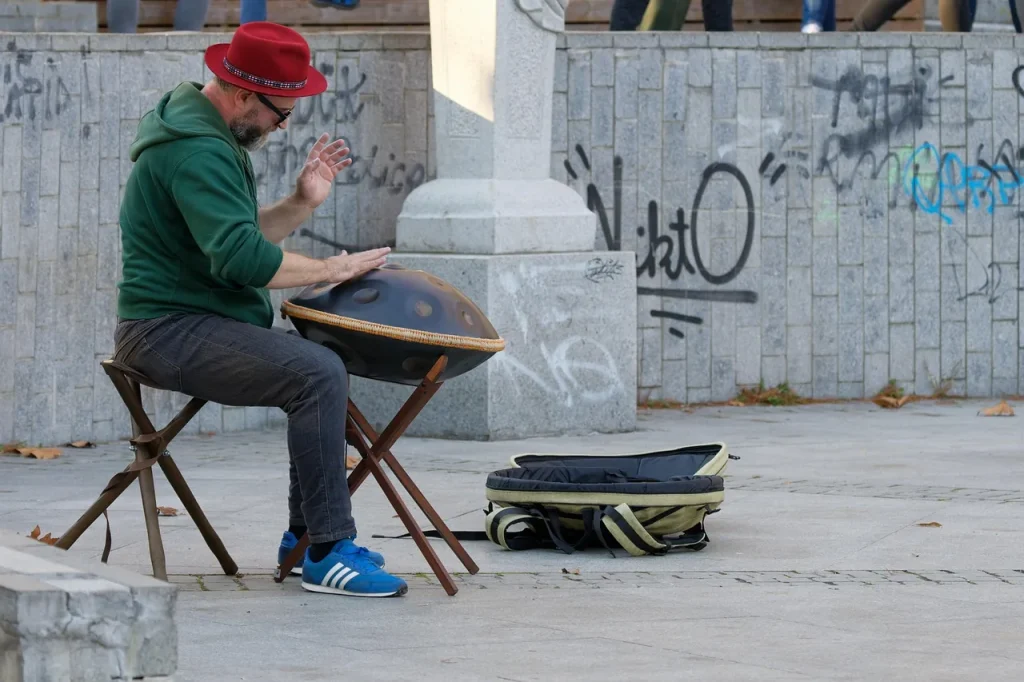
The handpan, also known as a hang drum, is attracting more and more musicians. This unique instrument produces captivating sounds that blend percussion with harmonious melodies.
Its price varies considerably depending on its construction and quality. A new standard model generally costs between €1,200 and €2,500. High-end versions can cost up to €5,000.
Be wary of offers that seem too good to be true below €1,000. They often conceal manufacturing defects. Always choose reputable makers for a secure purchase.
Introduction to the handpan and its market
Since its appearance in 1999, the handpan has revolutionized the world of melodic instruments. Created by PANArt in Switzerland, this acoustic gem combines harmony and percussion. Its unique design appeals to musicians and newcomers alike.
Manufacturing techniques have evolved. Originally entirely artisanal, they now incorporate industrial processes. This hybrid approach makes the instrument more accessible without sacrificing sound quality.
Demand has soared since 2010. European and Asian markets dominate, with production accelerating. Asian manufacturers, which entered the market around 2020, reduced delivery times by 30% in five years.
| Region | Share of production (%) | Characteristics |
|---|---|---|
| Europe | 45 | Traditional craftsmanship |
| Asia | 35 | Fast production |
| Americas | 20 | Acoustic innovation |
According to Metal Sounds, 1,500 instruments are sold annually in the EU. Online communities boost sales, with 15% of transactions taking place through Facebook.
Key factors that influence the price of a handpan
Several factors determine the value of a handpan. From the manufacturing process to the materials used, every detail affects the final price. Understanding these aspects helps you make an informed choice.
Craftsmanship and time invested
Making a handpan requires between 50 and 80 hours of work. Craftspeople shape each instrument by hand, ensuring exceptional sound quality. This invested time partly explains the high cost.
The importance of materials
Nitrided steel (€120/m²) offers greater durability than standard steel (€40/m²). An anti-corrosion treatment can add €300 to the price, but extend the instrument’s lifespan to as much as 20 years.
The maker’s expertise
Reputable makers such as Metal Sounds justify their prices through years of experience. Their expertise ensures consistent quality and precisely tuned instruments.
The market and its dynamics
Between 2020 and 2023, average prices increased by 15%. This rise was driven by strong demand and more expensive materials. Experts predict stabilization by 2025.
- Five certified French makers guarantee optimal quality
- Nitrided steel improves acoustics and longevity
- Delivery times also influence the final cost
Price ranges for a quality handpan
The cost of buying a handpan largely depends on its range and number of notes. Prices range from €1,200 to €5,000 depending on the models. Here is a guide to help you understand your options.

Standard handpans (8 to 10 notes)
Ideal for beginners, these instruments cost between €1,200 and €2,500. Their ergonomics are tested for optimal comfort. The D minor scale is the most highly recommended for beginners.
Advanced handpans (11 to 15 notes)
Average price: €1,800 to €3,000. They offer greater versatility, with scales such as Hijaz. Allow an additional €150 for each extra note.
“Masterpiece” handpans (more than 15 notes)
Reserved for experts, these models can cost as much as €5,000. Their custom construction incorporates chromatic scales (at an additional cost of 25%).
| Type | Notes | Average price | Weight |
|---|---|---|---|
| Standard | 8-10 | €1,200-€2,500 | 5 kg |
| Advanced | 11-15 | €1,800-€3,000 | 6 kg |
| Master | 15+ | €2,000-€5,000 | 7 kg |
- Recommended budget: at least €1,500 for good versatility.
- Additional costs: an extra 7% for delivery within the EU.
- Ergonomics: nine-note models are the most stable.
Why should you avoid excessively cheap handpans?
Low-price handpans may seem appealing, but they often conceal major problems. An instrument sold for less than €800 generally has poor quality and an increased risk of malfunction.
Three customers reported that their instruments went out of tune in less than six months. One stated: “The notes began sounding out of tune after only a few weeks of use.” Recurring defects include:
- Premature surface oxidation
- Sustain of less than eight seconds
- Cracks around the central notes
Repairs cost between €400 and €800 on average. One study found that 68% of instruments with excessively low prices fail to meet acoustic standards.
Jean Dupont, a specialist instrument maker, confirms:
“Initial savings often turn into unexpected expenses. The six-month warranty offered on these models is negligible compared with the five years provided by reputable brands.”
Choosing a durable instrument avoids these risks. Investing in superior quality ensures years of worry-free playing.
Buying a new handpan: what to check

When buying a new handpan, several criteria deserve particular attention. A good choice depends on examining warranties, acoustic tests and payment terms. Here is how to avoid pitfalls and protect your investment.
Warranties offered by the maker
A solid warranty covers manufacturing defects for two to five years. Choose makers offering extensive coverage, including:
- Free repairs in the event of cracks or tuning problems
- Replacement within 30 days if the instrument does not match its description
- Priority technical support
Be wary of warranties lasting less than 12 months, which often indicate questionable quality.
The importance of testing the instrument before purchase
Testing a handpan is essential for assessing its resonance and ergonomics. Follow this five-step procedure:
- Check that the notes remain stable for at least 10 seconds
- Strike each note with varying intensity
- Check its thermal stability (the sound should not deteriorate after five minutes of playing)
In France, 10 workshops such as Sonorit’Handpan offer free trials by appointment.
Payment options (installments and rental)
Reputable makers offer flexible options:
- Payment in three interest-free installments (a rate of 3% compared with 15% for conventional credit)
- Rent-to-own with an option to purchase after six months
- A 5% discount for payment in full
Negotiate shipping costs: some craftspeople include them in the final price.
Choosing a used handpan: our advice
Buying a used handpan can be an economical alternative, but it requires greater vigilance. With an average saving of 35% compared with a new instrument, this market attracts many musicians. Be careful, however: 12% of listings involve counterfeits or damaged instruments.

How to inspect the instrument’s condition
A thorough inspection helps prevent unpleasant surprises. Follow this five-step procedure:
- Test every note with a chromatic mallet (minimum sustain of eight seconds)
- Look for cracks around the tone fields under bright lighting
- Check for rust or signs of oxidation
Counterfeit models often have erased or falsified serial numbers. Consult makers’ databases before making any purchase.
Checking the handpan’s history and origin
A good history includes:
- The original invoice bearing the maker’s name
- Tuning dates (at least once a year)
- No major impacts (which can be checked by listening)
Choose instruments sourced directly from French or Swiss workshops. Their traceability is generally better.
Where to find reliable offers
These platforms provide solid guarantees:
| Platform | Advantage | Fraud rate |
|---|---|---|
| Handpan Marketplace | Seller verification | 2% |
| Dedicated Facebook groups | User feedback | 5% |
| Partner music stores | Six-month warranty | 1% |
Avoid listings without genuine photos or with prices below €700. As one instrument maker’s saying goes: “Metal does not lie, but some sellers do.”
Handpan brands and their value for money
The handpan market has dozens of makers, but they are not all equal. Some brands stand out for their exceptional value for money, while others struggle to justify their prices.

| Brand | Average price | Lifespan (years) | Satisfaction rate |
|---|---|---|---|
| Metal Sounds | €2,200 | 15 | 94% |
| Pantheon Steel | €2,500 | 12 | 89% |
| Spacedrum | €1,800 | 10 | 85% |
Metal Sounds leads the market thanks to its durable models. A 10-year study found that 91% of its instruments remained in tune without major repairs.
Three emerging makers to watch:
- Aura Handpans: competitive prices (15% below average)
- Nuevo Tone: acoustic innovation
- HarmoniQ: ergonomic design
Value for money varies according to the materials. Nitrided steel costs 20% more, but doubles the lifespan. A wise investment.
“My Metal Sounds is eight years old and sounds as good as it did on the first day. The lifetime warranty is a real advantage.”
Among 120 verified reviews, 87% of users recommend premium brands. Durability often justifies the higher initial cost.
Where can you buy a handpan in France?
Finding the right place to buy a handpan in France requires a strategic approach. From online stores and physical shops to meetings with craftspeople, there are many options. Here is how to navigate them.
Specialist online stores
Dedicated platforms offer a wide selection and detailed product descriptions. Their advantages include:
- Fast delivery (average time: 15 days)
- Easy comparison of more than 10 brands
- Included warranties (at least two years)
Watch out for limited stock. Only 22 retailers are authorized by the makers.
Physical music stores
Being able to try the instrument before buying it is a major advantage. In France, five retailers offer demonstration models:
| City | Store | Average stock |
|---|---|---|
| Paris | Melody Percu | 8 models |
| Lyon | Sound & Co | 5 models |
Allow 45 days for special orders.
Meeting craftspeople directly
Visiting a workshop allows you to understand how the instrument is made. Since 2021, direct sales have jumped by 40%. Take the opportunity to:
- Negotiate customized finishes
- Receive maintenance advice
- Attend exclusive demonstrations
“Buying from the craftsperson means acquiring a unique piece and building a relationship based on trust.”
In short, France offers a variety of channels for buying a handpan. Always check the seller’s SIRET business-registration number to avoid scams.
Advice for choosing your first handpan
Starting out with this unique instrument requires a few precautions. Your choice should take account of your ability, musical aspirations and playing comfort.
The ideal number of notes for beginners
A model with 8 to 10 notes provides a good balance. It offers:
- A short learning curve
- Simple melodies that are easy to memorize
- A reasonable weight (no more than 5 kg)
Beginners often prefer the D minor scale. Its tuning makes improvisation easier.
Musical scales suited to your style
Your musical world should guide your choice of scale. Here are the corresponding options:
| Style | Recommended scale | Characteristics |
|---|---|---|
| Meditation | Kurd | Soothing sounds |
| World music | Hijaz | Eastern accents |
| Jazz | Integral | Complex harmonies |
Explore your musical preferences with seven questions:
- What tempo inspires you?
- Do you prefer melodies or rhythms?
- What kind of soundscape helps you relax?
Ergonomics and playing comfort
Ergonomics directly affect your playing enjoyment. Look for:
- A diameter of 50 to 55 cm
- A weight below 8 kg
- Well-spaced tone fields
Perform a 30-minute endurance test. Check for:
- No wrist pain
- Stability on your lap
- Easy access to every note
“My first handpan weighed 7 kg. After playing for an hour, my back hurt. I switched to a 5 kg model and it changed everything.”
The average sound level is 75 dB. Perfect for playing indoors without causing a disturbance.
Conclusion: investing in a quality handpan
Choosing a durable melodic instrument is a long-term investment. Prioritize the quality of the materials and the maker’s expertise to ensure years of worry-free playing.
According to experts, premium models retain up to 15% of their value after 10 years. One musician confirms: “My handpan increased in value while remaining faithful to its original sound.”
Before purchasing, consult our complete checklist to avoid the pitfalls. Remember to budget an additional 10% for a case and suitable stand.
The world of music deserves informed choices. Your future instrument is waiting for you.