

For more than ten years, I have explored the benefits of singing bowls and shared a clear method for beginners. This introduction offers simple pointers to help you become familiar with your instrument and quickly experience its benefits.
You will learn how to handle the mallet, make your Tibetan singing bowl sing, and incorporate this practice into your daily meditation. The method combines precise movements, body awareness, and careful pressure control.
In practical terms, this step-by-step guide helps you avoid common beginner mistakes. It explains how to initiate the vibrations, enhance relaxation, and create a soothing sound experience for the mind and body.
This first article serves as an introduction: it lays the groundwork for handling several bowls, developing the rubbing technique, and cultivating a regular practice. Read on to master how to make them sing and fully enjoy their benefits.
Understanding How a Singing Bowl Works
Understanding the bowl’s sound mechanics helps you appreciate every resonance and its effect on the chakras.
Tibetan bowls date back to around 5000 BC. At the time, shamans used them for sacred incantations. This long history explains the place these instruments hold in ritual and wellness practices.
Composition and function: a traditional Tibetan bowl combines seven metals. Each metal corresponds to a visible celestial body and is intended to target a specific chakra. This combination creates a rich, deep tone.
- Alloy quality = lasting resonance.
- The vibration influences the body’s internal vibrational state.
- Modern science confirms an effect on brain waves.
“The bowl’s structure determines the purity of its sound and the reach of its harmonics.”
| Metal | Celestial body | Chakra | Function |
|---|---|---|---|
| Gold | Sun | Crown | Clarity and elevation |
| Silver | Moon | Third eye | Sensitivity and intuition |
| Copper | Venus | Heart | Emotional harmony |
| Tin | Mars | Throat | Communication |
By studying this structure, you can better understand how to make a bowl sing and generate beneficial vibrations. For a practical guide to the technique, see the instructions.
How Can You Use a Tibetan Singing Bowl Easily?
Choosing the right equipment completely changes how your instrument resonates.
Choosing the equipment
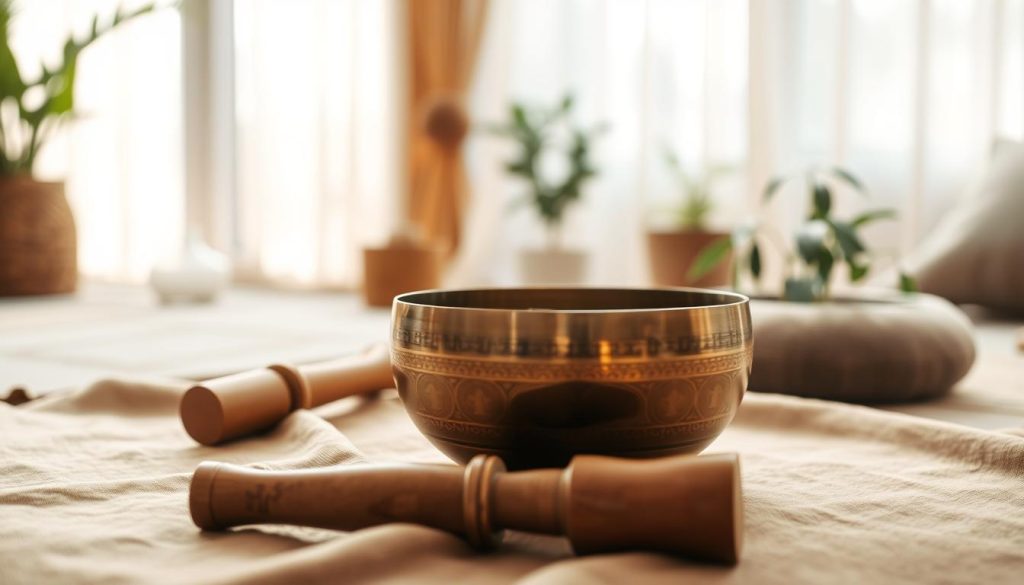
A wooden stick or a suitable mallet makes the movement easier. Try several sizes to find the one that suits your sound bowl.
Keep your hand relaxed and maintain light, consistent contact with the side. Too much pressure muffles the resonance; too little creates unwanted noise.
The importance of intention
Your state of mind influences the quality of the sound. A clear intention helps make the bowl sing and establish a connection with your bowls.
Every Tibetan bowl is unique: adapt your approach to reveal its potential. To develop your practice and learn how to make it sing, this article offers progressive exercises.
“A gentle movement opens the way to lasting resonance.”
Adopting the Ideal Posture for Successful Practice
Positioning your body carefully helps connect the movement with the vibration.
Sit comfortably, preferably cross-legged, for a meditation session of around ten minutes. A stable position helps you hold your Tibetan bowl without tension and remain present throughout the practice.
Place the bowl on a cushion rather than on a hard surface. This amplifies the resonance and protects the bottom from impacts.
Hold the mallet or wooden stick like a pen, with your palm relaxed. Keep your palm open beneath the bowl; closing your fingers around its side would block the vibration.
Your wrist movement should remain fluid. Gently strike the upper part of the bowl without tensing up to preserve the sound quality.
- Adjust the position to suit your comfort.
- Allow time to settle in before each session.
- With repetition, the bowl will become a natural extension of your body.
“A relaxed posture produces a richer, more stable vibration.”
Mastering the Striking Technique
A clean, controlled strike initiates the first harmonics. This simple movement produces the vibrations that define the bowl’s tone.
The method involves giving the upper part of the singing bowl a sharp tap with the mallet. The stick must rebound immediately after contact so that it does not muffle the vibration.

Wrist movement
Move like a pendulum: the motion comes from the wrist, not the entire arm. Keeping an open palm beneath the bowl prevents you from absorbing too much energy.
- Choose a mallet suited to the size of the bowls and the wood of the handle.
- Maintain light pressure: too much force creates harsh sounds.
- Stay relaxed: any tension in the body alters the effect and duration of the vibration.
“A fluid movement produces richer resonance.”
By repeating this method, you will learn how to make a Tibetan singing bowl sing accurately. To go further, read the technical guide.
Learning the Rubbing Method to Make the Bowl Sing
The rubbing method transforms a simple circular motion into a lasting, controlled vibration.
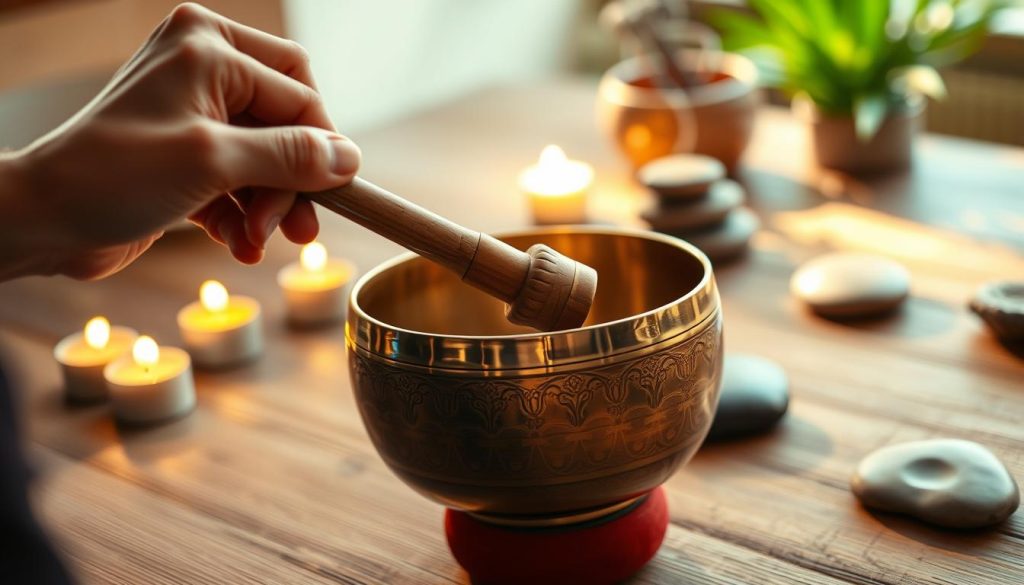
Hold the stick at a 90-degree angle to the outer rim for the best contact. This position maximizes the friction surface between the wood and the side of the bowl.
Consistency of movement
Make a slow, steady circle. Maintain constant pressure: neither too strong nor too light.
By maintaining the same speed, the tone develops and the vibration gains depth. If starting is difficult, give the bowl a gentle initial tap with the mallet.
Direction of rotation
Initiate the movement with your shoulder and arm while keeping your wrist stable. This motion preserves the stick’s stability.
Use the wooden side for a clearer note or the suede side for a low, enveloping tone. With practice, the sounds harmonize the chakras and can even make water inside the bowl ripple.
Tip: do not move too quickly: the bowl needs time to begin resonating.
Solving Common Difficulties During Use
If your instrument remains silent, first check your grip and circular movement. Hold the mallet like a pen and make sure your palm is completely flat beneath the bowl.
Inconsistent pressure or an irregular speed often interrupts the vibration. Use a slow, steady movement around the circumference. Keep the stick in contact throughout the motion to avoid breaking the resonance.
The quality of the alloy influences the tone. Some low-quality bowls do not produce harmonious sounds. If the problem persists, adjust your body position and the way you hold the mallet.
Regular practice improves your technique and promotes relaxation. If you get stuck, reread this detailed instruction guide to check every step, from holding the stick to controlling the applied pressure.
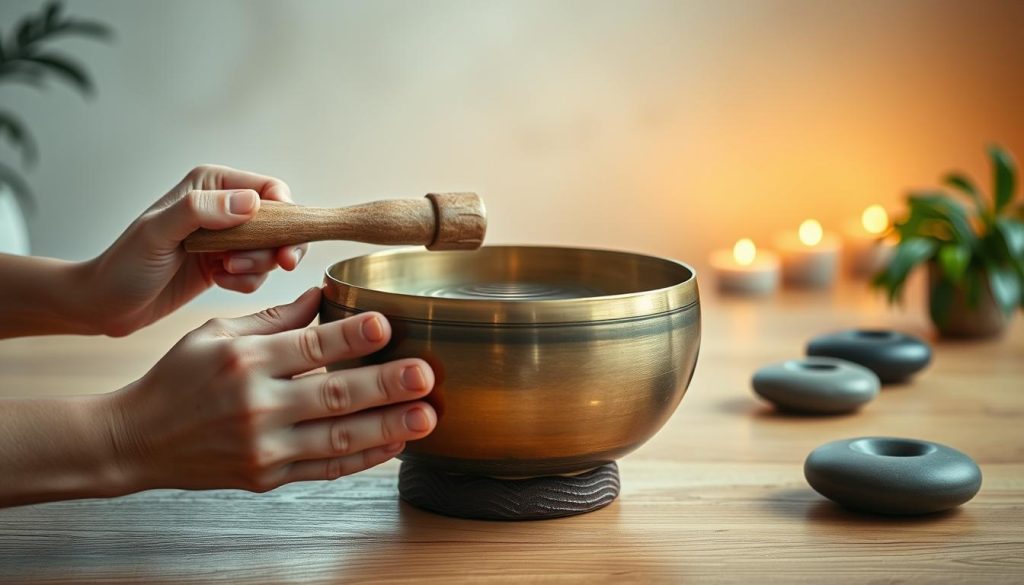
“A steady movement and an open palm release the finest vibrations.”
| Problem | Common cause | Quick solution |
|---|---|---|
| Silent instrument | Incorrect grip and pressure | Hold it like a pen, keep your palm flat, and restart the circular motion |
| Choppy sounds | Irregular contact | Maintain contact around the entire circumference |
| Weak tone | Poor-quality alloy | Try another bowl or adjust the mallet |
| Physical discomfort | Poor position | Adjust your posture and relax your shoulders |
Maintaining Your Instrument to Preserve Its Tone
Regular maintenance is essential for preserving your instrument’s pure sound.
Dust and oxidation quickly alter the vibration. Gently wiping it with a damp cloth is usually sufficient.
Avoid prolonged contact with water. Metals such as copper and iron can rust and reduce the instrument’s lifespan.
Some practitioners use a little white vinegar to restore its shine. Test it on a small area before applying it to the entire surface.
- Making the bowl sing regularly helps maintain its natural patina.
- Store the mallet and stick in a dry place to protect the wood and fabric.
- Handle the instrument gently: a fall can crack its side and permanently ruin its tone.
Tip: maintain light pressure and a calm movement; with practice, the body quickly learns how to protect the instrument.
“Simple maintenance ensures that your bowls will continue to sing during your wellness sessions.”
For technical advice and maintenance routines, see our practical guide on making a bowl sing.
Exploring the Therapeutic and Vibrational Benefits
The harmonics released by rotating the mallet promote deep relaxation in a short time.
A 10- to 20-minute session is often enough to reach a relaxed state. The waves travel through the body and help release tension.
The bowls’ vibrations help harmonize the chakras. Each dominant note encourages inner reconnection.
“A short, regular practice transforms the space into a sanctuary and calms the mind.”
Practical variations: use the wooden side of the mallet for the upper chakras and the suede side for lower frequencies.
| Benefit | Mechanism | Recommended duration |
|---|---|---|
| Stress reduction | Vibrations + breathing | 10–20 min |
| Harmonization | Activation of the dominant note | 10–20 min |
| Improved sleep | Deep relaxation | 10–20 min |
With the right method and steady mallet pressure, the practice becomes a daily ally for well-being.
Conclusion
Consistency transforms a discovery into a genuine wellness practice. By combining posture, the rubbing method, and striking movements, you will soon know how to make a bowl sing and appreciate its tone.
Every singing bowl is unique: listen to your body and adjust the pressure of your hand. Take care of your bowls to preserve the purity of their tone.
If you would like to develop your practice further, follow this link to learn how to make a bowl sing and discover other routines.
Thank you for reading this article. Continue exploring the methods, experiment with subtle variations in sound, and enjoy moments of calm with your Tibetan bowl.