

This article takes a balanced look at whether using a bowl can harm your hearing or body.
Drawing on more than ten years of personal experience, the author shares practical insights to guide you step by step.
We will examine whether the sound causes tinnitus or headaches, drawing on studies and practical advice.
You will also find simple precautions for handling your instrument without worrying about unwanted everyday effects.
For more information about the practical and medical aspects, see the page on side effects and contraindications.
Understanding the origins and benefits of singing bowls
These instruments have their roots in ancient traditions. They are often made with seven metals, each symbolizing a planet in the solar system.
Regular meditation promotes deep relaxation and helps reduce everyday stress. Studies, including those using Landry’s method in 2013, show improved calmness during guided sessions.
Practitioners also report positive effects on blood pressure and heart rate when the instruments are used properly.
- Traditional composition: seven metals and planetary symbolism.
- Landry method: a protocol designed to improve relaxation.
- Benefits: reduced stress and greater emotional harmony.
| Aspects | Observed effects | Evidence and observations |
|---|---|---|
| Relaxation | Reduced stress, muscle relaxation | 2013 studies (Landry method) and clinical feedback |
| Physiological parameters | Lower blood pressure, slower heart rate | Measurements before and after guided sessions |
| Meditation | Improved concentration, emotional regulation | Widespread use in contemporary sound therapies |
To learn more about the practice and how to choose an instrument, read our complete guide to everything you need to know about singing bowls.
Tibetan singing bowl dangers: are there any risks?
Let us begin by explaining what tinnitus means and why it occurs.
Definition of tinnitus
Tinnitus is the perception of sound without an external source. It can take the form of buzzing or ringing heard in the head or ear.
Common causes of hearing problems
Prolonged exposure to sounds above 85 decibels can damage hearing. In some cases, improper use of a bowl can cause auditory fatigue in sensitive people.
Stress, changes in the metals of the inner ear, and neurological factors can also contribute to these problems. Pregnant women and people with neurological conditions should consult a professional before use.

| Factor | Effect | Advice |
|---|---|---|
| Volume > 85 dB | Risk of tinnitus | Limit exposure and lower the volume |
| Intense vibrations | Auditory fatigue | Choose an instrument measuring 20 cm or less |
| Stress or neurological condition | Worsening symptoms | Consult a healthcare professional |
For additional medical information and practical recommendations, see our page on side effects and contraindications.
Scientific analysis of the effects of sound on hearing
Precise measurements clarify the impact of frequencies and vibrations on the human body.
Dr. Jayan Marie Landry’s 2013 study involved 51 participants — 35 women and 16 men.
The sessions followed the Landry method: 12 minutes of sound exposure followed by 20 minutes of guided relaxation.
Readings taken with an Omron HEM-747-IC show a significant reduction in systolic blood pressure.
The researchers also noted a decrease in heart rate associated with deep relaxation of the autonomic nervous system.
“Short, controlled exposure to sound produces a measurable effect on blood pressure and emotional state.”
These findings suggest that the vibrations produced by the instruments have a positive effect.
They promote relaxation and reduce stress during the session.
| Parameter | Observation | Interpretation |
|---|---|---|
| Blood pressure | Measured reduction in systolic pressure | Relaxing effect confirmed by the Omron device |
| Heart rate | Slower after the session | Activation of the parasympathetic nervous system |
| Emotional well-being | Reported improvement | Deep relaxation after exposure |
- Brief exposure (12 min) appears sufficient to produce measurable effects.
- The method combining sound and relaxation maximizes the benefits.
- The instruments have a genuine physiological impact, but duration and volume must remain controlled.
The connection between vibrations and headaches
The vibrations emitted by an instrument can provide deep relaxation.
However, some people experience discomfort in the head after a prolonged session.
Individual sensitivity to sound stimuli
The nervous system responds to sounds and vibrations.
In vulnerable individuals, excessive exposure causes sensory overload.
The instruments, which are often made from several metals, generate frequencies that affect the body.
In some cases, this can lead to problems such as headaches or increased tension.
- Some people are more sensitive to vibrations.
- Stress heightens the perception of sound and makes relaxation less effective.
- Monitoring blood pressure and your general condition helps prevent discomfort.
| Factor | Effect | Advice |
|---|---|---|
| Exposure time | Possible headaches | Limit the session to 10–15 min |
| Volume and vibrations | Sensory overload | Reduce the sound intensity |
| Individual sensitivity | Variable reactions | Adjust the instrument and distance |
Essential precautions for responsible use
A few precautions are necessary to enjoy the benefits of sound fully. They protect your hearing and improve the quality of your relaxation.
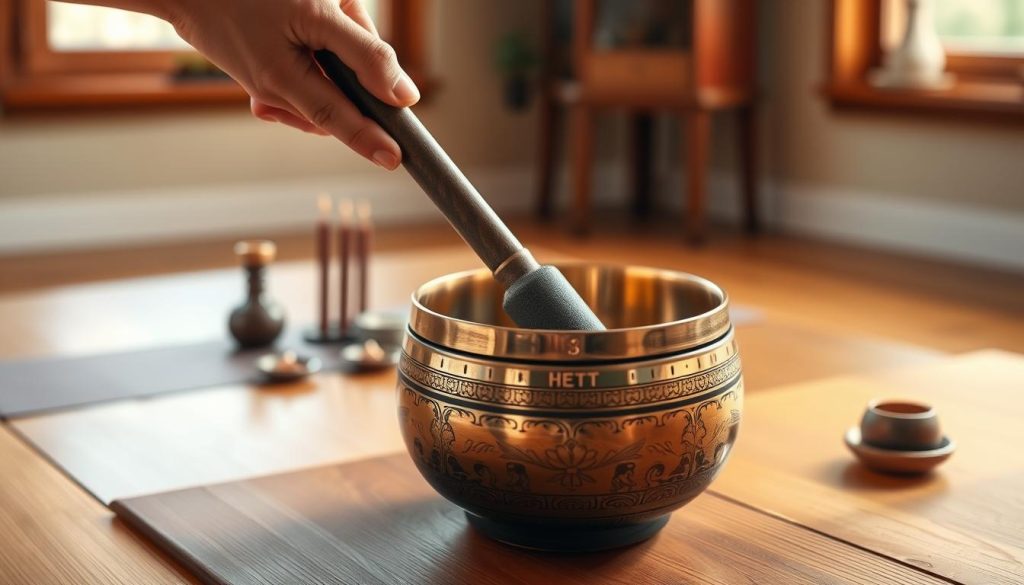
Adjusting the sound level
Monitor the sound level: use a mobile app to check that the sound remains below 85 decibels. This will help you avoid exposure that is too intense for your hearing health.
Controlling session length
Limit each session to a few minutes when you are starting out. For guided sessions, 10–15 minutes is often enough to achieve deep relaxation without causing auditory fatigue.
Creating a calm environment
Sensitive people benefit most from a quiet room and a relaxed posture. Move away from sources of noise and adjust the distance between the instrument and your head.
- Respect your body’s limits and do not force the vibrations.
- Choose moderately sized bowls to reduce sound intensity.
- If you experience discomfort, stop the session and consult a healthcare professional.
| Precaution | Goal | Recommended action |
|---|---|---|
| Adjust the volume | Protect hearing | Measure it with an app and stay below 85 dB |
| Limit the duration | Prevent auditory fatigue | Sessions of 10–15 minutes |
| Environment | Maximize well-being | Quiet room, good posture, suitable distance |
Contraindications for vulnerable people
Certain medical conditions require special attention before any sound session.
People with a pacemaker should consult a doctor before being exposed to Tibetan singing bowls. Magnetic fields and vibrations may interact with the electronic device.
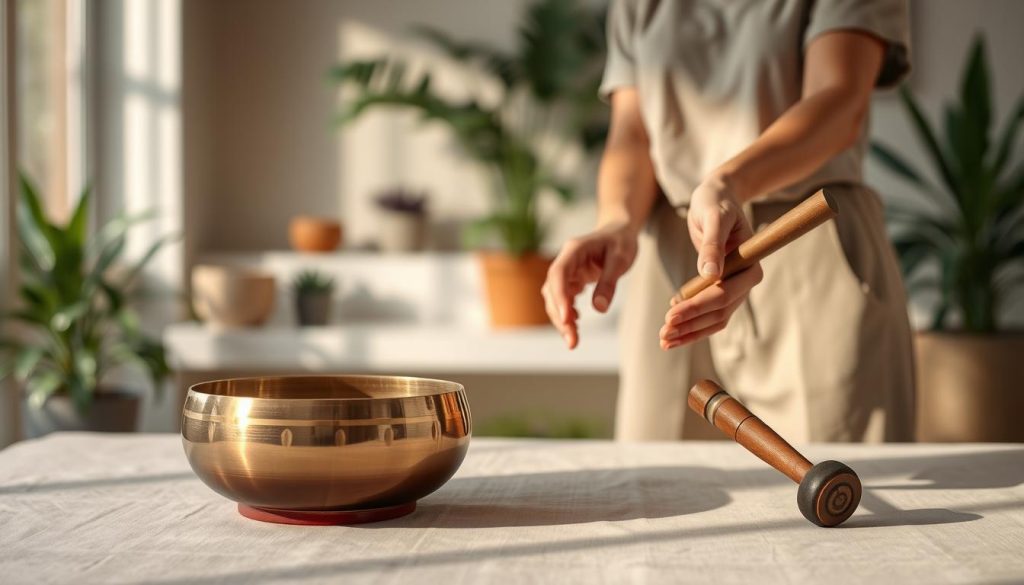
Pregnant women should also seek medical advice. Excessively intense or prolonged exposure could theoretically affect the fetus.
People with neurological disorders, such as epilepsy, should avoid unsupervised exposure. The same caution applies to older or very vulnerable people.
- Consult a doctor before using a bowl if you have a medical device.
- Seek medical advice before using bowls during pregnancy.
- Avoid unsupervised exposure if you have a neurological disorder.
| Profile | Potential risk | Practical advice |
|---|---|---|
| Person with a pacemaker | Electronic interference | Consult a cardiologist before exposure |
| Pregnant women | Intense vibrations | Seek advice from an obstetrician |
| Epilepsy or neurological disorders | Possible seizures | Avoid any use without medical supervision |
| Highly sensitive people | Reaction to metals and vibrations | Test briefly and reduce sound pressure |
Managing sensory overload during sessions
During some sessions, the intensity of the vibrations can overwhelm your attention and cause disorientation.
Sensory overload occurs mainly when exposure is prolonged or sessions are scheduled too close together. Some people experience mental fatigue, dizziness, or increased tension.
To limit this effect, shorten the duration and lower the sound intensity. Short sessions promote deep relaxation without overstimulating the nervous system.
Adapt your use to your condition: if you have a mood disorder or are pregnant, remain vigilant and consult a professional before extending your sessions.

- Short durations: begin with 10–15 minutes.
- Listen to your body: stop if you feel unusual fatigue or pressure.
- Gradual progression: increase the duration little by little to protect your hearing health.
For safety advice and a gradual approach, see our complete guide to safe use.
Choosing a quality instrument to minimize discomfort
A carefully chosen instrument limits discordant vibrations and improves the quality of the session. Choose a handcrafted bowl made from seven metals for harmonious, stable sounds.
The Instruments du Monde store offers valuable expertise in selecting instruments that reduce unpleasant sound effects. A quality bowl produces consistent frequencies and protects hearing health.
Investing in a reliable instrument helps control sound pressure. This reduces headaches associated with discordant frequencies and protects the body during use.
| Criterion | Advantage | Advice |
|---|---|---|
| Handcrafted construction | Stable sounds, better resonance | Choose certified models |
| Seven-metal composition | Harmonious vibrations | Choose traditional materials |
| Size and weight | Control of sound pressure | Test before buying |
| Expert advice | Personalized selection | Ask for help in the store |
For additional medical information, see the information on side effects and contraindications.
Adding Tibetan singing bowls to a safe wellness routine
Begin with short, regular sessions so your body can gently adapt to the soothing vibrations.
Use a gradual method: practice for 5 to 10 minutes a day, then increase the duration if everything feels comfortable. This approach reduces auditory fatigue and stress-related problems.
Using a quality instrument promotes relaxation and protects the body’s health. Choose singing bowls made from high-quality metals to obtain stable sounds.
Schedule sessions at quiet times. Avoid sources of tension around the session to maximize the benefits for relaxation and meditation.
- Test the intensity before settling in.
- Limit the duration if you experience pressure or discomfort.
- Alternate practice and rest days for safe progression.
| Goal | Recommended duration | Practical action |
|---|---|---|
| Getting started | 5–10 min | Sit down, adjust the distance, and strike gently |
| Routine | 10–20 min | Guided breathing and moderate use of the bowl |
| Maintenance | 2–3 times a week | Short sessions, quality instrument |
By following these guidelines, using a bowl becomes a reliable way to improve long-term well-being without worsening hearing problems.
Conclusion
To conclude, remember the key points from this article:
Studies confirm that sound has beneficial effects on relaxation and stress reduction. These benefits are most apparent during short, controlled sessions.
Choose a quality instrument and follow the recommended limits for duration and volume. Selecting a good bowl reduces discordant vibrations and protects your hearing.
If you have any concerns about your health, consult a professional before starting. With moderation and care, this practice can become a safe part of your wellness routine.