

This guide presents the keys to choosing an authentic sound instrument.
The singing bowl is an inverted bell used for meditation. A good Tibetan singing bowl offers rich, lasting resonance. Here, you will learn how to identify pieces hand-hammered by artisans.
Handcrafting gives each instrument a unique sonic signature. A quality Tibetan singing bowl stands out through its alloy and precise note. You must remain vigilant about the counterfeits flooding the market.
Investing in a superior model ensures longevity and deep harmonics. Follow this guide to avoid common mistakes and choose according to your preferred frequency and spiritual needs.
To compare a reliable selection, visit the specialist store: Instruments du Monde guide.
Understanding the world of Tibetan singing bowls
Let us explore how history and alloy create these instruments’ sonic signature.
Historical origins
The earliest uses are traced to Bön shamanic practices. These predated the arrival of Buddhism in Tibet in the seventh century.
The introduction of Buddhism by Songtsen Gampo transformed their ritual use. The singing bowl then became a liturgical and meditation tool.
Metal composition
Traditional manufacturing is based on an alloy of seven metals: gold, silver, mercury, copper, iron, tin and lead.
This complex blend allows each Tibetan bowl to produce a note rich in harmonics. Hand-hammering shapes its form and resonance.
- Bön origins, followed by Buddhist adoption in the seventh century.
- A seven-metal alloy providing depth and tone.
- A hand-hammering technique that creates a unique sonic signature.
- Nepalese and Indian artisans preserve this tradition.
Therapeutic and spiritual benefits
The vibration of an ancient instrument acts directly on the rhythms of the body and breath.
Regular use of a singing bowl facilitates deep relaxation. It reduces stress and anxiety through sound waves that soothe the nervous system.
Adding this bowl to a yoga session improves concentration. Practitioners report better circulation of energy through the body.
The Tibetan singing bowl is also used for sound massage. Its vibrations help release emotional tension and clear the mind.
- Reduced stress and pain relief.
- Chakra harmonization and energy rebalancing.
- Recognized use in some health centers as a complement to care.
| Effect | Mechanism | Benefit |
|---|---|---|
| Relaxation | Slow sound waves | Reduced everyday stress |
| Concentration | Pure harmonics | Improved yoga practice |
| Relief | Localized vibrations | Reduced physical tension |
Where can you buy a quality Tibetan singing bowl?
To find an authentic instrument, favor recognized specialist retailers.
Choose specialist stores that guarantee handcrafted origins. These retailers often specify the weight, provenance and manufacturing method.
The price reflects the range and weight in kilograms. The finer the hammering and the richer the alloy, the more precise the note and the greater the durability.
Compare several bowls online to find the best sound for the price. Read the descriptions and request audio recordings where possible.
Avoid general retailers: an authentic Tibetan singing bowl is best obtained from experts. Transparency about weight and provenance remains the most reliable sign of quality.
- Verify the handcrafted origin.
- Compare the notes and stated weight.
- Favor stores that offer a warranty and audio samples.
Different alloys and handcrafted production
The metal composition and the artisan’s technique determine the final tone of each instrument. The alloy, once heated and worked, determines elasticity and resonance. Each metal contributes to the color of the sound.
Hand-hammering is crucial. Intensive manual hammering creates a wall that vibrates for a long time and releases rich harmonics.
The role of hand-hammering
Artisans strike the metal and control its thickness to obtain a stable note. This technique distinguishes authentic singing bowls from industrial copies.
- The seven-metal alloy is heated and shaped with precision.
- Hand-hammering optimizes elasticity and vibration sustain.
- A carefully worked wall offers superior harmonic richness.

| Stage | Action | Sound result |
|---|---|---|
| Alloying | Mixing and heating the metals | Rich harmonic foundation |
| Hammering | Controlled hand-hammering | Lasting resonance |
| Finishing | Polishing and adjustment | Clarity and note stability |
To better understand the meaning of the metals, read this article about the seven-metal alloy.
Distinguishing meditation bowls from therapeutic bowls
Distinguishing an instrument designed for mindfulness from one intended for sound therapy requires examining several simple criteria.
Characteristics of meditation bowls
Models intended for meditation provide a stable fundamental note. This stability supports concentration and creates a sonic anchor during practice.
They prioritize delicate harmonics and clear resonance. Singing bowls intended for meditation therefore awaken the senses without overwhelming the listener.
Features of therapeutic models
Therapeutic bowls often have thicker walls to generate intense vibrations.
Each therapeutic singing bowl is optimized for sound massage. Its powerful resonance allows the waves to penetrate more deeply into the body.
- A stable note or vibrational power: the decisive criterion.
- A thin wall for harmonic richness; a thick wall for vibrational therapy.
- Choose according to the intended use: meditative relaxation or targeted treatment.
| Criterion | Meditation bowls | Therapeutic bowls |
|---|---|---|
| Note | Stable and pure | Precise, but more powerful |
| Wall | Thinner | Thicker |
| Use | Meditation, mindfulness | Sound massage, therapy |
| Resonance | Rich harmonics | Intense vibrations |
The importance of weight and size when choosing
Size and mass often determine whether an instrument produces deep lows or bright highs.
Weight directly influences the depth and duration of resonance. A heavy instrument vibrates more slowly. It generates long, warm harmonics.
A large size combined with substantial weight produces low-pitched sounds. These registers are suitable for grounding and lower-body work.
Conversely, small models are lightweight and produce high notes. They are used to stimulate alertness and mental clarity.
- Match the weight to your ability to handle the bowl during a session.
- The size-to-weight relationship defines the sound frequency and your choice of Tibetan singing bowl.
| Characteristic | Sound effect | Recommended use |
|---|---|---|
| Heavy weight | Deep lows, long resonance | Grounding, bodywork |
| Light weight | Clear highs, fast attack | Alertness, mental focus |
| Medium size | Balance between frequency and duration | Mixed practices, meditation |
The distinctive features of Full Moon bowls
Forged during the lunar night, Full Moon bowls seek to capture a distinctive vibration. These rare pieces are hand-hammered exclusively on full-moon nights. The artisan’s work is intended to imbue each instrument with ritual energy.
Their alloy is distinctive: a high proportion of silver and tin produces a clear, precious resonance. These metals enrich the tone and prolong the sustain.
These Tibetan singing bowls can be recognized by their rounded shape, which narrows toward the center and evokes the moon. This silhouette influences projection and harmonics.
The rarity of the metals used makes these bowls collectors’ instruments. They are sought by sound-therapy enthusiasts for their unique character.
- Hand-hammered during the full moon to capture a specific energy.
- An alloy rich in silver and tin for prestigious resonance.
- A rounded, moonlike shape that creates a visual and sonic signature.
Why you should avoid general retailers
When a retailer sells everything, expertise in sound instruments is often lost.
General retailers sometimes offer Tibetan singing bowls without providing reliable information about the metals or alloy. The seller may be unable to explain the composition or its impact on resonance.
Unlike specialists such as Jokat Pandora, which has been importing since 2002, these stores guarantee neither origin nor craftsmanship. They often carry mass-produced pieces that do not use traditional techniques.
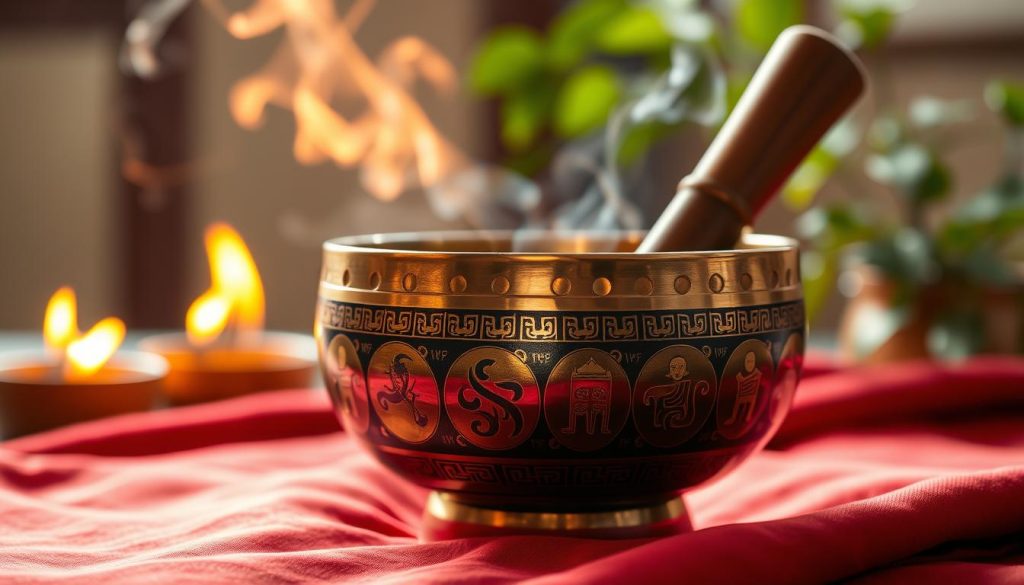
“Buying an instrument from an appliance store reduces your chances of obtaining genuine resonance.”
- Lack of advice about the composition of the metals.
- No guarantee concerning the alloy or provenance.
- Industrial production at the expense of hand-hammering.
Choose a specialist retailer that knows how to listen to and explain resonance. Good advice is often worth more than the displayed price.
The benefits of specialist online stores
Specialist platforms select each piece according to precise acoustic criteria.
These stores offer a curated range of Tibetan singing bowls. They emphasize traceability, technical specifications and, often, an audio sample.
You benefit from customer service that can compare alloys and explain the difference between hand-hammering and industrial production.
Warranties and the right of return
In France, the 14-day right of withdrawal allows you to test each bowl at home and return it if you do not like its sound.
- Personalized advice based on your practice: meditation, yoga or massage.
- A selection of hand-hammered instruments whose alloys have been checked.
- Clear information about product provenance and durability.
| Benefit | What it covers | Impact for the buyer |
|---|---|---|
| Home trial | 14-day withdrawal period in France | A real test of the note and sustain |
| Technical warranty | Material defect or shipping error | Repair or replacement |
| Expert advice | Choice based on frequency and size | An instrument better suited to the practice |
The risks of the secondhand market
The secondhand market requires vigilance: appearance can conceal defects in older instruments.
Rust and oxidation attack the alloy of singing bowls. Corrosion alters resonance and weakens the wall.
Verifying the weight and metal composition when buying from an individual remains difficult. Without expertise, you cannot confirm the Tibetan bowl’s true value or alloy.
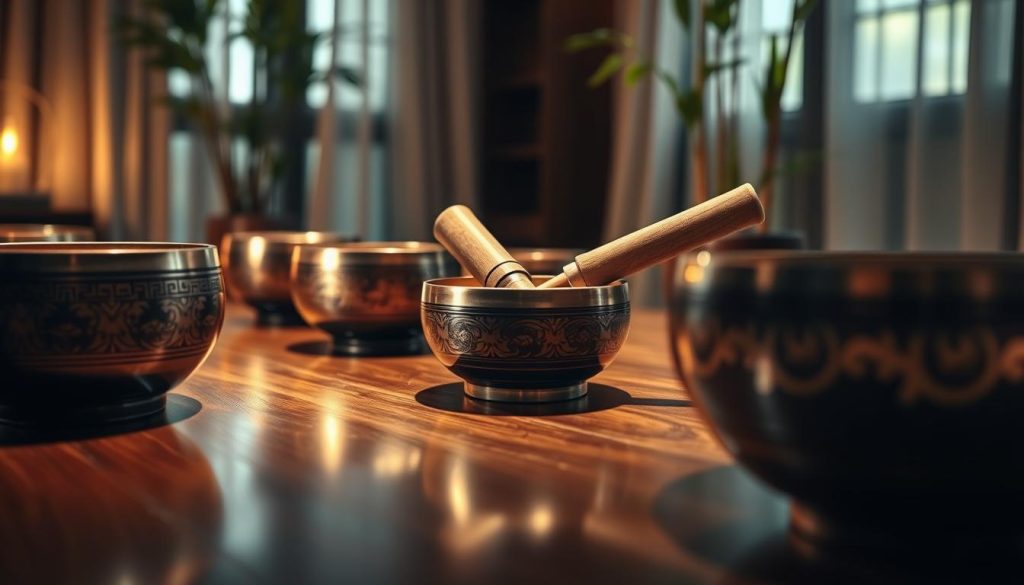
Prices listed on secondhand websites are sometimes inflated. Sentimental value leads some sellers to ask an excessive price for their bowl.
Buying a used Tibetan singing bowl rarely comes with a right of return. If dissatisfied, the consumer often has no recourse.
- Oxidation that reduces sound sustain.
- Weight and metals that are difficult to verify without testing.
- Prices inflated by personal attachment.
- No warranty or right of withdrawal.
- Individual pieces that make it difficult to create a coherent set.
“Prioritize listening and physical inspection before any secondhand purchase.”
Pitfalls to avoid during your search
Many listings use myths to entice buyers. Beware of spectacular claims, such as the use of meteorite metal to inflate the price. Such statements are often marketing and do not prove authenticity.
Quality cannot be judged by appearance alone. Test the vibration: an instrument hammered by hand reveals its sound sustain. An elaborate appearance may conceal industrial manufacturing with weak harmonics.
- Avoid cheap products that imitate the appearance but lack weight and sound.
- Reject vague descriptions of origin; ask for proof and an audio recording.
- Compare several offers to avoid misleading listings for bowls.
“Taking the time to check the sound is better than giving in to an enticing promotion.”
Techniques for making your instrument sing
Two simple, complementary techniques allow you to draw out the harmonics and control the sound’s sustain.
The striking method
Striking means gently hitting the wall with a suitable mallet. This action reveals the richness of the sounds and depth of the vibrations.
For a clean impact, use a felt mallet for small models. Heavier mallets suit large bowls and can produce powerful tones.
The rubbing method
Rubbing is performed by sliding the mallet beneath the rim. Steady motion and constant pressure generate a stable vibration, ideal for meditation.
Mastering speed and pressure is essential. Good accessories and regular hand practice help produce long, rich sounds.

- Striking: a short attack that reveals the harmonics.
- Rubbing: continuous movement for a sustained note.
- Accessories: match the mallet to the size and intended use.
| Technique | Action | Result |
|---|---|---|
| Striking | Controlled impact with a mallet | Emerging harmonics, clear attack |
| Rubbing | Sliding beneath the rim | Continuous vibration, sustained note |
| Accessories | Felt or leather mallet | Adaptation to size and power |
For detailed instructions, see these playing techniques.
The connection between notes and chakras
Certain frequencies are commonly associated with the body’s seven energy centers. This correspondence helps you choose the right note for each practice.
Each singing bowl emits a fundamental note that resonates with one of the chakras. Sound targeting facilitates energy rebalancing and guided meditation.
Classic examples:
- Muladhara, root → C or C sharp: stability and grounding.
- Anahata, heart → F or F sharp: openness and compassion.
- Sahasrara, crown → B: elevation and higher connection.
Using precise notes allows you to work intentionally with each chakra. An appropriate choice strengthens coherence between body and mind.
Practical advice: test the note before the session. For the practice to be effective, the resonance should speak to both practitioner and recipient.
The value of a complete set for sound therapy
A harmonized collection transforms a sound-therapy session into a complete experience.
A set of seven singing bowls covers all the notes required for targeted, progressive therapy. Each piece targets a specific area of the body and facilitates chakra work.
Singing bowls made with a harmonized alloy provide vibrational consistency. This uniformity enhances the effectiveness of sound massage and relaxation.
Combining different weights and sizes creates a rich sound palette. The included accessories facilitate use for meditation, yoga or individual sessions.
“A well-chosen set lets you explore the full sound range and adapt the treatment to the recipient’s needs.”
- Complete note coverage for coherent musical treatment.
- A harmonized alloy ensuring uniform resonance.
- Various weights for working upward from the lower body.
- Accessories that facilitate group or individual practice.
| Benefit | What it provides | Application |
|---|---|---|
| Seven-piece set | Complete range | Whole-body sound therapy |
| Harmonized alloy | Consistent resonance | Massage and relaxation |
| Various weights and sizes | Richness of sound | Localized bodywork |
To learn more about using a set during a session, read this practical guide: when and why to use a set.
Advice for testing the sound before buying
Always test the sound in person to determine whether the vibration truly speaks to you. Sound the note several times and listen to its sustain.
Weight and size influence how the vibration travels through the body. Hold the bowl, strike it gently, then rub the rim to compare the sensations.
Use appropriate accessories: felt and leather mallets alter the sounds. Poor technique can conceal the true quality of a hand-hammered instrument.
- Listen for clarity: there should be no buzzing or instability.
- Check that the vibration persists and soothes the mind.
- Test several bowls to experience their differences in use and treatment.
“Listening carefully to each bowl reveals whether it is compatible with your practice.”
Conclusion
In conclusion, prioritize resonance that speaks to you over marketing promises. Listening remains the best way to choose an instrument suited to your practice.
This guide has given you the keys to identifying a singing bowl hammered by hand and capable of supporting your meditation sessions. Test the sound and consider the weight and shape before deciding.
Every decision should help you find the bowl that suits you. Instruments are alive: each bowl has a unique signature that should resonate with your needs.
To explore the subject further, read our selection guide and begin searching for the Tibetan singing bowl that will become a faithful companion.