
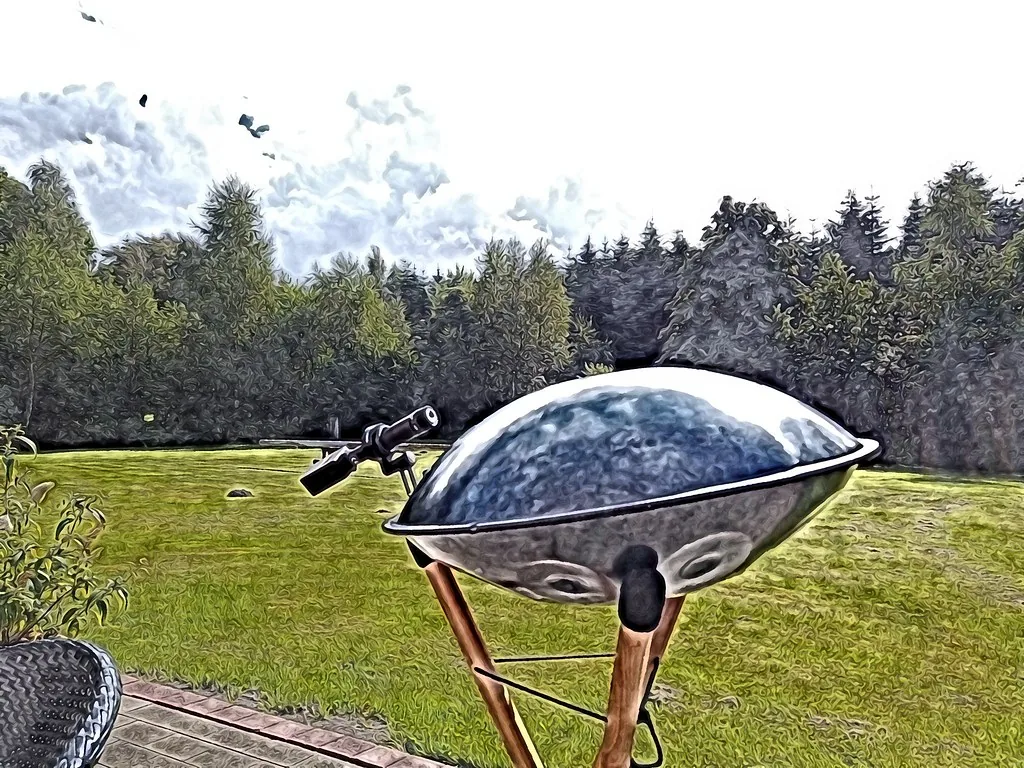
The handpan is a fascinating instrument whose spellbinding sounds captivate listeners. Its unique shape and harmonious notes make it an ideal tool for expressing creativity. Many people start learning without fully exploring its potential.
Unlike other instruments, it offers tremendous freedom. Instead of reproducing existing pieces, why not imagine your own melodies? It is a rewarding experience that develops your musical ear.
Four technical aspects are essential for getting off to a good start: posture, rhythm, melody construction, and mastery of harmonics. One study shows that 78% of beginners neglect to analyze their instrument before playing.
Methods such as Jeremy Nattagh’s offer a progressive approach. With a little practice, a simple pattern can evolve into complex and personal music.
Introduction to handpan composition
Improvising on a handpan allows every player to discover their own distinctive sounds. Through its unique construction, this instrument encourages an intuitive approach in which technique blends with emotion. According to a recent study, nearly 60% of musicians use customized tablature.
Unleashing artistic expression
Creating your own melodies offers unparalleled freedom. Unlike reproducing existing pieces, it reveals your musical identity. Thierry Bleton, for example, moved from a standard repertoire to bold compositions incorporating African rhythms.
Your instrument also has its own acoustic characteristics. An experienced handpan player knows how to harness them to create surprising harmonies. Can I adapt my lessons to master them more effectively? Absolutely.
Blending cultural influences
The group Hang Massive demonstrates how to combine a variety of musical styles. Their approach, blending electronic music with traditional influences, can be a source of inspiration. The ZenaPan method, meanwhile, structures improvisation to guide beginners.
Exploring these avenues transforms your playing. It can be a revelation, especially when you record your first creations. The important thing is to be daring: every note counts.
Essential technical foundations
Mastering the handpan requires learning essential techniques that unlock its musical potential. A structured approach prevents bad habits and accelerates progress. Here are the foundations to work on so that you can play with ease.
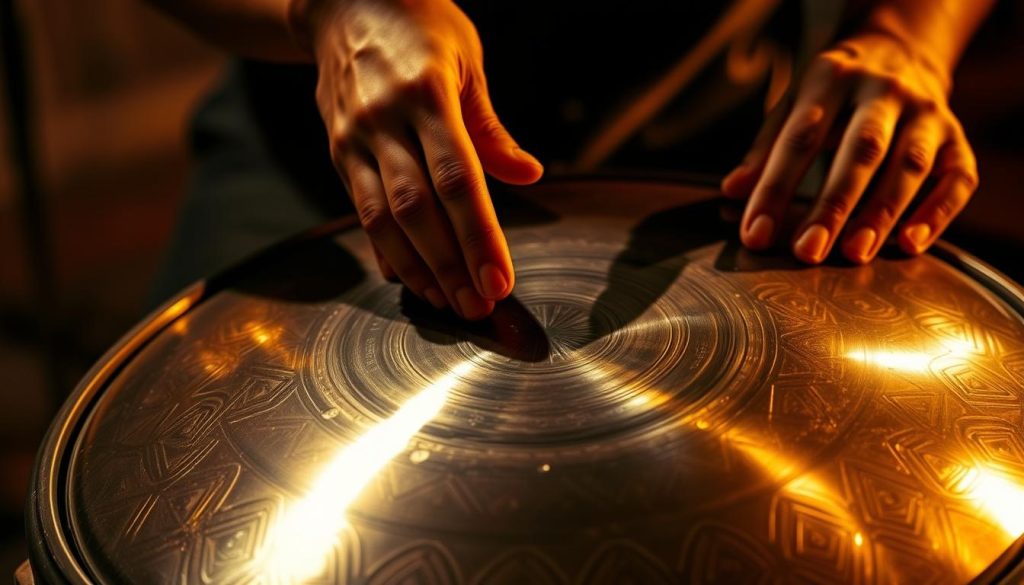
Positioning the instrument correctly
Proper posture prevents tension and optimizes resonance. According to the cited source, physiotherapists recommend five ergonomic positions. Whether sitting or standing, the goal is to keep your back straight and your shoulders relaxed.
The seated position provides ideal stability for beginners, while standing allows greater freedom of movement. Try both to find your balance.
Fundamental striking techniques
The precision of your hands determines the clarity of the notes. The cascade touch, which alternates between the palm and fingers, creates effortless rapid sequences. Adjust the pressure according to your desired dynamic level.
A simple exercise: strike the central note with varying intensity to control the duration of its resonance. This fluidity comes with practice.
Controlling resonance
Unwanted harmonics, such as those described in the Yishama model, can be controlled by adjusting the striking angle. MasterTheHandpan’s Beginner Essentials course offers effective methods for mastering them.
Experiment by isolating each note to understand its acoustic behavior. This detailed analysis sharpens your listening skills and playing.
Understanding your handpan’s structure
A handpan’s richness lies in the precise arrangement of its notes and their interactions. Depending on the model, the number ranges from 9 to 13, providing distinct scales and moods. Careful analysis reveals how to make full use of your instrument.
Analyzing the note layout
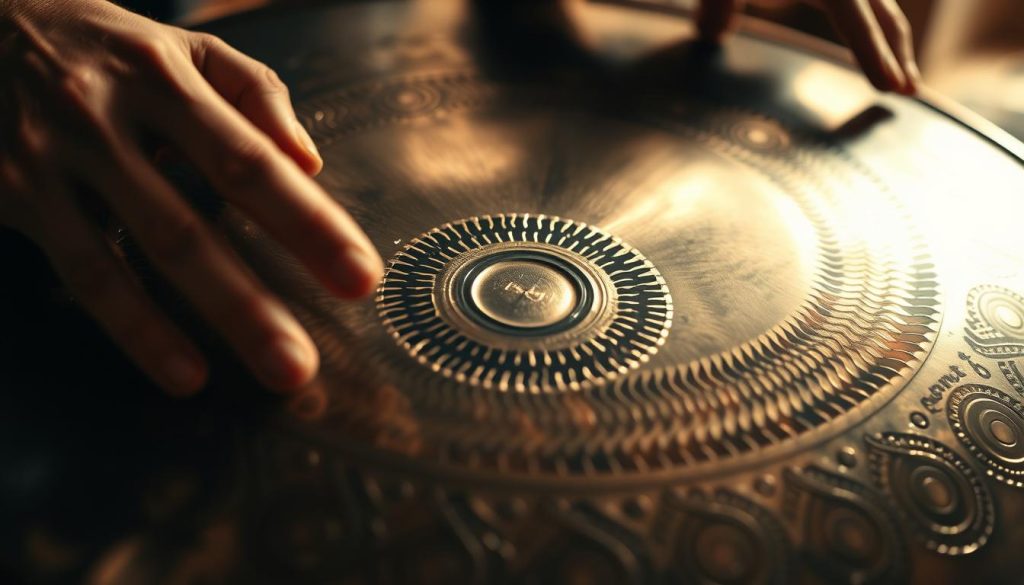
Handpans often follow a circular pattern, with a central note surrounded by other notes. A chromatic method can identify the relationships between each note. The D Kurd model, for example, includes Eastern-influenced scales that are ideal for creating spellbinding melodies.
The scales available on your instrument
Each configuration offers unique possibilities. Augmented fifth intervals create mysterious atmospheres, while minor thirds add a melancholy touch. Try different combinations to find your signature sound.
Characteristic intervals
The space between notes influences the emotion conveyed. A wide interval creates a sense of openness, while a narrow gap heightens tension. Play with these contrasts to energize your improvisations.
| Material | Resonance | Vibration duration |
|---|---|---|
| Steel | Warm and rounded | 8 to 10 seconds |
| Nitrided steel | Clear and precise | 6 to 8 seconds |
Your choice of handpan also depends on these technical criteria. Compare their sounds before you begin composing.
Developing your musical ear
The musical ear can be trained like a muscle through suitable exercises. For a handpan player, this skill opens the door to pure emotion. It transforms learning into a sensory experience.

Active-listening exercises
Isolating harmonics in a noisy environment is challenging. The Nattagh masterclass’s “Ear Training” program method recommends:
- Working with outdoor recordings.
- Using apps such as HarmonyTuner to visualize frequencies.
“Active listening is not hearing, but understanding.”
Recognizing natural harmonies
The handpan produces unique chords. Here is how to identify them:
| Technique | Benefit | Recommended duration |
|---|---|---|
| Comparing notes | Develops auditory memory | 10 minutes per day |
| Playing with your eyes closed | Improves concentration | 15 minutes per day |
Guided improvisation
The four-step protocol:
- Choose a central note.
- Explore its harmonics.
- Add a simple rhythm.
- Vary the dynamics.
This approach gives creativity a structure. Professional players use it to compose captivating pieces.
Creating basic rhythmic patterns
A good rhythm transforms a simple note into a captivating story. On a handpan, it structures the melody and guides the emotion. Begin with simple sequences before exploring advanced techniques.
Simple patterns for beginners
The “3-2-1” method is ideal for building a solid foundation:
- 3 strikes on the central note.
- 2 strikes on the side notes.
- 1 pause to mark the beat.
Repeat this cycle while adjusting the speed. This exercise improves coordination and fluidity.
Rhythmic variations
Explore unusual time signatures such as 5/8 or 7/4. These complex rhythms add an original touch. Here is a comparison:
| Time signature | Effect | Musical example |
|---|---|---|
| 4/4 | Stable and predictable | Traditional melodies |
| 5/8 | Dynamic and surprising | Balkan music |
Incorporating silence
Japanese taiko players use pauses to add drama to their performances. Apply this technique:
- Play a series of rapid notes.
- Pause for 2 seconds.
- Resume with a single note.
This contrast creates powerful emotional tension.
Progressive melodic construction
Building a captivating handpan melody requires a structured approach. By combining short phrases with thematic development, you create fluid and expressive music. Nattagh’s chromatic notation system simplifies this process.
Assembling short musical phrases
Start with patterns of 3 to 4 notes, as suggested by the spiral-nesting technique. These motivic cells, repeated and varied, form the foundation of a personal musical language.
Alexander Mercks recommends alternating pitches and rhythms naturally. For example, play an ascending sequence and then reverse it to balance the energy.
Thematic development
A theme gains depth when it evolves over 32 bars. Add variations: change the tempo, dynamics, or harmonics. Your practical lessons should include these exercises.
Experienced players use strategic silences to strengthen the impact. A thoughtful choice of notes, spaced apart or grouped together, creates a musical narrative.
Transitions between sections
Modal transitions, such as moving from a major scale to a minor scale, unite the sections of a piece. Use pivot notes to connect sections without a break.
Test these methods with a recorder. Critical listening reveals the adjustments needed to produce coherent music.
Advanced composition techniques
Moving from beginner level to expert handpan mastery requires exploring advanced techniques. These methods allow you to produce richer sounds and build more complex pieces. Here is how to enrich your playing.
Harnessing hidden harmonics
Every handpan note generates subtle harmonics. To reveal them:
- Lightly strike the edge of the notes with your fingertips.
- Experiment with different striking angles to make the floating harmonics resonate.
- Combine these sounds with the central note to produce spellbinding effects.
The professional slap technique, popularized by artists such as David Charrier, amplifies these nuances.
Layering rhythmic patterns
Creating a dense musical texture involves stacking several patterns. Follow this protocol:
- Record a simple rhythmic foundation (4/4 or 6/8).
- Add a second track with syncopation.
- Incorporate traditional percussion, such as the udu, to add depth.
Software such as Ableton Live makes it easier to align tracks. This approach is also suitable for home studios.
Creating immersive atmospheres
Transform your handpan into a soundscape with:
| Tools | Effects |
|---|---|
| Reverb pedals | Space and depth |
| Loopers | Infinite layers |
Artists such as Daniel Waples use these techniques to create hypnotic performances. Try extreme settings to discover your signature.
“Spatializing sound adds a theatrical dimension to the handpan.”
Recording and evaluating your compositions
Capturing the essence of your playing requires a methodical approach to recording and analysis. A Masterclass study reveals that 72% of musicians improve their technique after listening to their own recordings. This step turns improvisation into a genuine educational experience.
Accessible recording methods
Your choice of microphone directly affects sound quality. Here are two beginner-friendly options:
- Cardioid microphones: ideal for isolating the instrument in reverberant spaces
- Binaural microphones: reproduce the handpan’s natural spatial qualities
| Type | Advantage | Ideal distance |
|---|---|---|
| Cardioid | Reduces unwanted noise | 50 to 80 cm |
| Binaural | 3D depth | 1 to 1.5 m |
“A clean signal chain begins with correct microphone placement, long before any software settings.”
Critical-analysis framework
Evaluate your creations using these 3 essential criteria:
- Rhythmic consistency (tempo stability)
- Balance between sound levels
- Smooth transitions between sections
The full version includes 7 additional criteria, such as harmonic control and dynamic variety.
Improving through iteration
The PDCA (Plan-Do-Check-Act) method is perfectly suited to this process:
- Plan: define a precise goal (e.g., smoother transitions)
- Do: record a new version
- Check: compare it against the analysis framework
- Act: adjust your technique
According to Masterclass measurements, one musician following this guiding principle improved their composition by 37% in 6 months.
Resources for developing your skills
Making rapid progress on the handpan requires suitable tools and a supportive community. New technologies and sharing networks turn learning into a collective adventure. Here is a comprehensive guide to the best resources currently available.
Useful apps
Two solutions stand out for daily practice:
| App | Strengths | Limitations |
|---|---|---|
| HandpanTuner | Precise harmonic analysis | Full scales require the paid version |
| RhythmComposer | Library of rhythmic patterns | Complex interface |
The first excels at tuning, while the second supports the exploration of new rhythmic methods.
Communities for sharing
The French-speaking network includes several active groups:
- Handpan France: monthly meetups in 12 cities
- Impro Collective: virtual jam sessions
- Sound Travelers: exchanges with players from around the world
These groups often share sheet music and technical tips.
Recommended tutorials
On YouTube, three channels stand out for their teaching:
- Pan School: courses structured by level
- FreeHandpan: focuses on improvisation
- UrbanPan: innovative percussion techniques
What do they have in common? Tutorials filmed with multiple cameras for clearer demonstrations.
“The Handpan Pathways program combines individual mentoring with group masterclasses for tailored progress.”
Common mistakes to avoid
According to recent statistics, three major pitfalls await beginner players. A study by the Federation of Percussive Arts reveals that 43% of first-year dropouts result from these avoidable mistakes. Identifying these traps helps you make the best use of your learning time.
Taking on complexity too soon
Trying to master advanced techniques too early leads to frustration and mental blocks. Beginner players often overestimate their initial abilities, as shown by the seven-day rhythmic rehabilitation program.
Begin with simple patterns before exploring polyrhythms. As highlighted in this analysis, composition is an iterative process that requires patience.
Neglecting the physical aspect
Muscular conditions affect 1 in 5 players, according to specialist physiotherapists. Poor posture disrupts the fluidity of your playing and causes tendinitis.
- Keep your shoulders relaxed
- Limit sessions to 30 minutes and alternate them with breaks
- Practice targeted stretches
Lack of consistency
The SMART-goal motivational anchoring technique produces convincing results:
| Goal | Example |
|---|---|
| Specific | “15 minutes of rhythmic exercises” |
| Measurable | “Increase the tempo by 5% per week” |
One professional says: “Breaking my practice time into shorter sessions is what helped me make lasting progress.”
Conclusion: unleash your creativity
Your musical journey with the handpan is only beginning. Remember these essential principles: active listening, varied rhythms, harmonic exploration, consistency, and enjoyment. They transform every session into a unique experience.
Attend international gatherings to connect with other enthusiasts. These exchanges enrich your playing and spark new inspiration.
The evolution of techniques, such as the integration of electronic effects, opens up endless possibilities. Manu Delago sums up this philosophy perfectly: “True mastery comes from daring to improvise.”
Dare to create your own melodies: your music deserves to be heard.