
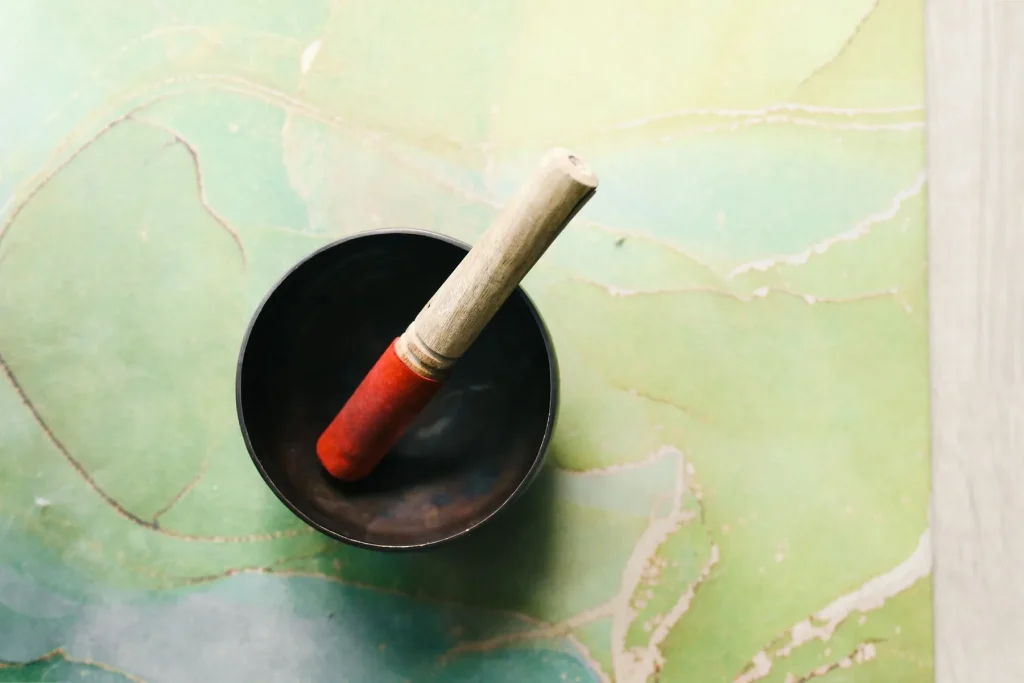
Brief introduction. Singing bowls have attracted attention for years. Studies conducted over more than five years have examined their use in sound therapy.
You may be wondering whether using a Tibetan singing bowl can pose a health risk. This section provides a clear, pragmatic overview.
Objective: clarify the real contraindications, identify commercial myths and provide sensible safety advice.
Although this instrument is freely sold and generally considered harmless, it is important to understand the limitations associated with sounds and vibrations.
By reading this article, you will be able to decide whether incorporating this tool is appropriate for your health and follow simple rules for safe practice.
Understanding the nature of singing bowls
The shape and alloy of singing bowls largely explain their unique timbre. These instruments resemble inverted Western bells and are made from an alloy of various metals.
Classified as musical objects, Tibetan singing bowls are not medical devices. They have been freely available for sale in France for decades.
Their effects are mainly produced through auditory and sensory stimulation. Their resonances influence the sound environment and the nervous system.
- Metal structure producing harmonic vibrations.
- Commonly used for relaxation in spas and practitioners’ offices.
- No curative properties capable of treating serious illnesses.
| Feature | Description | Implication |
|---|---|---|
| Shape | Similar to an inverted bell | Promotes resonance |
| Composition | Complex metal alloy | Timbre varies depending on the metal |
| Status | Musical instrument | Freely sold; not a medical device |
| Main effect | Auditory and sensory stimulation | Relaxation and renewed focus |
For more information about precautions and use in a professional setting, see our practical guide.
Tibetan singing bowl side effects: what should you know?
Prolonged exposure to intense frequencies can trigger warning signs in some people. It is helpful to identify physical and emotional reactions to sounds and vibrations quickly.
Physical warning signs
Monitoring your body: exposure above 80 decibels can cause auditory discomfort.
- Headaches may occur if the intensity or duration exceeds 10 minutes.
- Dizziness, nausea or feelings of pressure may occur when the vibrations are too close to the body.
- If you have tinnitus or hearing problems, distance and volume must be strictly controlled.
Temporary emotional reactions
After a session, some people report crying, disorientation or temporary hypersensitivity.
“Emotional reactions are often temporary: pay attention to how you feel and stop if necessary.”
- A 5- to 10-minute session is enough to test your tolerance.
- Adapt the practice to your sensitivity and, in the event of direct contact, to the metal composition.
Safety tip: control the volume, maintain an appropriate distance and stop using the bowl if adverse effects occur.
Analyzing the risks associated with sounds and vibrations
Powerful vibrations and sounds deserve particular attention before any session. A large instrument can exceed 80 decibels, a level comparable to engine noise. This is enough to warrant simple precautions.
Impact on hearing
Hearing damage is a major risk if the instrument is played too close to the ears.
Key points:
- Prolonged exposure to >80 dB can cause headaches and hearing problems.
- Maintain a safe distance of 20 to 30 cm between the bowl and the body to reduce sound pressure.
- The instruments’ high-pitched sounds are harmful to people who already have hearing problems or migraines.
“If you experience auditory discomfort, reduce the volume or stop the session immediately.”
Practical advice: practitioners must learn to manage intensity and duration. Every case is unique: adapt the distance, volume and duration to the body’s response.
For further information about precautions in a professional setting, see our practical contraindications guide.
Major medical contraindications
Sounds and vibrations can pose risks to some people. It is important to identify the situations in which the practice is not recommended before any session.

Epilepsy and neurological disorders
Epilepsy is a clear contraindication.
The combination of sounds and vibrations can trigger seizures in some sensitive people. Consult a doctor before any exposure if you have a history of neurological conditions.
People with cardiac devices
People with a pacemaker must seek medical advice before exposure to vibrations.
The relaxation induced by singing bowls does not eliminate the need for cardiac monitoring. Never replace treatment prescribed by a professional.
Pregnancy and health vulnerabilities
During pregnancy, avoid placing the instrument directly on the abdomen and limit the duration.
For vulnerable people, a maximum session of 10 minutes is recommended to reduce the risk of adverse reactions.
- Tell your practitioner about any medical history.
- Obtain medical advice before beginning any regular practice.
| Situation | Main risk | Recommendation |
|---|---|---|
| Epilepsy | Seizures triggered by sounds or vibrations | Contraindicated; consult a neurologist |
| Pacemaker wearer | Possible interference with the device | Medical advice required before any exposure |
| Pregnancy | Discomfort or contact-related risk | No direct placement; limit the duration |
“Caution comes first: disclose your health conditions and ask a doctor for advice before any session.”
Metal sensitivity and skin reactions
Some people react to simple contact with metal by developing redness or tingling.
Context: traditional Tibetan singing bowls often contain an alloy of seven metals (gold, copper, silver, lead, tin, iron and mercury).
Most modern models are mainly made from copper and tin. This reduces the presence of heavy metals.
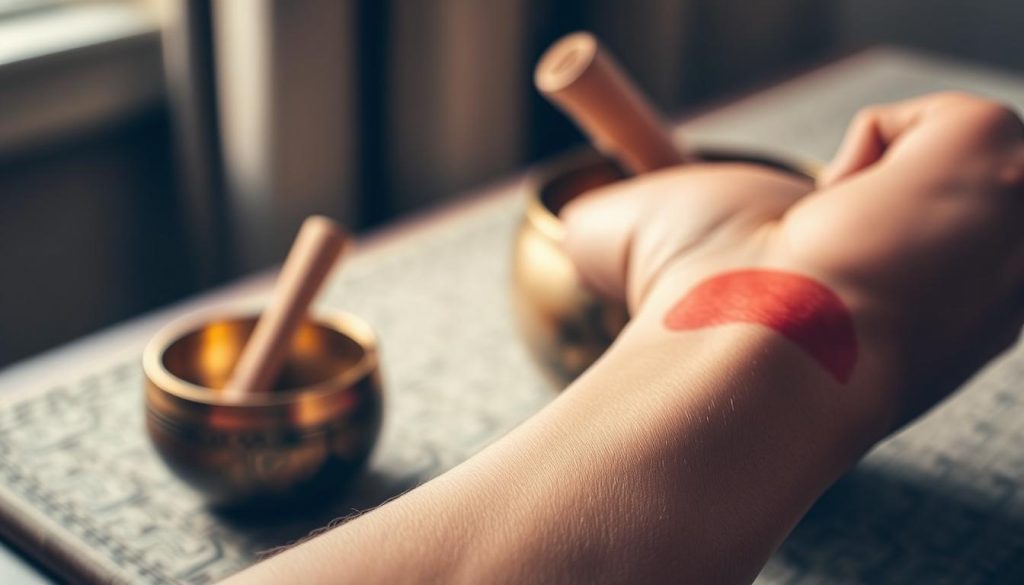
What to do if a reaction occurs: stop using the instrument immediately if you notice itching or redness after direct contact.
- Choose crystal or simple bronze bowls for sensitive skin.
- Clean the surface regularly with a soft cloth to limit metal residue.
- Ask for the exact composition before buying if you have known allergies.
| Case | Risk | Recommendation |
|---|---|---|
| Metal allergy | Skin irritation | Choose crystal or simple bronze |
| Prolonged contact | Residue buildup | Clean regularly |
| Uncertain origin | Traces of lead or mercury | Ask the seller for the composition |
“Caution comes first: if you are unsure about the composition, find out before use.”
For more details, see the information about metal-related risks.
Precautions for safe practice at home
Before any session at home, a few simple rules will help ensure safe practice.
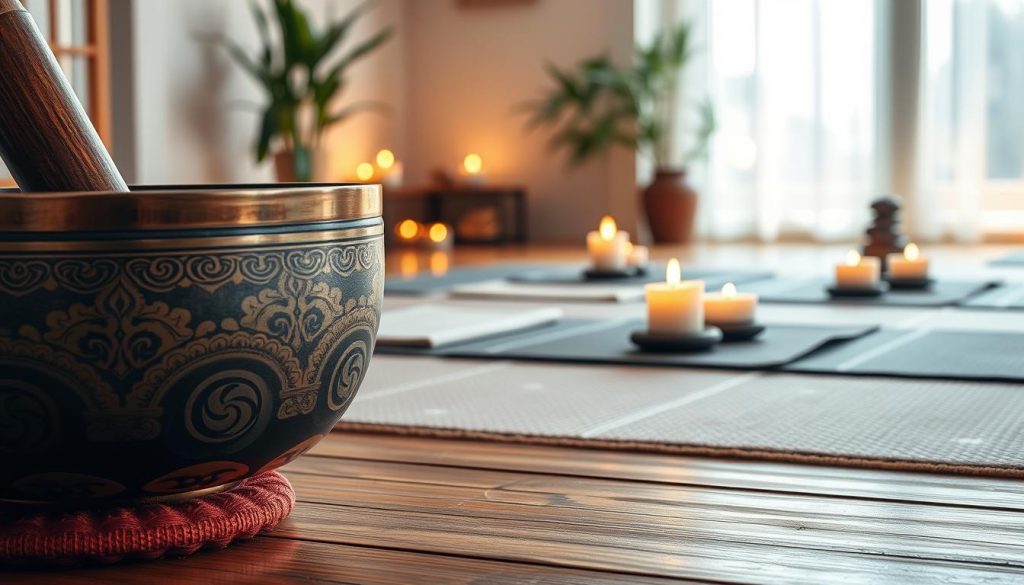
Strike at an angle of about 45° with a felt mallet to produce a clear sound without harming your hearing.
When rubbing the rim, maintain a steady rotation to avoid shrill sounds and discordant vibrations.
Managing duration and the environment
Start with sessions of 5 to 10 minutes to observe how your body responds to the vibrations.
Maintain a distance of 20 to 30 cm between the bowl and the body to limit sound pressure.
- Control the volume: avoid striking too hard, especially near the head.
- Use a stable support to preserve the harmonics and reduce unwanted vibrations.
- Create a calm, distraction-free space to optimize relaxation and reduce stress.
- If you experience headaches or hearing problems after the session, reduce the intensity and rest.
- If you experience discomfort, stop the practice and drink water to support recovery.
“Safety comes first: adapt your use to your sensitivity and monitor your reactions.”
| Point | Recommendation | Why |
|---|---|---|
| Duration | 5–10 minutes | Limit exposure and test tolerance |
| Distance | 20–30 cm | Reduce sound pressure on the head |
| Technique | 45° angle and slow rotation | Maintain a stable sound without overstimulation |
Myths and realities about chakras
In spiritual traditions, the seven notes are often associated with the chakras. This association remains symbolic. There is no scientific evidence validating the existence of chakras as measurable structures in the human body.
In practical terms, the sounds produced by an instrument can promote relaxation and concentration. They help some people meditate more effectively and reduce stress.
- Myth: bowls automatically reharmonize energy centers. This is primarily a symbolic tradition.
- Reality: the practice supports mental well-being but does not replace medical care for health conditions.
- Caution: no study proves that improper use can physically block a chakra.
Take a rational approach: view these instruments as relaxation tools. Avoid exaggerated commercial claims so that you can enjoy your practice with peace of mind.
“Inner harmony comes from regular, supervised practice, not miraculous promises.”
The importance of medical advice before any session
A prior medical consultation helps tailor the duration and intensity of the vibrations to your health vulnerabilities. The practitioner must always obtain consent and ask about medical history before the first session.
Some people, especially those taking anticoagulants or living with advanced diabetes, should consult a doctor before any exposure. People with a pacemaker must seek medical advice.
- Ask a doctor for advice before any session if you have a heart condition.
- A history of epilepsy requires consultation with a healthcare professional before any use.
- An unsuitable session may cause headaches, dizziness or other reactions afterward.
The duration, intensity and distance between the instrument and the body must be determined carefully. A trained professional should be able to manage unexpected physical reactions and adjust the sessions.
“If in doubt, always err on the side of caution and ask a doctor for advice before incorporating these instruments into your routine.”
For preparation and maintenance advice relating to sound practices, see our guide to handpan care and cleaning. Following this protocol protects your health and preserves the benefits of relaxation.
Tips for choosing a suitable instrument
Choosing the right instrument directly affects the quality of your relaxation sessions. A carefully considered choice protects your hearing and improves the sound’s sustain.
Alloys or crystal: quartz crystal bowls are suitable for people who are sensitive to metals. Handcrafted models often offer richer resonance than mass-produced ones.
Practical criteria
- Choose transparent composition information to avoid metal allergies.
- Size affects the note: large models produce low notes, while small models produce high notes.
- For a session at home, a medium-sized bowl is a good compromise.
- Test the resonance before buying: the sound should be clear and stable.
- Choose an instrument that is easy to handle for regular, effortless sessions.
| Criterion | Impact | Recommendation |
|---|---|---|
| Composition | Allergies or lifespan | Ask the seller for the composition |
| Size | Note pitch | Start with a medium size |
| Quality | Sound sustain | Choose handcrafted models |
Tip: compare several instruments and consult a buying information sheet to refine your choice, such as this buying guide.
Conclusion
In summary, moderate use lets you enjoy vibrations and sounds without compromising your health. Control the volume, limit session duration and listen to your body so you can adjust the intensity.
These instruments promote relaxation and meditation, but some people may experience headaches or other adverse effects after a session. If you feel unwell, stop the session immediately.
Before any exposure, consult a doctor or professional if you have health vulnerabilities or an implant. Choose materials whose composition is clearly stated, and record your reactions after each session to improve safety and maximize the benefits.
To learn more about contraindications and precautions, see our dedicated page: contraindications and precautions.