
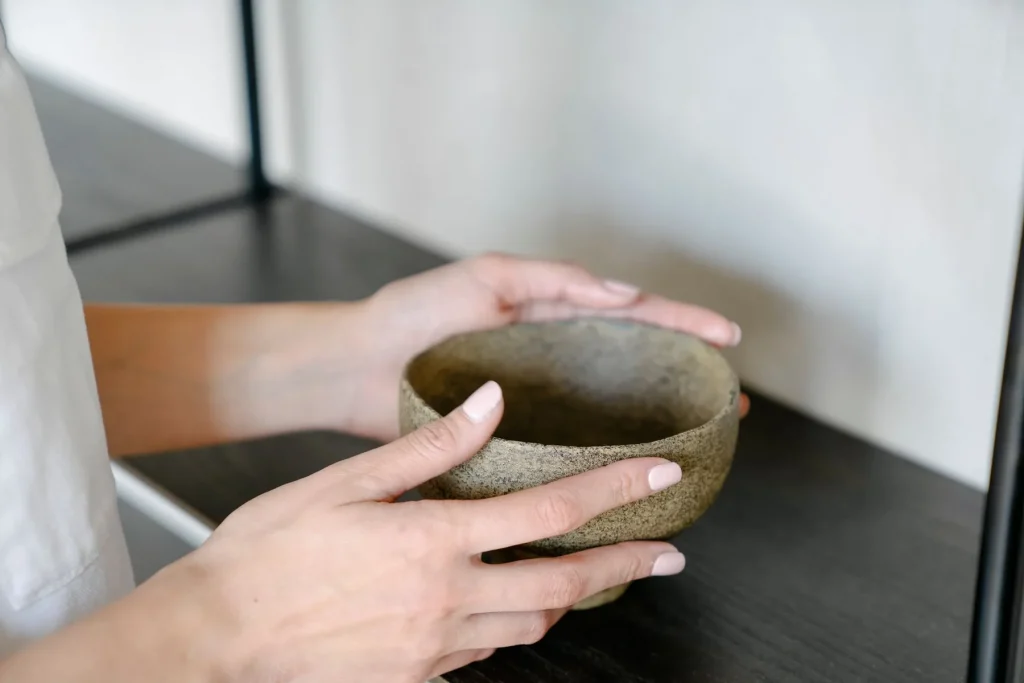
Discover a relaxation instrument: the Tibetan singing bowl creates a soothing everyday soundscape. It is a simple tool for inviting calm, even on a busy day.
This short article explores the many facets of this ancient instrument, now commonly used in France. We explain its modern use, which requires no particular spiritual expertise.
The bowl serves as a vibrational aid. It helps establish short rituals of serenity. Each bowl has a unique signature, allowing you to choose one according to your needs.
Finally, we discuss the precautions to take so that the practice remains safe and beneficial for body and mind. This guide aims to make relaxation practical and easy to incorporate into everyday life.
Understanding the Tibetan singing bowl and its origins
This instrument’s roots run deep in Himalayan cultures. It is found in regions such as Nepal, northern India, Tibet and Bhutan, where it accompanies rituals and everyday practices.
Ancient history and Himalayan traditions
These instruments date back to the Bronze Age and have been passed down from generation to generation. The artisan’s hand shapes each piece, ensuring a unique sound signature.
The sacred seven-metal alloy
The traditional alloy combines gold, silver, mercury, copper, iron, tin and lead. This complex mixture gives the bowls rich harmonics and a sought-after sound quality.
To make a bowl sing, artisans use precise hammering and polishing techniques. The result is a singing bowl capable of producing deep, harmonious vibrations.
“Each piece reflects ancient craftsmanship and a sensitivity to materials.”
To learn more about the meaning of the seven metals and how they are made, read the detailed article about the alloy of the seven metals.
Tibetan singing bowl benefits: what you can expect
A bowl’s resonance helps refocus attention and calm the mind.
Regular practice: frequent use of Tibetan singing bowls reduces stress and creates an essential moment of calm. Short sessions promote deep relaxation and release bodily tension.
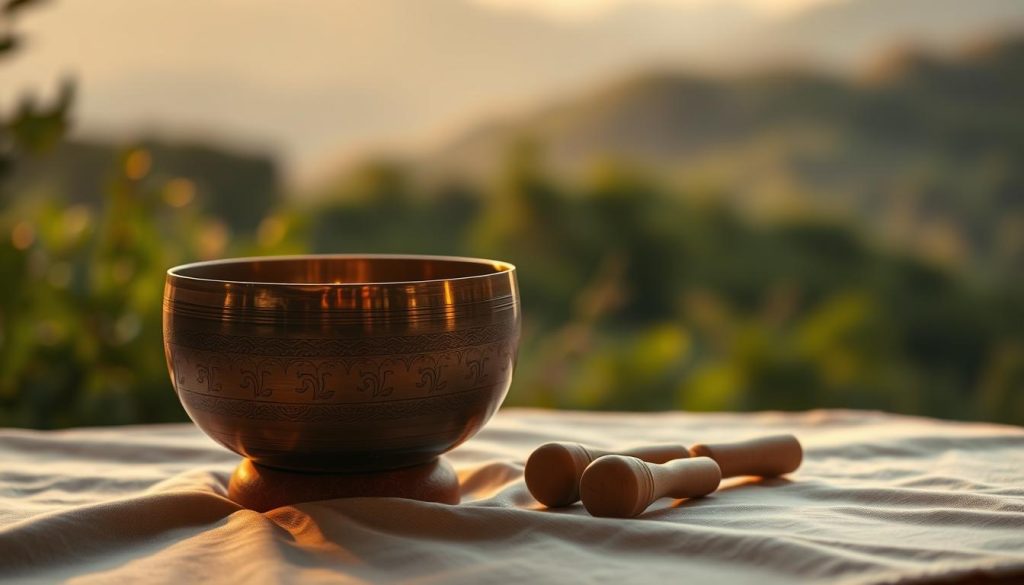
Testimonials indicate improved sleep quality and better concentration. Adding a singing bowl to meditation or yoga supports emotional balance.
- Reduced stress and relief from tension.
- Support for deep relaxation and present-moment awareness.
- Resonance associated with the metal alloy, which helps combat anxiety and certain everyday problems.
“These sessions often have a lasting soothing effect on body and mind.”
Important: effects may vary and are not a substitute for medical care. To enrich your relaxation time, discover music such as soothing playlists suited to your sessions.
How vibrations affect body and mind
The sound emitted by this instrument creates a vibrational pattern that modulates the nervous system and encourages relaxation.
Sound as an anchor for the mind
Studies show a measurable impact. In 2016, research conducted at the University of San Diego with 62 participants found a significant reduction in stress.
Another 2014 study involving 51 people showed that using a Tibetan singing bowl improves relaxation compared with silent meditation.
- The singing bowl’s mechanical vibrations act on the body and help the nervous system regulate itself during a session.
- The sound becomes an anchor for attention, reducing distracting thoughts related to stress.
- The hand holding the instrument should remain relaxed so the waves can circulate throughout the body.
“Each session fosters a better connection between body and mind, strengthening emotional stability.”
Simple and accessible practice: to deepen your experience, discover a guided sound journey along with tips for incorporating these tools into your rest periods.
Techniques for incorporating bowls into your daily routine
Daily use makes sound a genuine anchor in your day. Begin with short practices and increase their duration according to how you feel.
Meditation guided by resonance
Place a bowl on your open hand and make it sing with the mallet. The sound helps maintain attention and quickly reduces stress.
Alternate striking and rubbing to vary the vibrations. This method supports meditation and improves concentration.
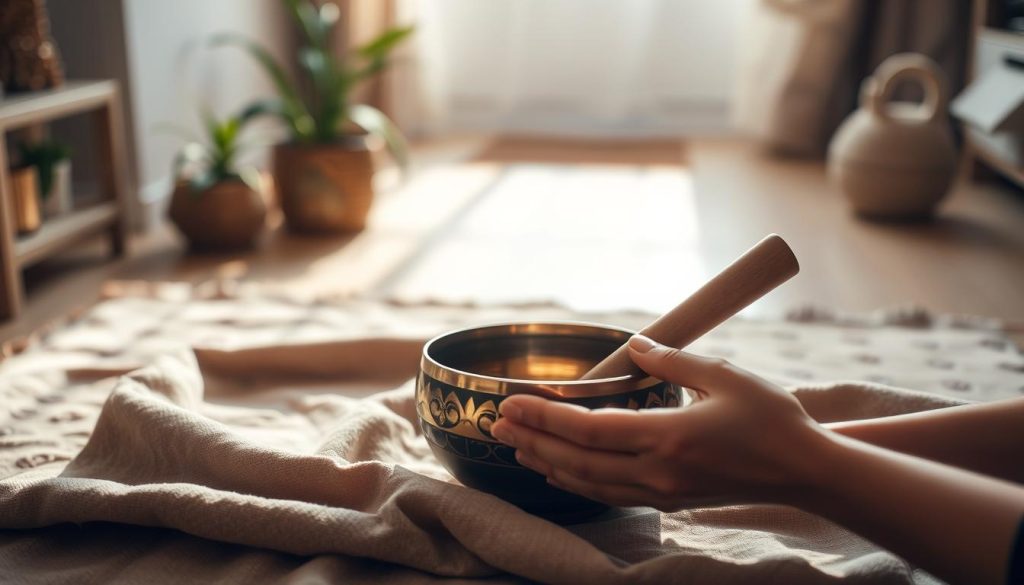
Sound massages for deep relaxation
Sound massages use vibrations to release tension in the body and calm the mind.
Bowls made from an alloy of seven metals are often used to harmonize the chakras and promote deep relaxation.
Yoga and stretching accompanied by sound
Incorporate sound at the beginning or end of a yoga session to prolong the state of calm. The ritual helps the nervous system regulate itself and improves sleep.
For practical advice and ideas for use, consult this practical guide.
“Regularity transforms a simple session into a genuine well-being tool.”
Tips for choosing your relaxation instrument
Selecting a good instrument begins by listening to its resonance. Prioritize sound quality over appearance. A rich tone promotes deep relaxation and makes meditation easier.
For beginners, choose medium-sized bowls. They are easier to make sing when resting in the hand. Try several models to sense their vibrational signature.
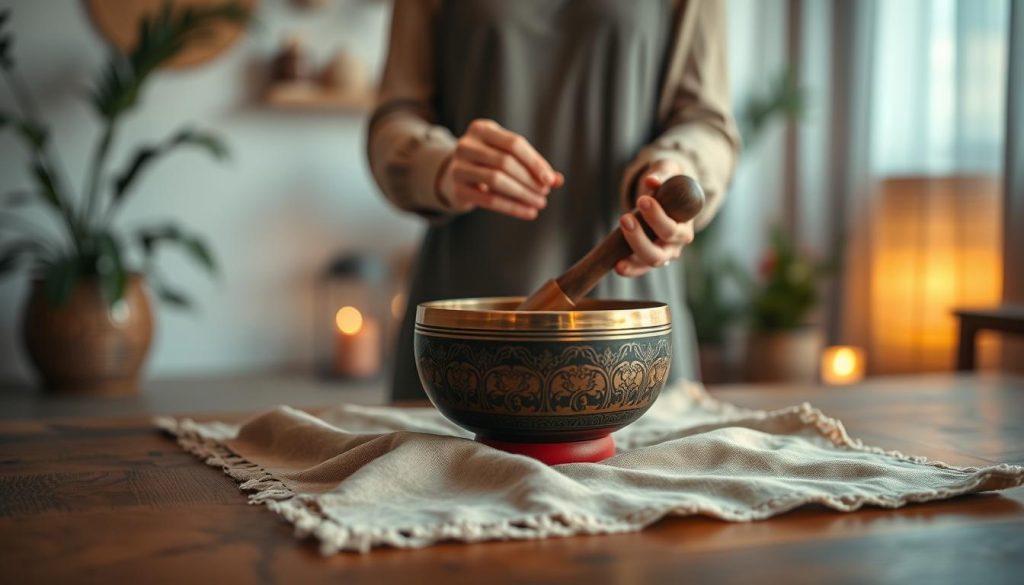
- Alloy and metals: a balanced mixture ensures long-lasting sounds.
- Suitable mallet: force and material affect sound quality.
- Craftsmanship: high-quality handcrafting extends resonance and supports practice.
“Choosing a bowl remains a personal process tied to your need for relaxation.”
| Size | Recommended use | Advantage | Disadvantage |
|---|---|---|---|
| Small | Travel, short sessions | Easy to carry | Shorter resonance |
| Medium | Beginners, hand-held practice | Balance between sound and ease of use | Less powerful than a large bowl |
| Large | Long sessions, large spaces | Deep resonance | Less manageable |
To learn more about choosing and using one, consult this user guide and try several instruments before investing.
Precautions and contraindications
Certain situations require caution before exposing the body to vibrations produced by a singing instrument.
Consult a professional if you are pregnant, have a history of epilepsy, have a pacemaker or experience psychological vulnerability. Medical advice will help prevent any risks associated with the practice.
During a meditation session, avoid placing the bowl too close to your ears. Excessive exposure to sound may cause stress or hearing discomfort.
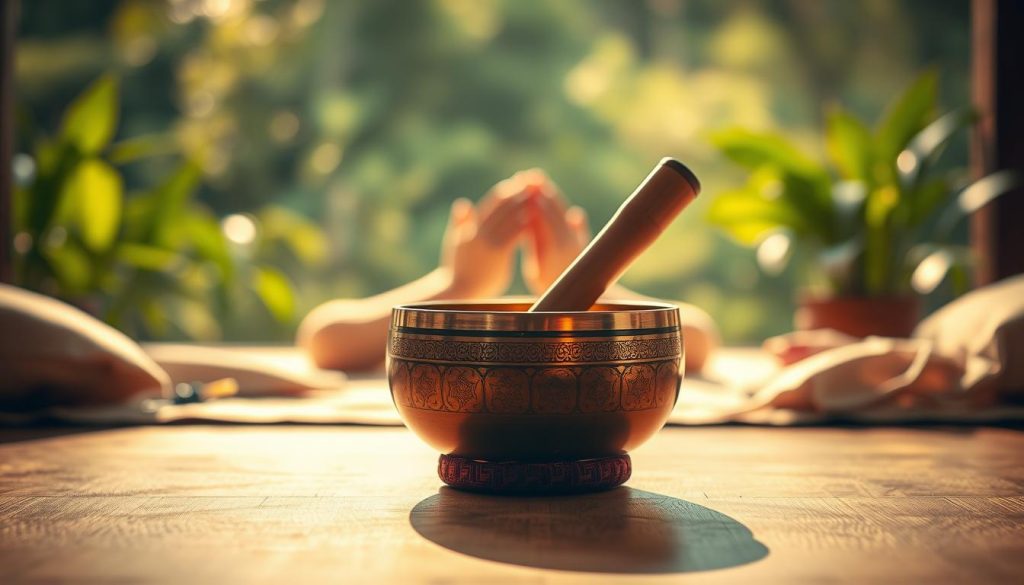
- People with heart conditions should consult their physician before any use.
- Intense vibrations may be contraindicated for pregnant women or people with epilepsy without prior medical advice.
- If you work with chakras, ensure that each person remains completely comfortable.
Keep the practice gentle and progressive. Listen to your body’s signals to avoid excessive sound exposure. The practice should promote relaxation, not create new tension.
“Reducing anxiety through sound requires attention to each person’s sensitivity.”
| Situation | Recommendation | Risk if the recommendation is ignored |
|---|---|---|
| Pregnancy | Seek medical advice | Intense vibrations |
| Having a pacemaker | Do not use without medical approval | Cardiac interference |
| Psychological vulnerability | Professional supervision | Worsening symptoms |
Conclusion
Thus, controlled use of this Tibetan singing bowl promotes a calm presence and better recovery.
The richness of the metal alloy gives each instrument a unique signature. This sound quality helps body and mind return to a calmer rhythm during a short session.
Incorporating regular practice often improves sleep and stabilizes attention during meditation. Choose a model suited to your hand to turn each session into a moment of genuine relaxation.
Pay attention to your nervous system’s reactions: begin gently, follow hearing-safety rules and adjust the duration according to how you feel. For practical advice and the limits to observe, consult this article.
In summary: thoughtful use allows you to enjoy the full benefits of this simple and accessible tool, without replacing medical care when it is needed.