
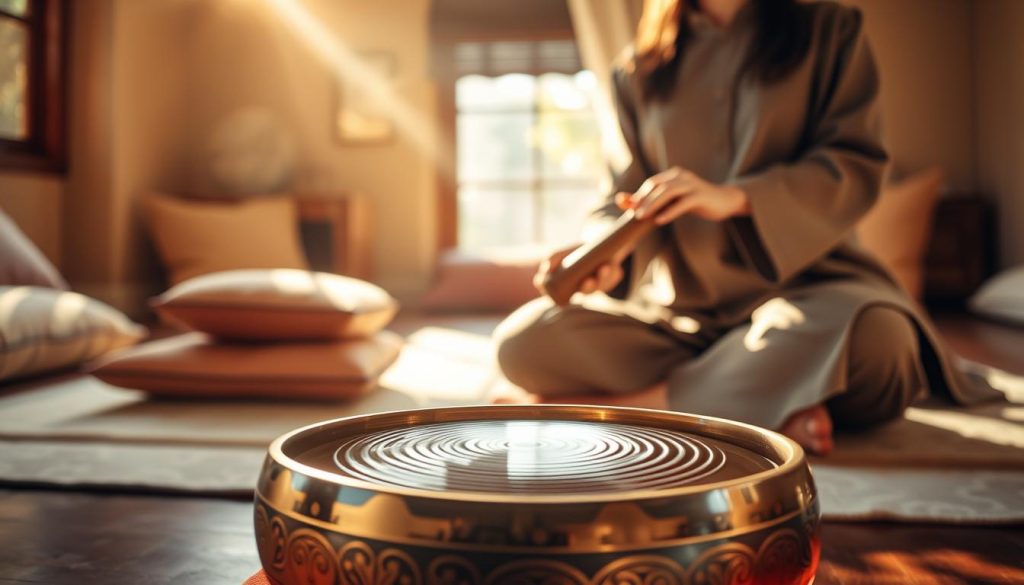
For more than 5,000 years, Mongolian shamans have used the vibrations of these instruments to promote relaxation. Today, the subject still intrigues researchers and the general public.
This guide explores how every moment of the day can be transformed through resonance. Simple sound practices can easily be incorporated into breaks, meditation sessions, or periods following intense stress.
We will see why these vibrations can influence your emotional state from the very first use. You will discover practical ways to turn brief intervals into genuine moments of calm.
Objective: to explain, simply and clearly, the perceptible benefits and physical principles underlying this ancient sound experience.
Understanding Tibetan singing bowl music: why is this sound so soothing?
Understanding an instrument’s signature helps explain its effect on the nervous system. Each instrument emits its own frequency profile. This profile is determined by its material, size, and shape.
Since the 1980s, metal bowls have been joined by new quartz crystal models. These recent creations have broadened the range of tones and resonances.
The relationship between material composition and auditory perception largely explains the mystery. A single strike can become an immersive experience.
Many practitioners now use these bowls during relaxation sessions and to manage stress. This detailed article explains how each piece can influence our psychological state.
Historical origins and mysteries of this instrument
The history of these objects lies somewhere between shamanic accounts and limited documentary evidence.
Shamanic theory
According to tradition, Mongolian nomads used this instrument in rituals 5,000 years ago.
The shamanic theory holds that these practices were intended to mark stages of life and accompany healing ceremonies.
Pragmatic hypothesis
Modern research notes, however, that the earliest written records date back only to the 1970s.
A pragmatic interpretation suggests that kitchen utensils evolved into meditation tools. Monks then incorporated these bowls into their routines to promote serenity.
- Ancient use described by oral tradition.
- The cultural transformation of a utilitarian object into a sacred one.
- The benefits perceived today are often linked to this long tradition of transmission.
This article compares these accounts with the available evidence to better establish the true origins of these instruments and their place in world history.
Metal composition and the symbolism of the seven metals
The seven traditional metals form an alchemy that shapes the vibrations. Gold, silver, mercury, copper, iron, lead, and tin make up the historical alloy. Each metal is associated with a celestial body and, symbolically, with one of the major chakras.
The manufacture of each instrument relies on precise proportions. Nepalese craftspeople often keep these formulas secret. Copper and tin play a key role: they shape the richness of the harmonics and the sustain of the note.
- The symbolism reinforces the ritual value: gold = Sun, silver = Moon.
- Analysis of old alloys helps explain modern choices.
- Mastering the proportions makes it possible to produce bowls with consistent tones.
This transition from history to practice shows why this article emphasizes the material. Understanding the composition helps you choose an instrument suited to your practice and needs.
How sound vibrations work physically
Observing cymatics helps explain how simple waves create complex forms.
The phenomenon of cymatics
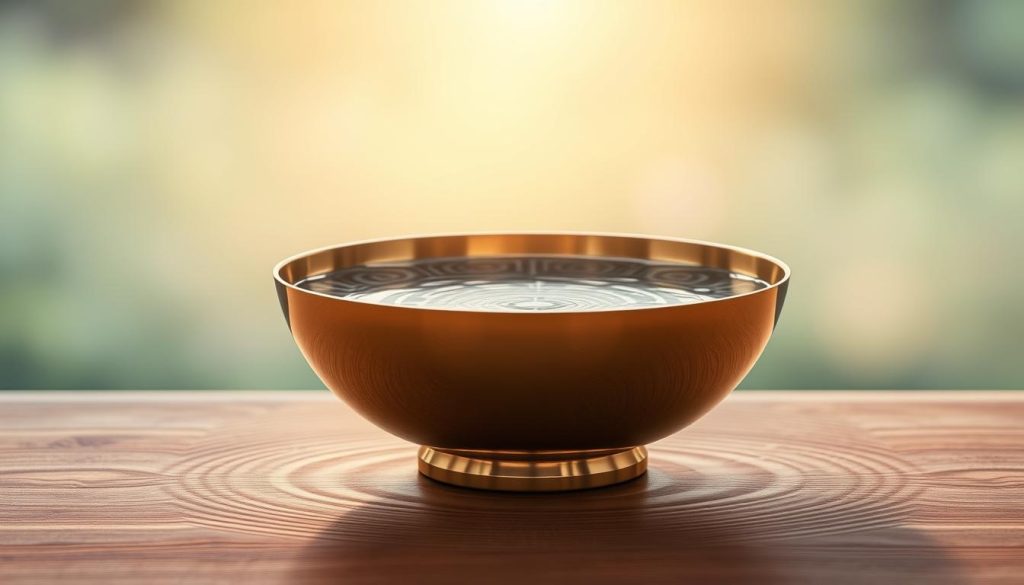
Cymatics shows how vibrations transform water into geometric patterns. Liquid placed in a bowl reveals distinct shapes when subjected to precise frequencies.
Each instrument works because its metal wall begins to move. These movements propagate waves through the air and toward our auditory system.
When a bowl is placed on the body, the waves penetrate the tissues. Cells sense these variations, making the experience both auditory and tactile.
- Vibrations organize water molecules into harmonious patterns.
- The sounds produced travel through the air and the body’s tissues.
- Much of the effect relies on this physical and perceptual transmission.
| Mechanism | Observed effect | Evidence |
|---|---|---|
| Wall vibration | Stable sound waves | Acoustic measurements |
| Cymatics on liquid | Geometric patterns | Visual experiments |
| Transmission to the body | Muscle relaxation | Clinical studies and testimonials |
To explore the connection between waves and well-being in greater depth, read this text about the power of waves. It complements this section by connecting theory and practice.
Traditional manufacturing methods
Each piece emerges from a technical ritual in which heat, hammering, and patience come together.
Hammering is a long and demanding stage. Experienced blacksmiths strike the heated metal for several hours. The process requires considerable physical endurance and precision.
Handcrafting a quality instrument in Nepal requires hours of work. The irregularities created by manual hammering shape the richness of its harmonics.
- Casting techniques prepare the molten metal.
- Final hammering refines the shape and acoustic response.
- Traditional tools ensure optimal resonance for meditative practice.
| Stage | Purpose | Sound effect |
|---|---|---|
| Casting | Form the base | Pure, stable note |
| Hand hammering | Refine the wall | Rich harmonics, varied textures |
| Finishing and polishing | Balance the resonance | Sustain and clarity |
The music produced by a hammered bowl differs noticeably from that of a cast model. This article about their benefits describes the techniques used in greater detail.
Distinguishing authentic bowls from imitations
Buying a genuine instrument often requires a better ear than eye.
There is no official organization that certifies authenticity. You must therefore remain vigilant when buying instruments.
An authentic example shows slight hammering imperfections. These handmade marks influence the richness of its harmonics.
Industrial models, by contrast, have an overly perfect finish. They imitate the appearance without reproducing the sonic depth of older pieces.
- Patina and age: a century-old object will have a particular color and resonance.
- Listen to the note’s sustain: a good bowl resonates for a long time and produces complex harmonics.
- Beware of sellers who automatically cite the seven metals to justify a high price.
This article helps you ask the right questions in a store and identify the acoustic signs that distinguish a genuine piece from an imitation.
Physical benefits for the human body
The waves emitted by the instrument modulate nervous activity and provide tangible relief from tension.
Reduced muscle tension
The vibrations travel through the tissues and release muscle knots.
The production of endorphins, stimulated by the bowl’s low-pitched sounds, helps reduce pain and promotes relaxation throughout the body.
- Less stiffness after a short session.
- An effect similar to a gentle massage, without physical contact.
- The nervous system calms down, reducing the stress associated with chronic tension.
Improved sleep
A regular sound ritual makes it easier to fall asleep and improves the quality of rest.
The physical relaxation induced by the vibrations releases accumulated blockages and brings genuine relief to the body and mind.
In short, these physical benefits support better recovery and a lasting sense of relaxation.
Emotional impact and stress management
Regular practice with an instrument promotes notable emotional stability.
The vibrations produced by a bowl resonate through the body and mind.
This phenomenon acts as a powerful emotional regulator. It helps dissipate accumulated stress and restore a serene inner balance.
Regularly listening to harmonious sounds improves mood and increases self-tolerance.
- The vibrations release buried emotional tension.
- The bowl calms incessant thoughts and promotes mental clarity.
- A simple routine supports lasting well-being and greater resilience during periods of low mood.
In conclusion, this article highlights tangible benefits: better stress management, restored relaxation, and a more positive state of mind through practice with these bowls.
Developing concentration and memory
Regular practice with an instrument can sharpen attention and strengthen memory. Studies show that alpha and theta brain waves increase during focused listening. This helps stabilize concentration during periods of effort.
For students, establishing a sound ritual before a study session reduces mental stress. The relaxation that follows frees cognitive resources useful for memorization.
- Using a bowl during a short break helps focus attention on a specific task.
- The vibrations help balance the chakras and provide mental clarity conducive to learning.
- Low-pitched sounds draw the mind into a meditative state that supports sustained concentration.
“Regular practice turns a simple action into a powerful tool for study and memory.”
Finally, this article notes that the benefits for concentration can appear quickly. Incorporate short sessions to optimize your intellectual abilities without excessive effort.
Using the bowl for meditation
Settle down calmly to ground your practice and optimize the effect of the vibrations. A tidy space and stable posture are enough to begin.
Steps for a successful session
Sit comfortably with your back straight but relaxed. Hold the bowl in your open palm and place the mallet against the rim.
Gently rub the rim in a steady circular motion. This technique produces a continuous sound that captures your attention and guides your breathing.
- Meditation aid: this instrument helps you quickly reach a state of presence and tranquility.
- Attention and concentration: the sound supports focus and reduces distracting thoughts.
- Chakra harmonization: the vibrations facilitate a deeper yoga practice and a sense of balance.
Listen to each moment without judgment. The vibrations touch the body like a gentle massage and reduce perceived stress.
For a lasting effect, practice regularly. Repeated use of these instruments strengthens the benefits for the mind and emotional balance.
Techniques for making your instrument sing
Learning to make a bowl vibrate requires precise movement and careful attention to touch.
Gently but firmly rub the outer rim with a mallet or puja in a steady circular motion. Keep your hand open so the vibrations can develop.
Pressure and speed control the tone color. A sharp strike creates a clear attack. Continuous friction produces prolonged resonance.
- Mastering the technique requires patience and repetition.
- The support material—felt, wood, or leather—changes the nature of the sounds.
- Feel the vibrations in your hand and arm to guide the movement more effectively.
Making the bowl sing creates a physical connection with your body. Practice transforms the object into a sound-relaxation tool.
| Movement | Effect | Recommended equipment |
|---|---|---|
| Sharp strike | Clear attack, short note | Firm felt mallet |
| Continuous friction | Long resonance, rich harmonics | Wooden puja or soft mallet |
| Combination | Dynamic variations | Several supports depending on the intention |
To go further, read our user guide and adapt the movements to your practice.
Practices for cleansing objects and spaces
Cleansing practices use resonance to transform the atmosphere of a home.

Practical use: place stones, crystals, or seeds in the center of the bowl before making it vibrate. A few minutes are enough to recharge their energy.
To cleanse a space, walk slowly while making the instrument resonate in every corner of the room. This action harmonizes the chakras of the immediate environment.
- Clears accumulated negative energy.
- Creates a more positive atmosphere that is more conducive to relaxation.
- Maintains a consistent energy balance for everyday well-being.
| Application | Procedure | Expected effect |
|---|---|---|
| Cleansing objects | Place in the center and resonate for 2 to 5 minutes | Recharging and neutralizing energy |
| Cleansing a room | Resonate in every corner and breathe deeply | Calm, balanced atmosphere |
| Regular maintenance | Short weekly session | Maintenance of a stable atmosphere |
These simple techniques can easily be incorporated into your routine. The article recommends gentle, regular practice to enjoy the benefits fully.
Integration into group therapies
In a group, resonances meet and strengthen their effect on the body and mind.
Géraldine Picord, a practitioner recommended by Médoucine, offers sound massages and gong baths tailored to group sessions. Participants often lie on the floor to receive the bowls’ vibrations and experience deep relaxation.
A group sound massage creates a restorative cocoon. The sounds envelop each person and promote lasting relaxation.
- Participants receive waves that act like a contactless massage.
- The practices aim to balance the chakras and create shared energy harmonization.
- The effect is enhanced when experienced practitioners play several instruments together.
Adding yoga and bowls to these therapies reduces collective stress and facilitates a shared spiritual connection.
To explore group practice in greater depth, read our complete guide to the use and benefits of sound sessions.
Precautions for pregnant women and children
Certain precautions ensure a gentle experience for expectant mothers and younger people. Light vibrations often provide genuine relaxation, but use must be adapted to the body’s sensitivity.

For pregnant women, choose short sessions and gentle contact. Avoid forceful strikes and overly long sessions so the nervous system is not unnecessarily stimulated and no stress is created.
Children react quickly to frequencies. Gentle practice can improve sleep and stabilize emotions. It also contributes to balancing their developing chakras.
- Recommended method: gentle sound massage, no more than 5 to 10 minutes.
- Always monitor reactions: fatigue, agitation, or discomfort means the session must stop immediately.
- Choose a calm atmosphere and reassuring contact for the body and mind.
| Audience | Recommended duration | Key precaution |
|---|---|---|
| Pregnant women | 5 to 10 min | Gentle vibrations, no forceful strikes |
| Children aged 3 to 12 | 3 to 8 min | Observe behavior and reduce intensity |
| Babies | 1 to 3 min | Very gentle approach and reassuring proximity |
Tips for choosing your first bowl
The right choice begins with how the vibration feels in your hand, even before you consider its appearance.
Choosing your first instrument requires attention: each object has a history and a signature that should resonate with you.
Test several pieces by striking and rubbing the rim. Try different techniques and supports to identify the tone color that supports your concentration or suits massage.
Do not rely on engravings. Listen to the inner music the bowl evokes. Older models often have a unique vibrational depth related to their history.
- Play several instruments before buying.
- Compare the attack and sustain of the note with different supports.
- Let your intuition guide the final choice.
For a practical guide and purchasing advice, see our choosing and buying page.
Conclusion
Ultimately, regular use of this instrument turns brief intervals into truly restorative breaks. A simple bowl resting on your palm is enough to create a moment of relaxation and a brief connection with your inner music.
Incorporate this practice into yoga or meditation sessions. The benefits affect the body and mind, help reduce stress, and promote the balance of the chakras.
Whether you are a beginner or a regular practitioner, every contact with the instrument matters. Adopt it as a short ritual to make your relaxing moments deeper and more frequent.