
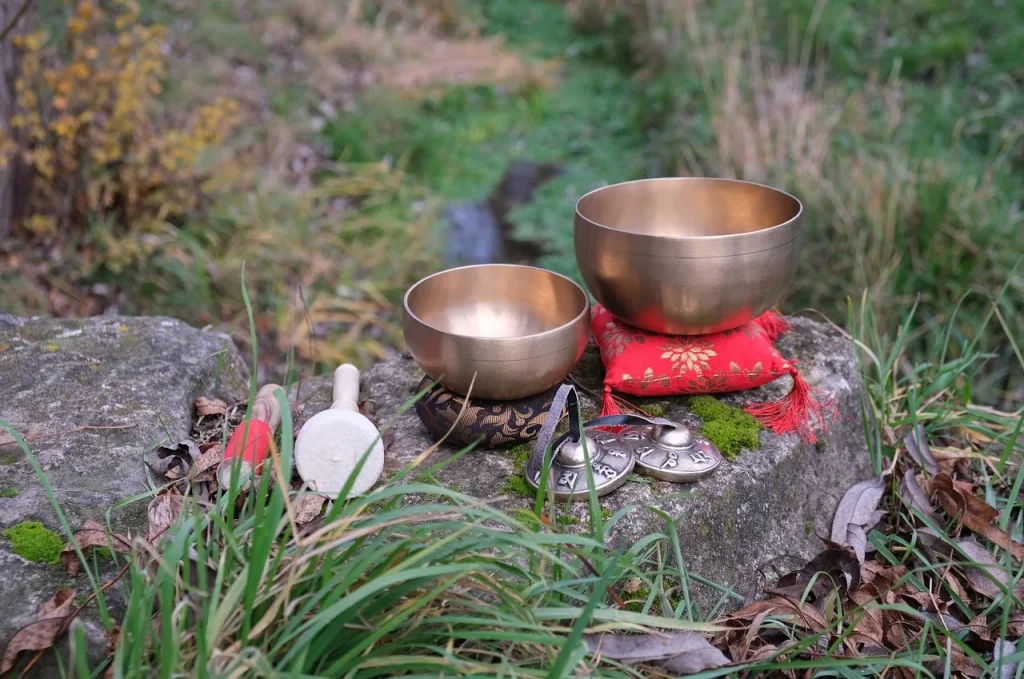
A structured sound treatment offers a clear path to relaxation. The protocol guides the recipient from the initial conversation through to the return to a calm state. Every stage is designed for comfort and safety.
Sound, as a means of soothing, uses specific frequencies to harmonize the body and calm the mind. This practice, inherited from a centuries-old tradition, has become accessible and adapted to modern audiences.
The session follows simple stages: welcoming the recipient, discussing the areas that need relief, carefully positioning the instruments, and then rehydrating. This guide explains the protocol for providing a profound and safe experience. For a complete overview of the process, read this practical guide.
Understanding Tibetan singing bowl massage: principles and procedure
The wave emitted by the instrument surrounds the body and encourages it to let go. Sound therapy uses vibrations that promote a deep state of relaxation.
In practice, the practitioner places the bowls around or on the body to create continuous resonance. This modern sound therapy method helps the recipient regain a natural balance and a greater sense of well-being.
The instruments’ resonance helps release accumulated tension. Contact with sound can induce a meditative posture that benefits quality of life.
“Sound acts as a guide: it opens the inner space and supports relaxation.”
- Promotes relaxation through vibrational waves.
- Restores physical and mental harmony.
- Provides a way to explore the benefits of sound massage and singing sounds.
Origins and workings of singing bowls
The origins of these instruments date back to ancient rites in which sound was used as a healing tool. Historically, Mongolian shamans are said to have used them more than 5,000 years ago for their vibrational properties.
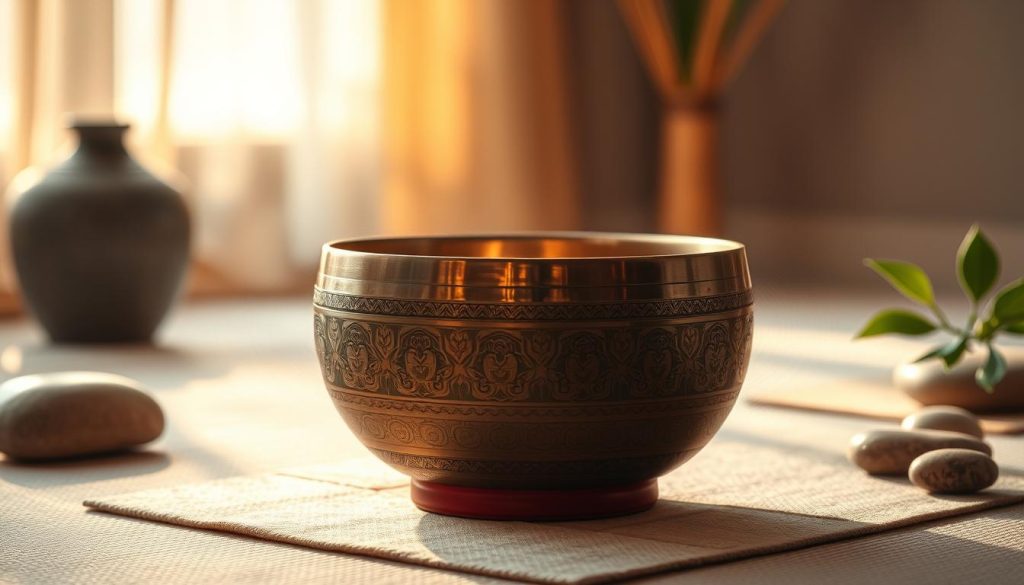
Alloy composition
Composition strongly influences the note and sound signature. Many bowls are forged according to the tradition of the seven metals, using approximately 70% copper and 29% tin.
Each blend gives the instrument a unique personality. Its composition also determines how the waves travel through tissue and bone.
Role of frequencies
Size plays a key role: large models (≥ 25 cm) emit low-frequency waves, unlike smaller bowls.
These vibrations target the chakras and circulating energy. The combination of sounds and vibrations creates a deep resonance that is useful for meditation.
- Ancient use: shamanic practices and rituals.
- Sound signature: determined by the metal composition.
- Choice of size: essential for making the instrument sing.
“Resonance transforms every singing bowl into a tool for centering and harmonization.”
To learn more about their history and manufacture, read the history of singing bowls.
Preparing the space and equipment for a session
Before each session, the space should be arranged to invite tranquility. A quiet, comfortably warm room with subdued lighting makes the client feel welcome. Preparation generally takes 5 to 10 minutes to be truly effective.
Arranging the relaxation space
The practitioner sets up a comfortable table or futon to ensure a stable position. Cushions and blankets preserve body heat and contribute to relaxation.
The equipment, consisting of a few bowls and mallets, is placed within easy reach. A quiet environment allows sound waves to circulate without interruption during the sessions.
- Dim the lighting to reduce stimulation.
- Take 5 to 10 minutes to tune the instruments and check that the session will flow smoothly.
- Every detail, from the placement of cushions to the quiet surroundings, helps promote relaxation.
“A well-prepared space amplifies the effect of the sounds and preserves the recipient’s comfort.”
Welcoming and positioning the recipient
The welcome marks the beginning of a trusting relationship between the practitioner and the recipient.
A brief conversation helps align expectations and identify sensitive areas of the body.
The practitioner offers a glass of water to prepare the body. This simple gesture helps vibrations circulate through the tissues.
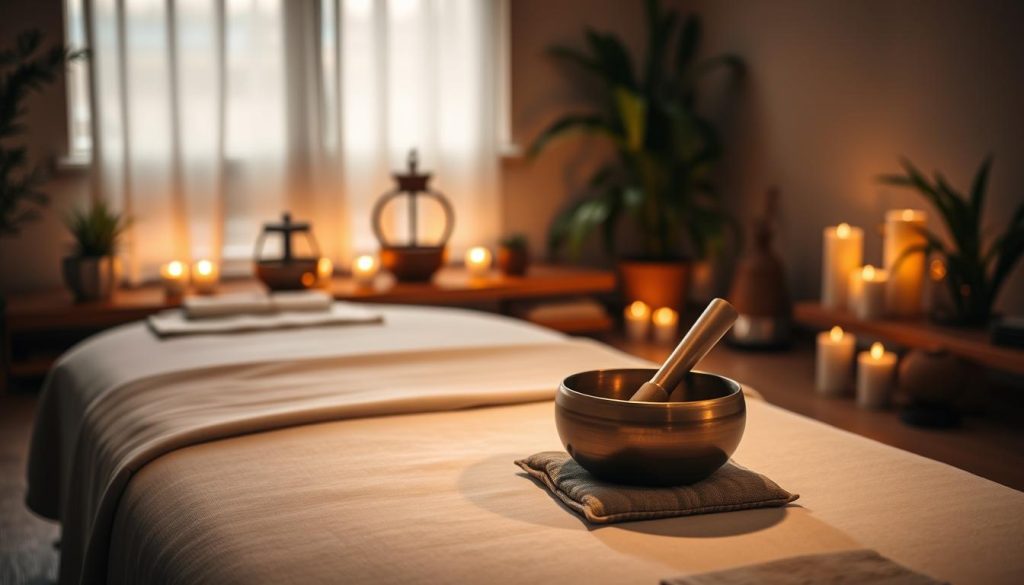
The recipient settles onto a table or futon, with supports used to align the chakras.
During the 5 to 10 minutes needed for positioning, the practitioner checks the placement of the Tibetan singing bowl to ensure maximum effectiveness.
“The time devoted to welcoming the recipient creates the trust essential for letting go.”
- Initial conversation: expectations and areas of the body to monitor.
- Comfort: cushions and positioning to promote relaxation.
- Equipment check: positioning the bowls and making adjustments before the massage begins.
| Stage | Action | Estimated duration |
|---|---|---|
| Welcome | Discussing expectations and sensitive areas | 3–5 minutes |
| Hydration | Offering a glass of water | 1–2 minutes |
| Positioning | Settling onto a table or futon and aligning the chakras | 5–10 minutes |
| Check | Final positioning of the bowls and sound test | 2–3 minutes |
To learn more about how a session works in practice, consult this useful resource: sessions and treatments.
Sound rituals and the intention of the session
An opening tone anchors the breath and marks the transition into presence. The practitioner briefly introduces the bowls and then sounds an introductory note.
The ritual begins by gently striking a bowl to invite the recipient into a mindful state of presence. This opening remains brief: around 5 minutes.
By alternating several bowls and other instruments, the practitioner establishes the treatment’s intention. This intention provides a reassuring framework for the vibrational work to come.
The introduction allows the sounds to be harmonized with the client’s breathing. Each activation is gentle. The silence between resonances is respected to amplify their effect.
“The intention set at the beginning transforms every sound into a vehicle for calm and balance.”
- A gentle strike to anchor the breath.
- A brief introduction to the bowls and their timbre.
- Harmonization time: around 5 minutes.
| Element | Action | Duration |
|---|---|---|
| Introduction | Introducing the bowls and the instrument | 1–2 minutes |
| Opening sound | A gentle strike to anchor the breath | 1–2 minutes |
| Harmonization | Harmonizing the sounds with the breath | 2–3 minutes |
To explore sound therapy and the practitioner’s role in greater depth, discover sound therapy training.
Sound massage and vibration techniques
Sound-based movements follow precise methods to modulate the effect of vibrations on the body. The practitioner chooses the combination best suited to the recipient. This working phase generally lasts between 30 and 45 minutes.

Direct vibration on the body
Direct vibration involves placing a bowl on a targeted area of the body. Contact transmits a localized vibration that helps release deep-seated tension.
The practitioner adjusts the duration and pressure to the recipient’s sensitivity. This technique provides a feeling of depth and grounding.
Indirect vibration
Indirect vibration involves making the bowls sing around the recipient without contact, creating a true sound bath.
This method envelops and harmonizes through circulating sounds. It promotes total immersion while remaining nonintrusive.
Using suction cups
Suction cups used with bowls allow them to glide smoothly over the skin. They connect several areas through continuous sound massage with the bowls.
The practitioner regularly rubs each instrument to make it sing and ensure harmonious resonance. Adjustments are made in real time to make the best use of the allotted time.
“Variations in contact and distance make it possible to explore a range of vibrational effects, from targeted to immersive.”
- Direct vibration: localized intensity through contact.
- Indirect vibration: contact-free immersion.
- Suction cups: continuous gliding and connection between areas.
- Duration: 30–45 minutes, adjusted by the practitioner.
Benefits for the body and mind
Sound vibrations subtly alter the perception of the body from the first few minutes. The waves promote blood and lymphatic circulation. This contributes to the gradual release of muscle tension.
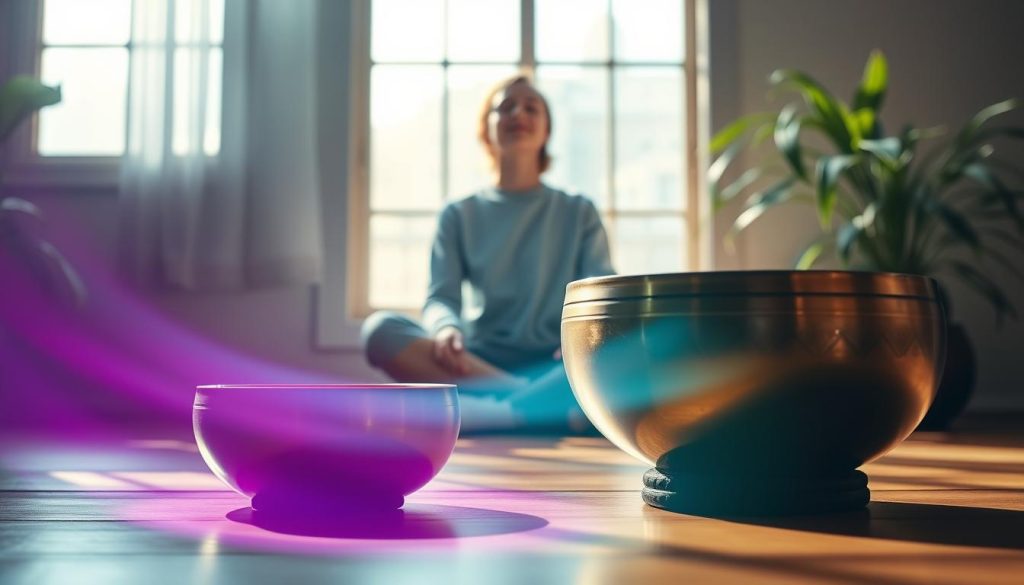
The practitioner uses the bowl to diffuse sounds that soothe the nervous system. The result is deep relaxation and a lasting state of calm.
Impact on the nervous system
The benefits include relief from everyday stress and greater harmony between body and mind. Many people report feeling lighter after the session.
- Deep relaxation: a noticeable reduction in nervous tension.
- Release of tension: waves penetrate the tissues and relax tight areas.
- Drainage: drinking water after the experience supports the lymphatic system.
“Resting after the treatment allows the benefits to be integrated and prolongs relaxation.”
To prolong the effect and better understand sound massage techniques, read about singing bowls and sound.
Essential precautions and contraindications
Before any sound-based treatment, it is crucial to identify the recipient’s specific medical risks.
Certain conditions rule out direct contact with a Tibetan singing bowl. A pacemaker, metal implants, or recent surgery are key issues that must be checked.
Pregnancy, epilepsy, and tinnitus require contact-free techniques or suitable sound alternatives. The practitioner must offer these options whenever necessary.
The practitioner documents each case in a client record. This record makes it possible to adjust the protocol, anticipate the body’s reactions, and avoid any adverse effects from the sounds.
“The recipient’s safety comes first: suspend sessions if in doubt and seek medical advice.”
In summary, vigilance regarding metals and medical devices remains the priority. Systematic screening protects the recipient and ensures that the technique is effective.
Tips for prolonging the treatment’s effects
The minutes immediately after getting off the table are crucial for integration.
Drink water within the first ten minutes to help eliminate toxins released by the Tibetan singing bowl’s vibrations.
Remain in a calm environment and avoid strenuous activity for at least thirty minutes. This prolongs relaxation and helps maintain the benefits for the body.
The practitioner often recommends gentle stretching or a short meditation. These practices relieve any remaining tension and anchor the feeling of well-being.
Avoid sources of stress and physical exertion. Let the sounds continue to work for a while after you leave to consolidate the effect you feel.
| Action | Purpose | Recommended duration |
|---|---|---|
| Drink water | Support elimination | Within 10 minutes |
| Rest quietly | Anchor relaxation | 30 minutes |
| Gentle stretching or meditation | Release residual tension | 5–10 minutes |
“Following these simple tips prolongs the treatment’s effects and preserves the restored balance.”
For more details about sessions and treatments, consult this resource.
Incorporating bowls into a daily practice
A few simple actions are enough to incorporate vibrational sounds into your daily routine. Brief, repeated practice helps reduce stress and harmonize the chakras.
Devote 5 to 15 minutes to each session on a table or cushion. Regularity increases the benefits for the body and nervous system.
Striking method
The striking method consists of giving the side a crisp tap. This brief action produces a direct note. It is ideal for quickly releasing muscle tension.
Rimming method
The rimming method requires a constant circular motion to make the instrument sing. Continuous contact produces a pure, sustained note rich in vibrations.
- Use: managing stress through short sessions.
- Tip: add a little water to the bowl to vary the sounds and enhance the room’s energy.
- Choosing an instrument: its size and seven-metal composition influence the note and the sensation.
“A few minutes a day are enough to anchor an intention and observe relaxation.”
Conclusion
A well-conducted treatment relies on careful preparation and the practitioner’s active presence.
The chosen techniques and measured use of the Tibetan singing bowl optimize the observed benefits: deep relaxation and sustained well-being.
Each singing bowl produces a unique note that transforms the experience into a sensory journey. The various sounds and the characteristics of an instrument promote lasting harmony.
To prolong the feeling of calm, adopt a regular practice with Tibetan singing bowls. To learn more about the sound therapy approach and its applications, consult this resource.